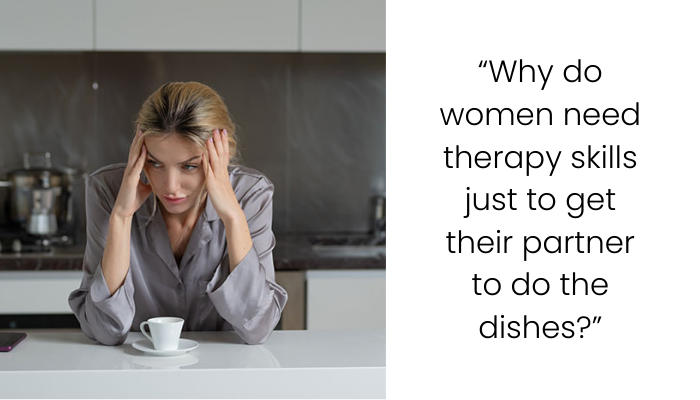
Women Shouldn’t Need a Psychology Degree Just to Get the Bare Minimum From Their Partners
This one isn’t just a rant — it’s a revelation. The poster starts off admitting that she used to be that person: the one suggesting “better communication” as the fix-all for relationship imbalance. She thought maybe if women just phrased things the right way, asked nicely, gave it time — the emotional labor would magically become shared. Spoiler: it didn’t.
Over time, she saw it wasn’t just her experience — it was everywhere. Sisters, friends, coworkers — all stuck in the same rinse-and-repeat cycle of carrying the mental load in their relationships while their male partners tuned out, got defensive, or performed a temporary fix and called it growth.
This post is a wake-up call. A slow-burn realization that in many heterosexual relationships, women aren’t just managing homes — they’re managing men. Learning conflict resolution, soft-speech negotiation tactics, and emotional restraint just to have a clean sink or a partner that doesn’t act like a martyr for doing 10% of the chores.
And the kicker? The men usually think they’re doing great. That they’re “trying.” But when someone has to train their partner with gentle coaching and chore-specific walkthroughs just to get basic help — we’re not talking partnership. We’re talking parenting.
Some men can be difficult romantic partners

This woman wrote about these challenges in a lengthy post, pointing out the male traits she finds problematic
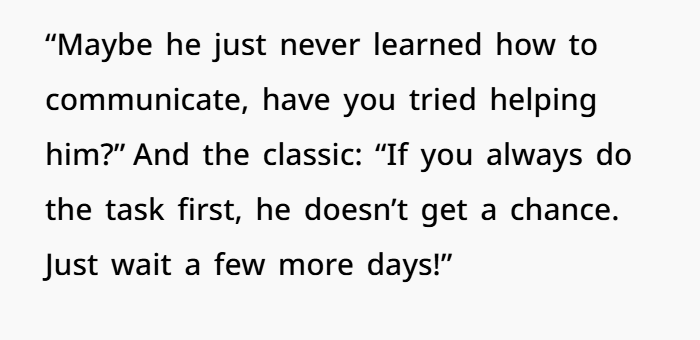
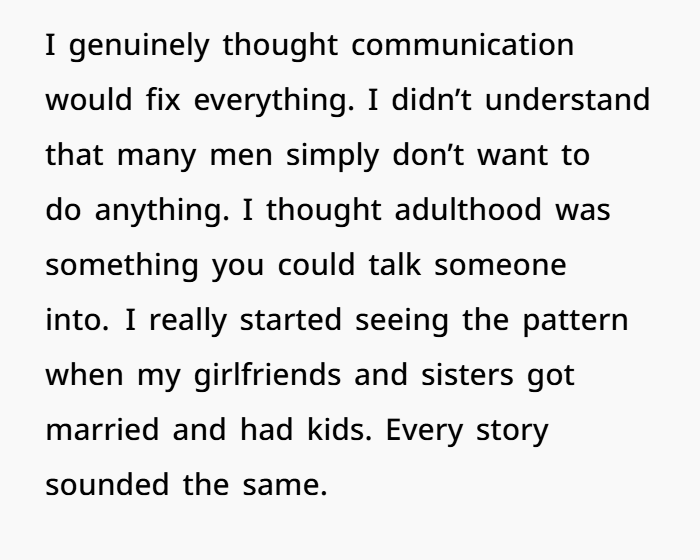
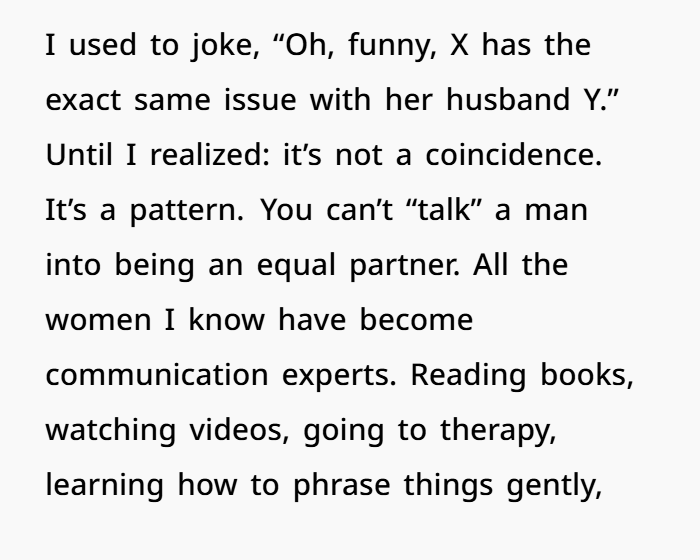
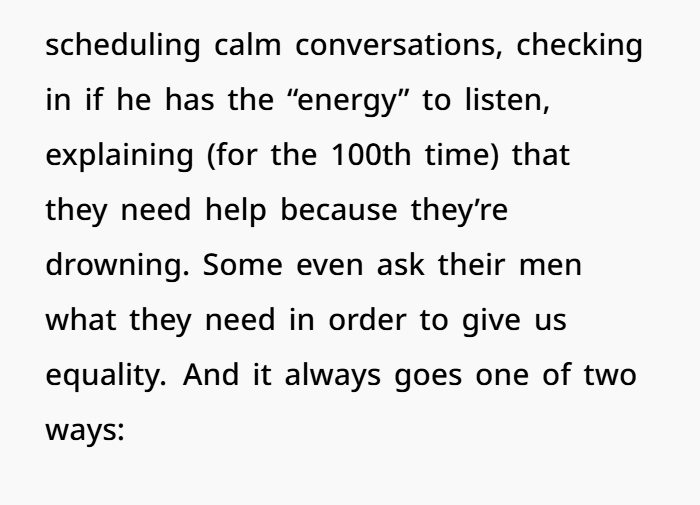
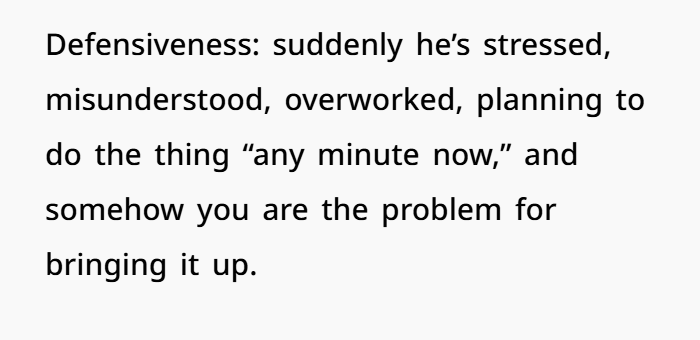
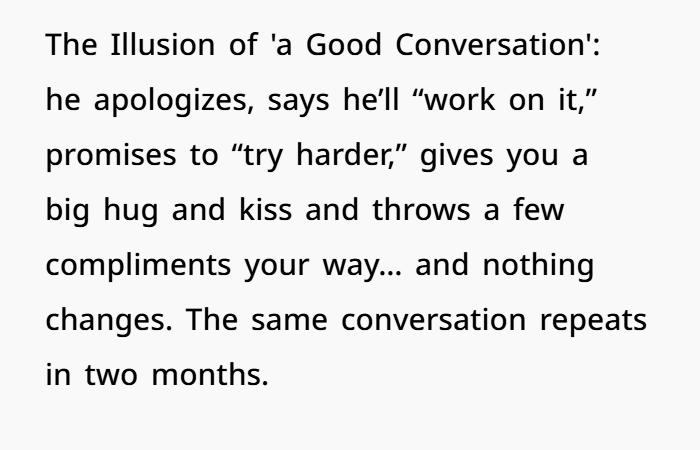
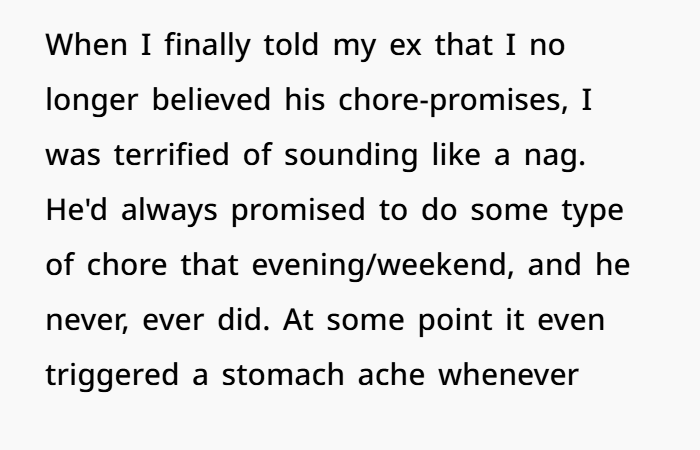
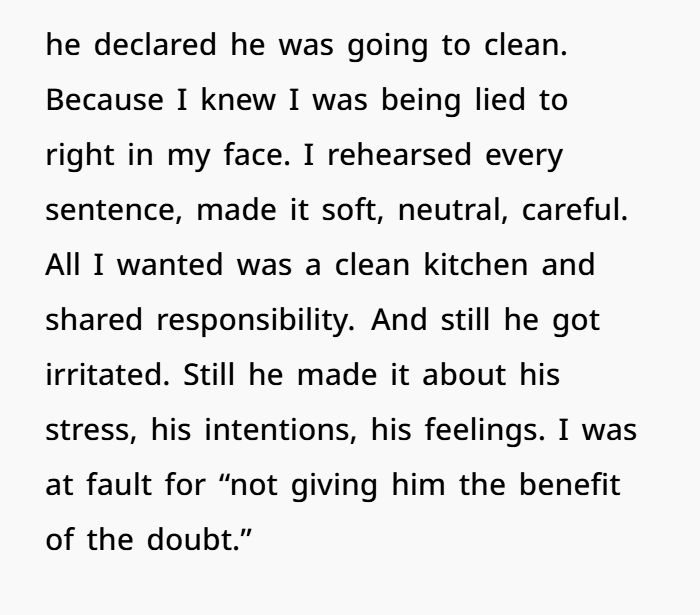
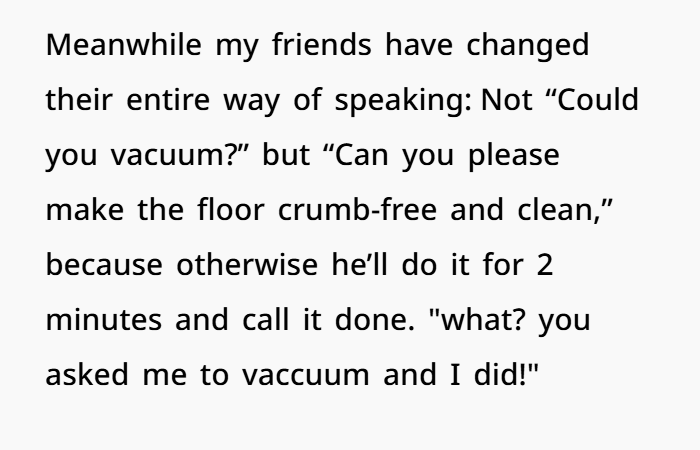
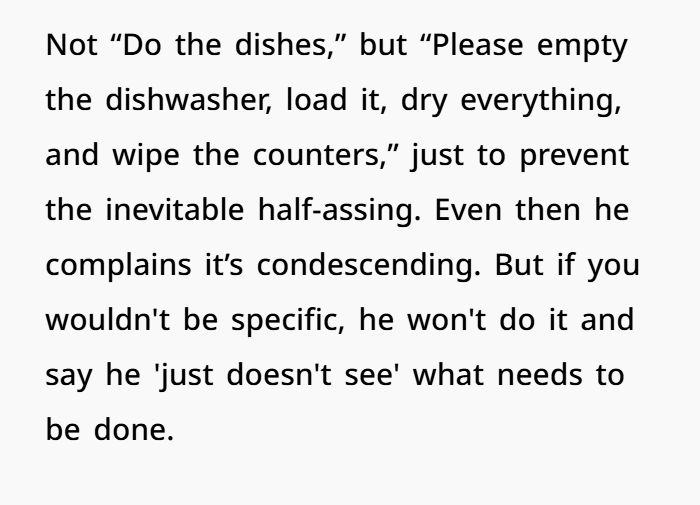
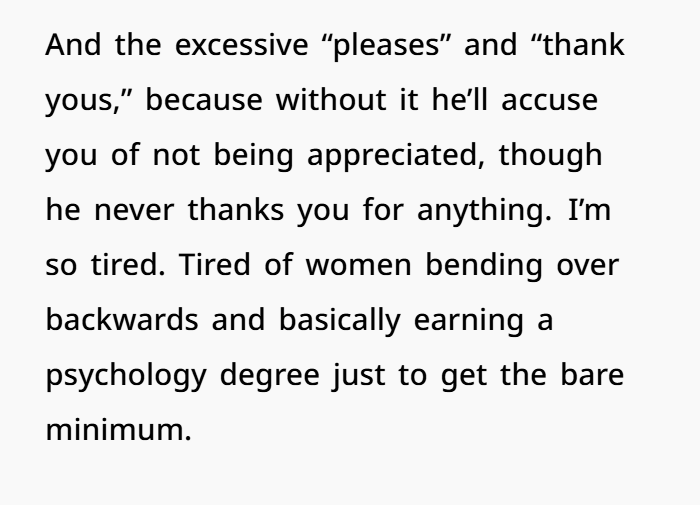
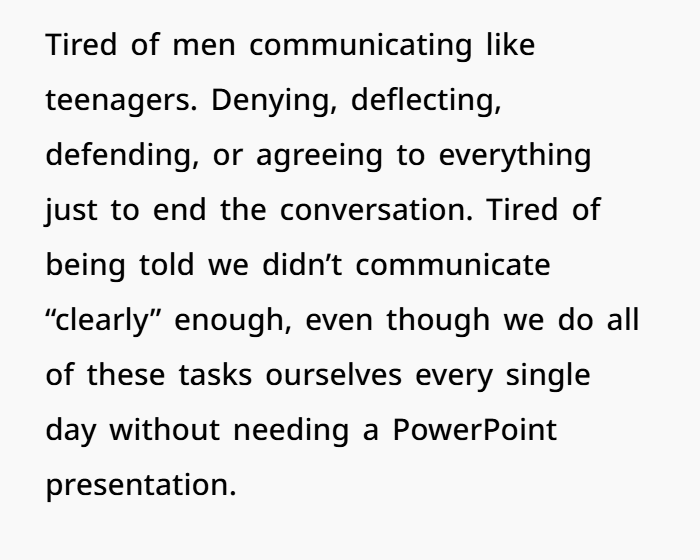
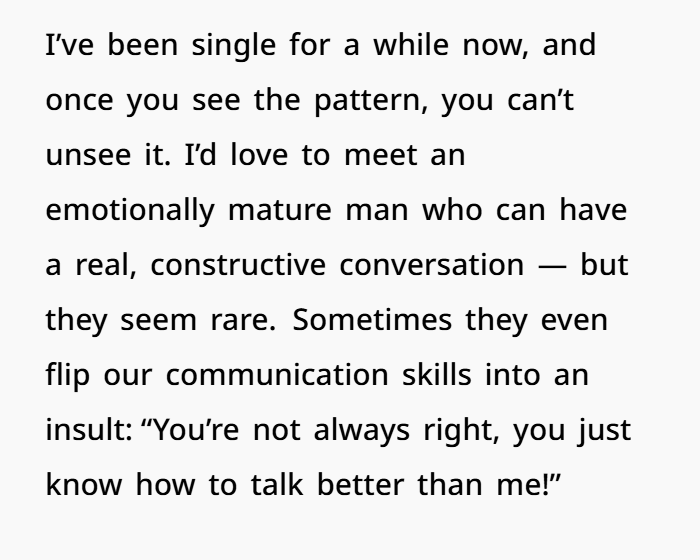
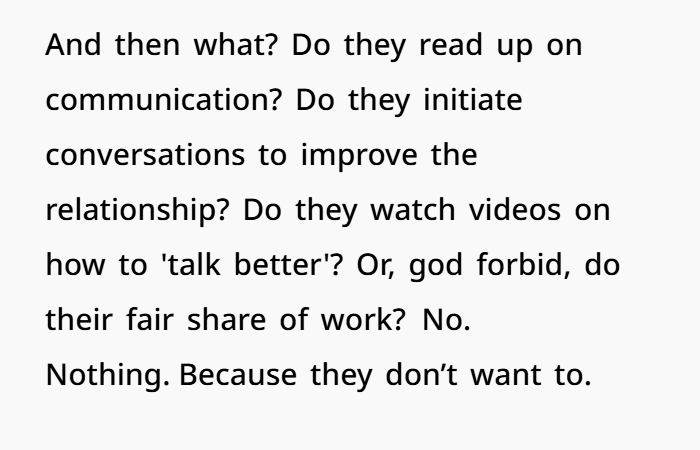
Let’s be honest — this post is like looking into the collective diary of countless women in straight relationships. It’s not just venting. It’s a pattern that cuts across class, culture, and age. Women trying everything — every self-help book, therapy trick, conflict resolution podcast — just to get their partner to take on 50% of what should already be shared.

What Is the Mental Load, Anyway?
The term mental load refers to the invisible labor that keeps a household functioning. It’s not just “doing” the chores, but thinking about them, planning them, and remembering them. It’s remembering when the toilet paper’s low. It’s knowing your kid’s next dentist appointment. It’s noticing that the trash is full before the bin overflows.
As author Emma puts it in her viral comic “You Should’ve Asked,” women aren’t just doing the chores — they’re the project managers of the household. That’s emotional labor. And it’s exhausting.
And it doesn’t matter how many conversations you have — unless both people value that labor equally, the woman keeps carrying it. Alone.
1. Communication Isn’t the Problem — Weaponized Incompetence Is
It’s not that women don’t communicate clearly. They over-communicate. They plan the talk, choose the timing, soften their tone, and even rehearse the words to avoid triggering defensiveness.
Meanwhile, many men have mastered the art of weaponized incompetence — pretending they don’t know how to do things just to avoid responsibility.
Ever heard these?
- “You should’ve reminded me.”
- “I didn’t know how you wanted it done.”
- “You do it better.”
- “You should’ve asked.”
These are not innocent phrases. These are escape routes — preloaded excuses that make women feel like managers, not partners.
And the worst part? Even when they do agree to help, the help comes half-baked. The floor’s vacuumed… but only the middle. The dishes are “done,” but the counters are still covered in crumbs. When asked why, the answer is: “You didn’t say to wipe the counters.”
And heaven forbid you give specifics, because now you’re “micromanaging” and “being condescending.”
2. Emotional Maturity Isn’t a Gendered Trait — It’s a Choice
So many women stay stuck hoping their partner will learn. That he’ll read a book, watch a video, go to therapy. But more often than not, it doesn’t happen — because he doesn’t see the need.
This isn’t about capacity. It’s about willingness.
That’s the part that hurts the most — knowing he could learn to do better, but chooses not to. He’ll learn skills for work. He’ll research fantasy football stats. He’ll grind hours into YouTube tutorials for hobbies. But learning how to be a better partner? Too much.
Signs of emotional maturity in men include:
- Accepting criticism without getting defensive
- Taking initiative without being told
- Following through on promises
- Valuing your partner’s well-being, not just their performance
If he can’t manage that, he’s not too busy. He’s just not interested in changing.

3. The Slow Death of Gratitude and Resentment
When one partner always has to “ask,” “remind,” or “spell it out,” it kills gratitude.
The woman feels unseen. She starts resenting every sock left on the floor, every missed bin day, every pretend-blank stare when the house is messy.
Meanwhile, the man starts to resent being “nagged.” He sees himself as a good guy because he occasionally does dishes or watches the kids. He wants a parade for doing what should’ve been automatic.
This resentment on both sides builds up — and love dies in resentment.
4. Single and Seeing It Clearly
The OP mentions something key: now that she’s single, the pattern is glaring.
That’s the thing — once you step outside of the role of “household manager,” you realize just how much you were doing. Just how often your life revolved around managing someone else’s time, emotions, and basic hygiene.
It’s like a fog lifts. You start noticing how peaceful it feels not having to plan anyone else’s dinner, or explain how to vacuum.
And you start craving one thing: a partner who gets it.
5. Wanting Bare Minimum Isn’t High Maintenance
At the end of the day, women aren’t asking for luxury. They’re asking for the basics:
- Do your share without being asked
- Communicate like an adult
- Respect my time and energy
- Don’t make me feel like your mom
That’s not high maintenance. That’s standard partnership behavior.
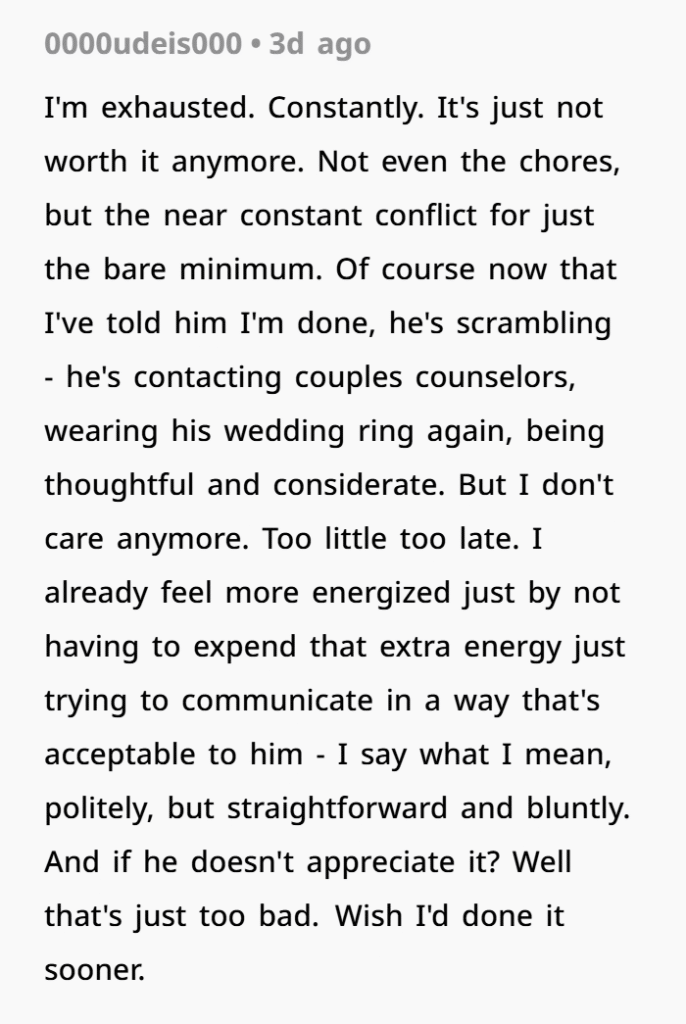
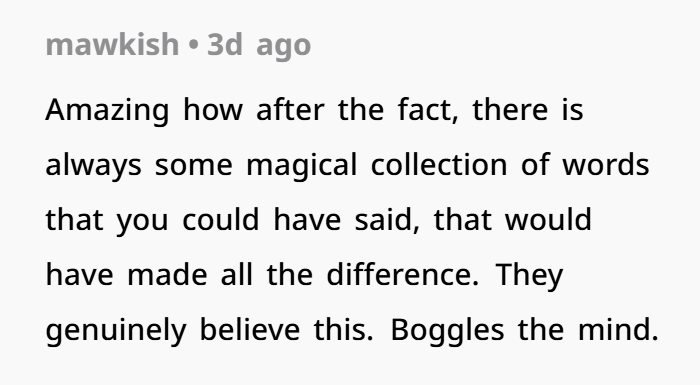
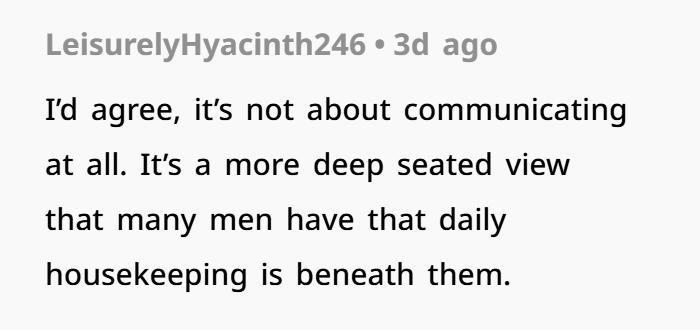
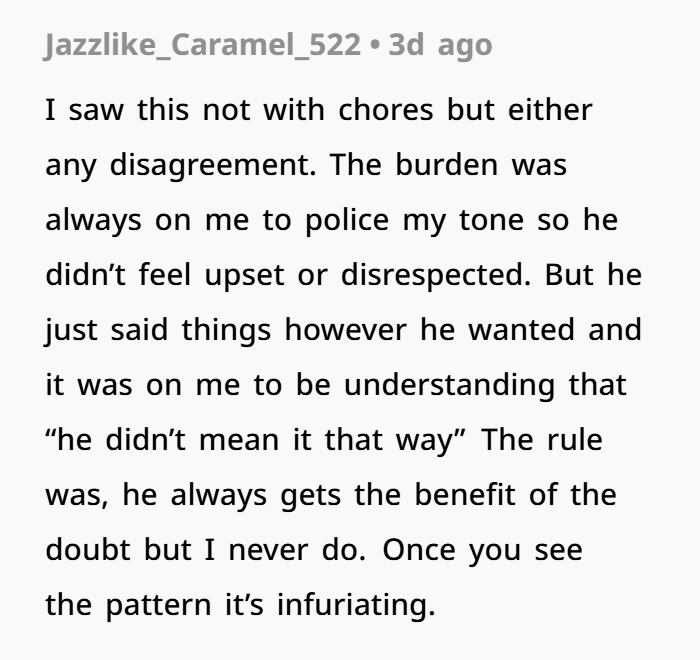
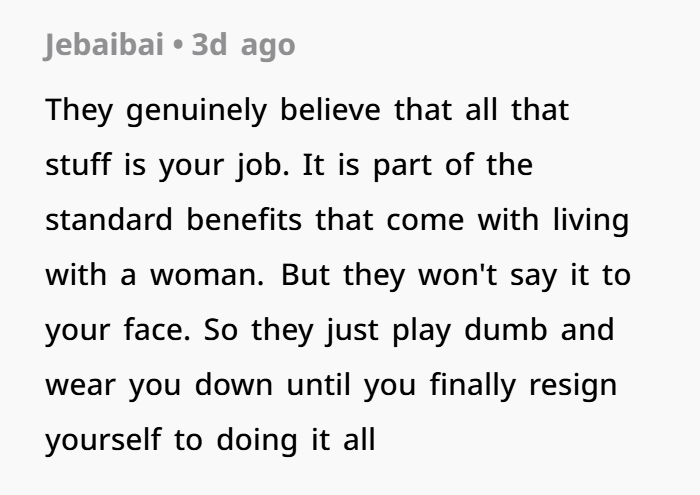
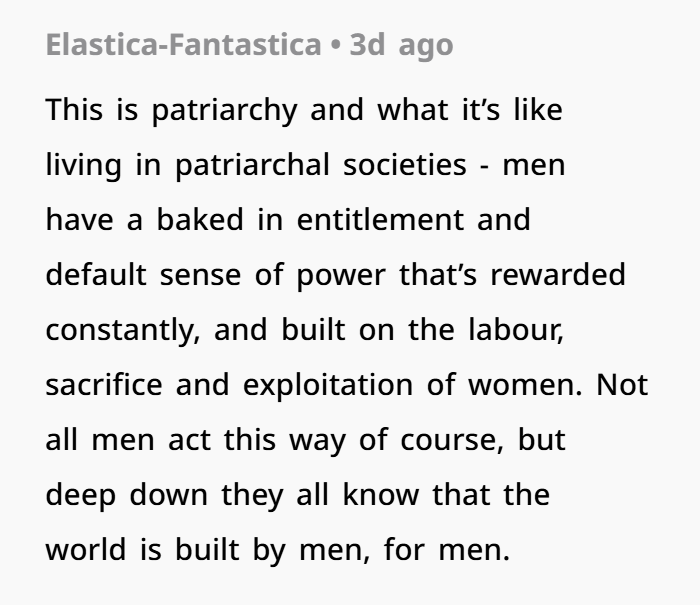
Many people in the comments sympathized with her and shared similar experiences


Women Aren’t Asking for Too Much — They’re Asking the Wrong People
The most heartbreaking thing here? It’s not even about housework. It’s about dignity. About being seen, respected, and partnered with — not managed around.
The poster ends with a brutal truth: they don’t change because they don’t want to. Not because they can’t. Not because you didn’t phrase it right. Because deep down, they don’t see the problem.
And once you realize that — once you see that all your energy is going into “fixing” someone who won’t even meet you halfway — leaving starts to feel like the sanest option.