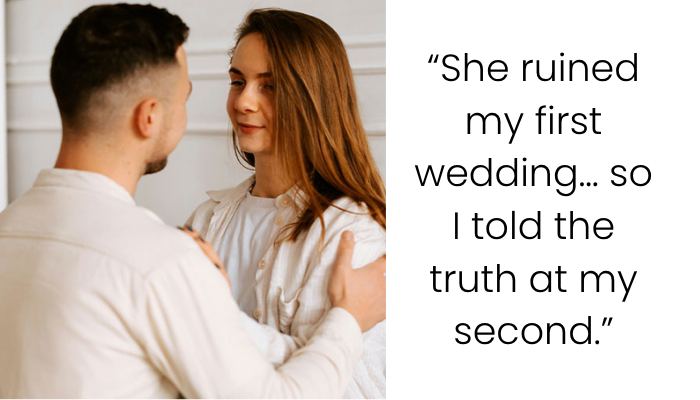
My In-Laws Skipped Their Only Son’s Wedding Because We Refused to Invite Them to Our Romantic Dinner—They Didn’t Even Congratulate Us!

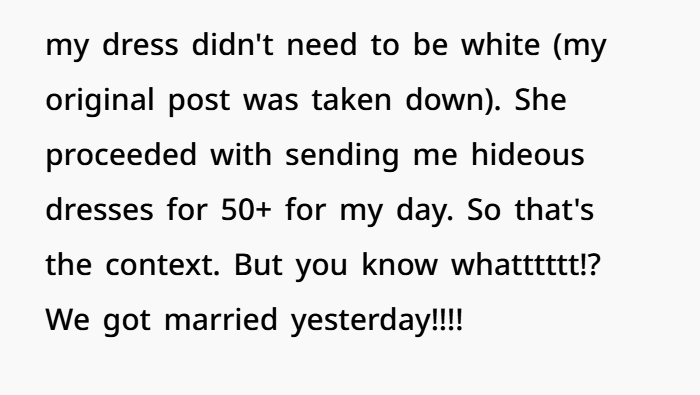
A woman was looking forward to a quiet wedding with the man she loved. They had originally planned to elope because they wanted a private and meaningful day without a large wedding budget or complicated arrangements. But his mother wanted to be there when her only son got married, so the couple agreed to include their families. Even before the ceremony, the bride had some uncomfortable moments with her future mother-in-law. She had suggested wearing an off-white dress and told the bride she did not need to wear white. She also sent wedding dress options that were very different from what the bride liked. In the end, the bride chose the white dress she wanted and continued planning their small celebration.
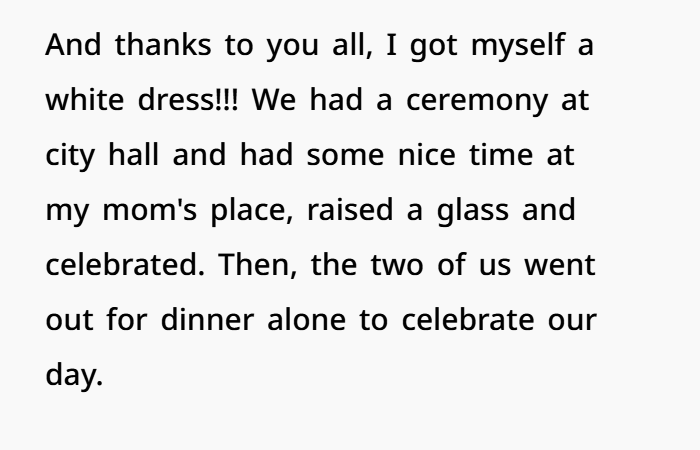
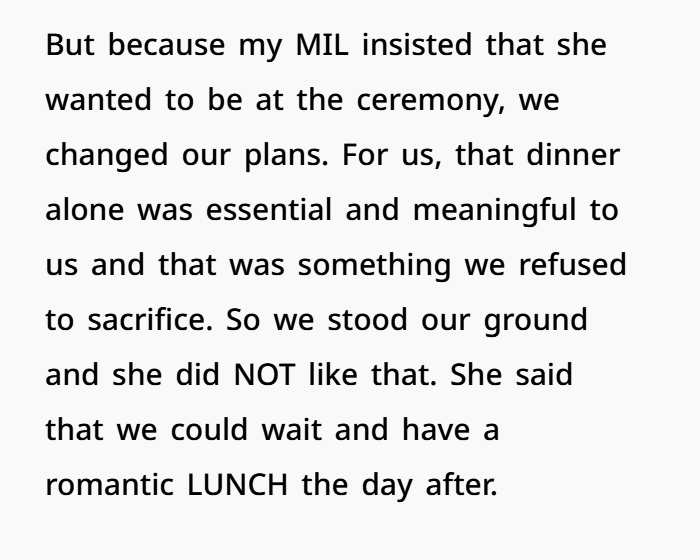
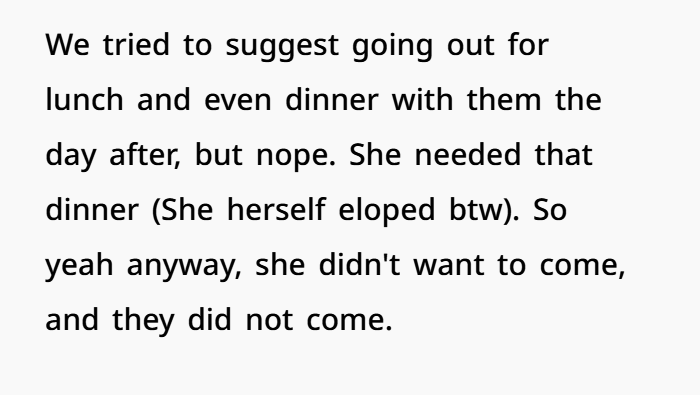
The couple arranged a simple city hall wedding, followed by a small gathering at the bride’s mother’s house. They planned to enjoy some time with family before going out for a romantic dinner alone. Having that private dinner was important because it gave them a little of the elopement experience they had originally wanted. However, the groom’s mother expected to join them for the meal. When they explained that the dinner was only for the newlyweds, she became upset. She suggested they could spend time alone over lunch the next day instead. The couple offered to meet his parents for lunch or dinner the following day, but she was not willing to change her mind.
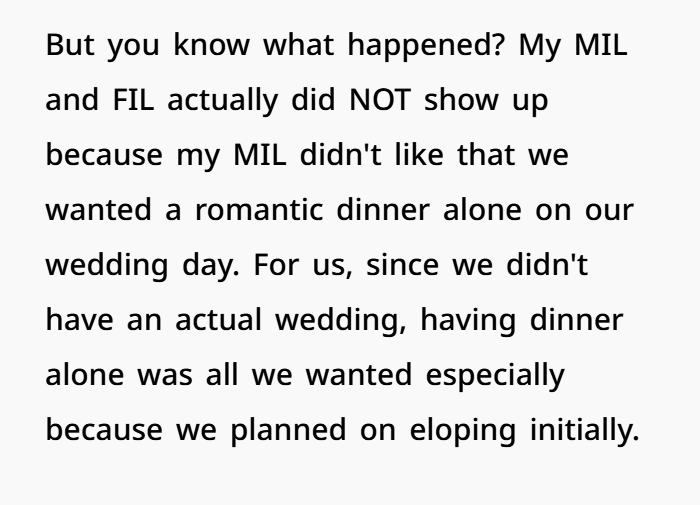
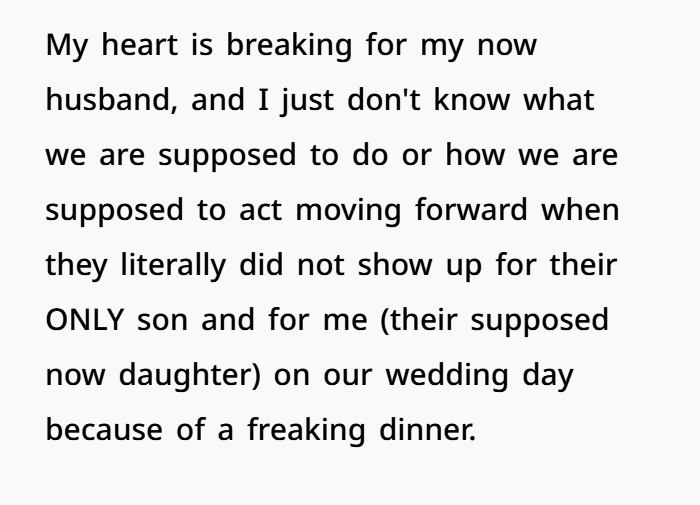
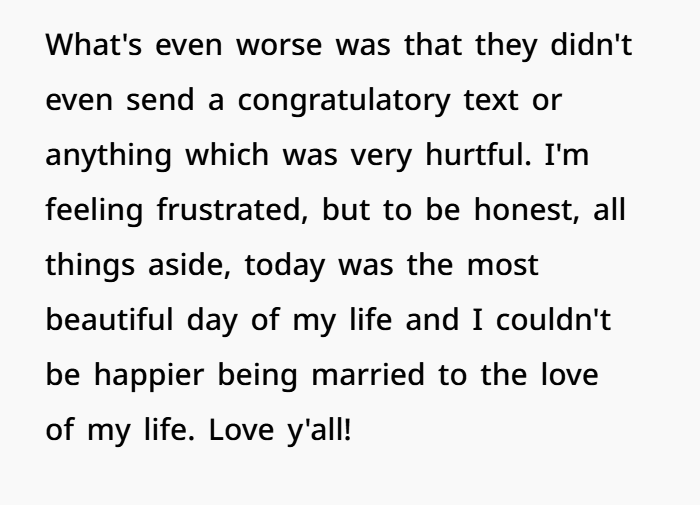
The disagreement led to something the couple never expected. The groom’s mother and father decided to skip the wedding completely. They did not show up at city hall, even though their son and his bride had changed their plans to include them. They also did not send a message to congratulate the couple after the ceremony. The bride was deeply upset for her husband. She knew how much it could hurt to have parents miss such an important family moment. She also found it surprising that her mother-in-law had eloped herself but did not seem to understand why the couple wanted a little privacy on their wedding night.
The couple still had a lovely wedding day. They exchanged vows, celebrated with the family members who attended, and enjoyed their dinner together. Their small wedding had given them the simple and personal experience they wanted, even though some important people were missing. The bride was happy to begin married life with her husband, but the disagreement left her worried about future family gatherings. She did not want every important decision to turn into an argument. She believed that married couples should be able to make their own plans while still respecting their families. Now she is wondering whether they should try to make peace with his parents or give the relationship some space.
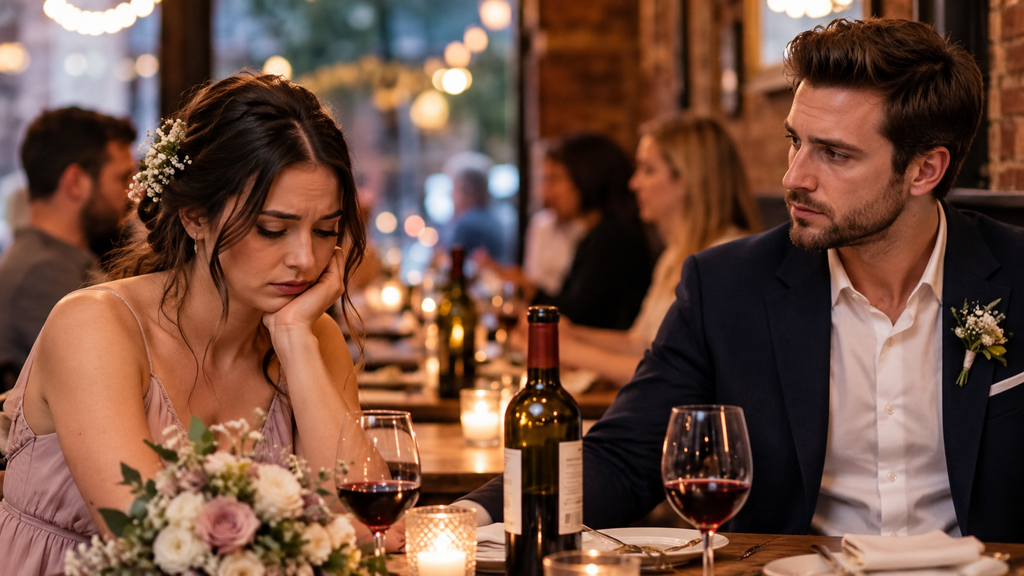
Groom’s Parents Missed His Wedding Because They Didn’t Like the Couple’s Dinner Plans
A wedding is supposed to be a happy day. Two people get married, families come together, and everyone gets to celebrate.
But sometimes, family expectations can turn even a small wedding into a stressful event.
One bride and groom learned this when a disagreement about dinner caused the groom’s parents to miss their wedding.
The couple had originally planned to elope. They wanted a quiet ceremony without a big crowd or expensive celebration.
But the groom’s mother wanted to watch her son get married.
So the couple changed their plans to include family.
They only wanted one thing for themselves: a private dinner after the ceremony.
That simple plan became the reason for a major family disagreement.
The Couple Originally Wanted a Private Wedding
The bride and groom did not want a traditional wedding.
They preferred something small and simple.
Instead of spending months choosing a wedding venue, arranging catering, and planning a large reception, they wanted to elope.
For many couples, a private wedding can be a good way to reduce stress.
It can also help keep wedding expenses under control.
Traditional weddings often involve costs for wedding photography, decorations, flowers, food, and transportation.
Even a small guest list can make the wedding budget grow quickly.
The couple wanted to avoid much of that planning.
But the groom’s mother had a different wish.
She wanted to be present when her son exchanged vows.
The couple understood how important that moment was to her.
So they agreed to change their original plans.
They would have a ceremony that family members could attend.
They Still Wanted One Special Moment Alone
Although the couple agreed to include their families, they wanted to keep one part of the wedding day private.
They planned to have a romantic dinner together after the ceremony.
Just the two of them.
It would be their first dinner as husband and wife.
They wanted to enjoy a quiet meal, talk about the day, and spend time together.
They were not trying to leave their families out of the entire celebration.
In fact, they had already made plans to spend time with relatives at the bride’s mother’s home.
They also offered to have lunch or dinner with the groom’s parents the next day.
But their wedding-night dinner was something they wanted to enjoy alone.
For them, it was a meaningful part of starting their marriage.
The Groom’s Mother Wanted Everyone at Dinner
The groom’s mother was not happy when she heard about the private dinner.
She wanted the family to eat together on the wedding night.
The couple explained that they had already decided to spend that time alone.
They offered another meal the following day.
That seemed like a reasonable compromise.
The parents could still attend the ceremony, celebrate with family, and enjoy a meal with the newlyweds later.
But the groom’s parents did not accept the offer.
They wanted the dinner to happen on the wedding night.
The couple did not change their minds.
And the disagreement quickly became much bigger than anyone may have expected.
His Parents Decided Not to Come to the Wedding
Instead of attending the ceremony, the groom’s parents chose to stay home.
That decision was especially upsetting because the couple had already changed their plans for them.
They had originally wanted to elope.
The groom’s mother asked to attend, and they agreed.
Now, because of a disagreement about one meal, both parents were going to miss their son’s wedding.
The groom was also their only son.
For many families, watching a child get married is a special moment.
Parents may look forward to it for years.
But in this case, the groom’s parents decided not to attend.
According to the story, they also did not send a congratulatory message afterward.
That made the situation feel even more painful.
The couple had hoped to enjoy their wedding day with family support.
Instead, they were left dealing with hurt feelings.
The Bride Had Already Felt Uncomfortable With Her Mother-in-Law
The dinner disagreement was not the first problem between the bride and her future mother-in-law.
Before the wedding, the groom’s mother had reportedly considered wearing an off-white dress.
She had also questioned whether the bride needed to wear white.
Wedding clothing traditions can be different from one family to another.
Some brides love traditional white dresses.
Others prefer colorful outfits, simple dresses, or something completely different.
But in many Western weddings, guests avoid wearing white unless the couple is comfortable with it.
The bride felt that her future mother-in-law was questioning decisions that should have been hers.
So when the dinner disagreement happened, it felt like another situation where the groom’s mother wanted to influence the wedding plans.
That made the conflict harder to ignore.
Weddings Can Change Family Relationships
Marriage is a big life event.
It is not only about wedding dresses, flowers, and reception decorations.
It also marks the beginning of a new family life.
When someone gets married, they start making important decisions with their spouse.
These decisions may involve housing, work schedules, family holidays, and household finances.
Parents are still important.
But their adult children may no longer make every decision based on what the parents prefer.
That change can be emotional.
Family therapist Murray Bowen studied how family relationships affect one another.
His work helps explain why major changes, such as marriage, can sometimes create tension.
A parent may feel left out when their adult child begins making more independent choices.
That does not mean the child is doing something wrong.
It simply means the family is adjusting to a new stage of life.
The Groom’s Mother Had Eloped Herself
One interesting detail made the disagreement even more surprising.
The groom’s mother had reportedly eloped when she got married.
She had once chosen a private wedding for herself.
But when her son wanted a similar experience, she was unhappy.
Of course, people can feel differently about weddings as they get older.
Someone who enjoyed eloping may still dream of attending their child’s wedding.
That is understandable.
But the couple had already agreed to include family in the ceremony.
They were only asking to keep dinner private.
Wanting to attend a child’s wedding does not mean every part of the celebration has to happen exactly as a parent wants.
Missing the Ceremony May Leave Lasting Hurt Feelings
A wedding is a moment that cannot be repeated in exactly the same way.
The couple may have anniversary dinners, family celebrations, and future holidays together.
But the day they exchange vows happens only once.
That is why the parents’ decision not to attend could have a lasting emotional effect.
The groom may have been disappointed that his parents were not there.
The bride may also have felt hurt that changing their original plans was not enough.
And the lack of a congratulatory message afterward may have made the distance between them feel greater.
One disagreement does not always lead to a permanent family separation.
But some events are difficult to forget.
Sociologist Karl Pillemer explored family conflict in his 2020 book Fault Lines: Fractured Families and How to Mend Them.
His work discusses how family members may remember the same disagreement in very different ways.
That may be happening here.
The groom’s parents may have felt excluded from an important celebration.
The couple may have felt that their personal wishes were not respected.
Both sides may see the situation differently.
Family Help With Wedding Planning Shouldn’t Mean Full Control
Many couples receive help from relatives when planning a wedding.
Parents may offer money toward wedding expenses.
Others may help find a wedding venue, arrange catering services, or book a wedding photographer.
That support can make planning easier.
But problems can happen when family members believe their help gives them the right to make every decision.
For example, someone who contributes to the wedding budget may want to choose the guest list.
Another relative may have strong opinions about the dress, decorations, or reception menu.
These situations can create stress when the couple feels pressured.
A wedding should reflect the people getting married.
Some couples want a large reception with many guests.
Others prefer a small ceremony and a quiet dinner.
Both choices can be meaningful.
The Couple May Need Time Before Talking to His Parents
After the wedding, the newlyweds may need some time to enjoy their marriage.
They do not have to solve the family disagreement immediately.
The groom should have an important role in deciding when and how to speak with his parents.
After all, they were the ones who missed his wedding.
If they eventually talk, the conversation could focus on how their absence affected the couple.
The newlyweds can explain that they wanted the parents at the ceremony.
They can also explain why the private dinner mattered to them.
The parents may share why they felt disappointed.
A calm conversation could help everyone understand the situation better.
But rebuilding the relationship would likely require respect for the couple’s decisions.
Starting a Marriage Means Making Choices Together
After getting married, couples begin building a shared life.
They may start planning a household budget, setting savings goals, reviewing insurance coverage, or thinking about future housing costs.
They also make decisions about family visits, holidays, and how they spend their free time.
These choices are part of married life.
Parents can offer advice and support.
But the couple needs room to make decisions together.
The same idea applies to wedding plans.
Wanting a private dinner does not mean the couple loves their families any less.
It simply means they want to enjoy a special moment together.
Final Thoughts
This couple originally wanted to elope.
They changed their plans because the groom’s mother wanted to attend the ceremony.
They also offered other chances for the family to celebrate together.
But they wanted to keep their wedding-night dinner private.
When the groom’s parents refused to accept that decision, they chose not to attend the wedding.
What started as a disagreement about one meal became a painful family memory.
A wedding should celebrate the couple’s marriage, not become a disagreement over who gets to make every decision.
Family relationships are important, but so are personal boundaries.
Sometimes, the best way to support loved ones is to respect their choices, even when those choices are different from what we expected.
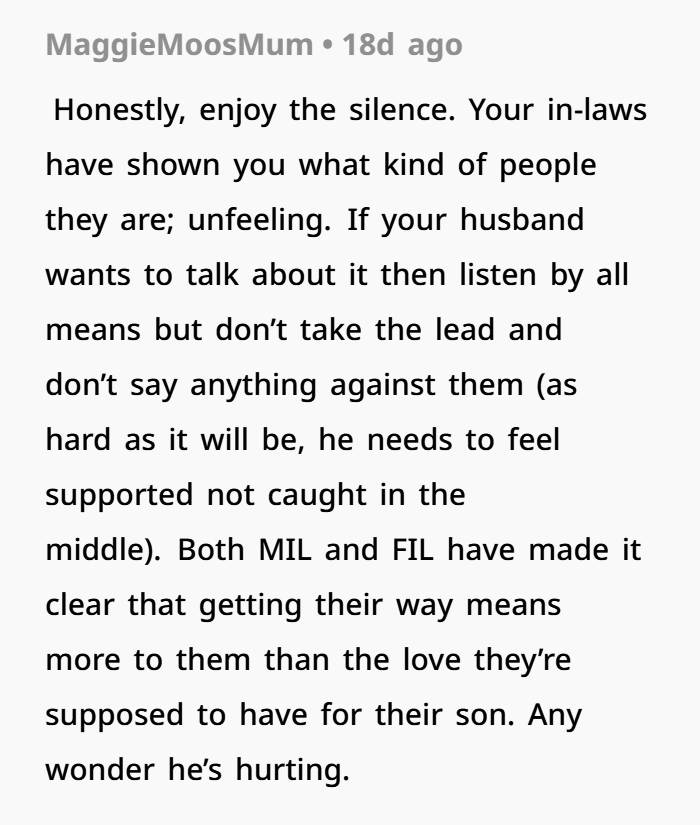
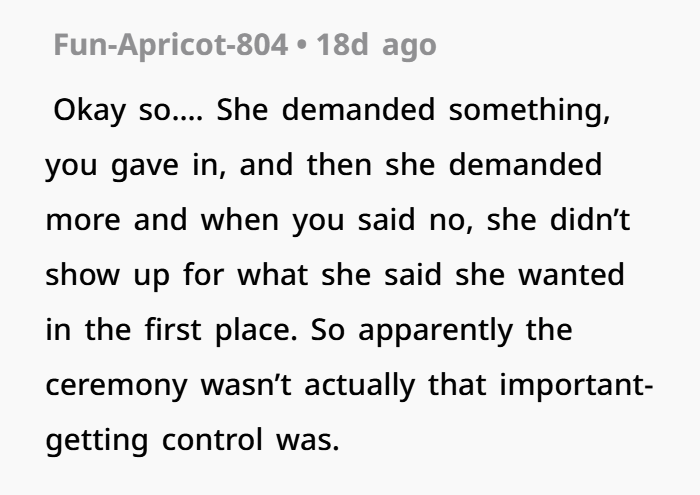
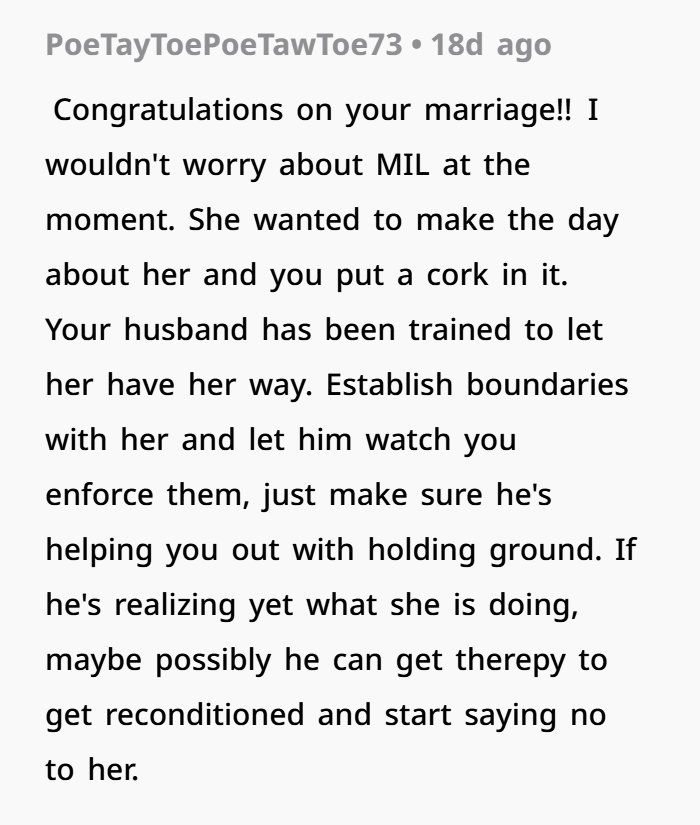
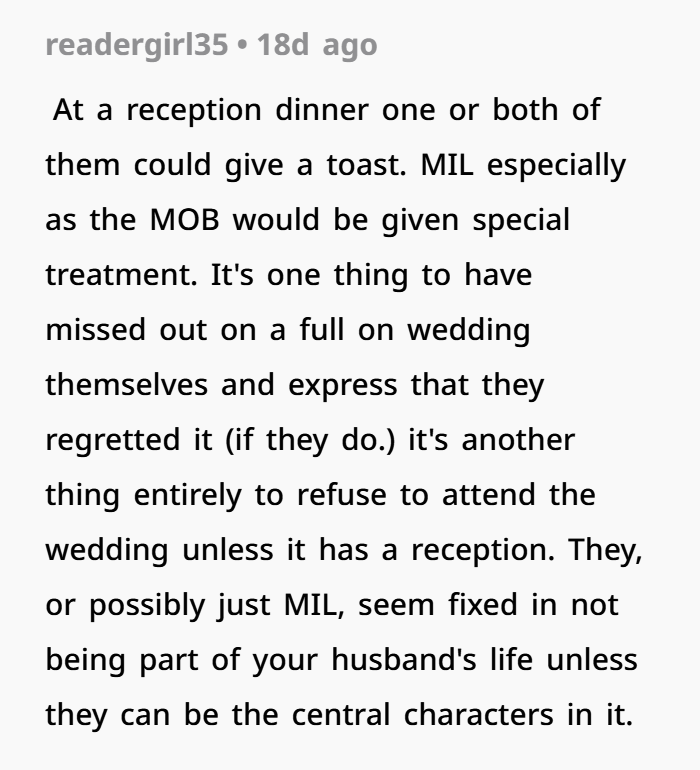
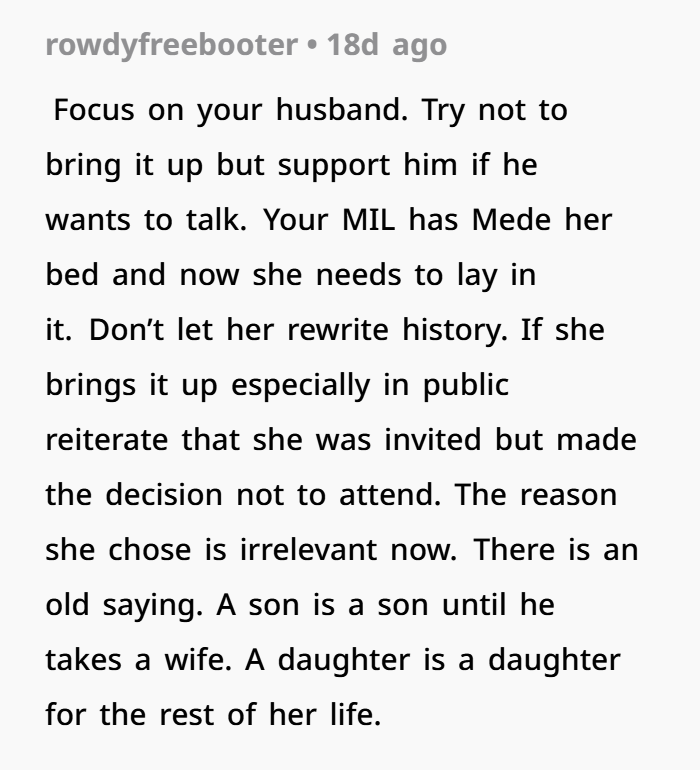
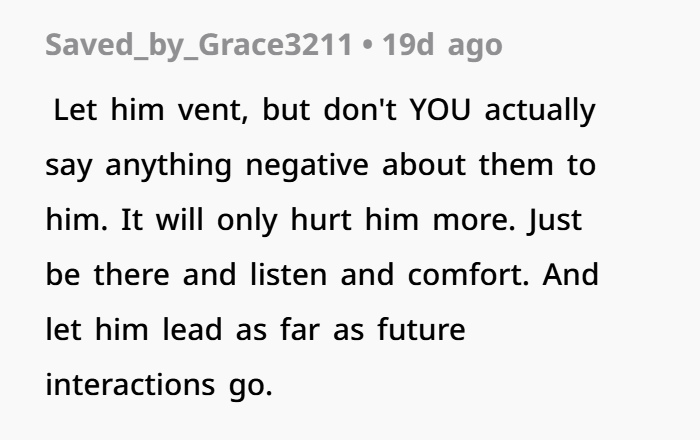
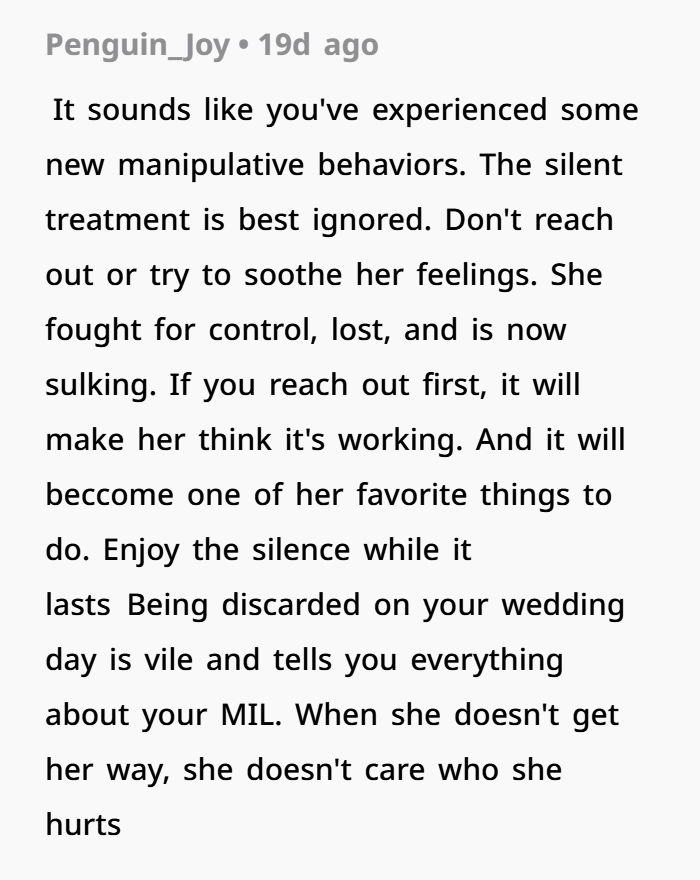
The Most Honest Comments