AITA for Inviting My Dad’s Newly Discovered Half-Sister to My Wedding When My Own Cousins Weren’t Invited to the Ceremony?

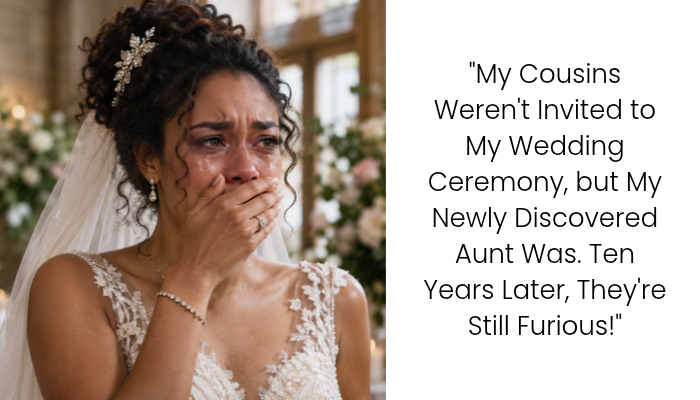
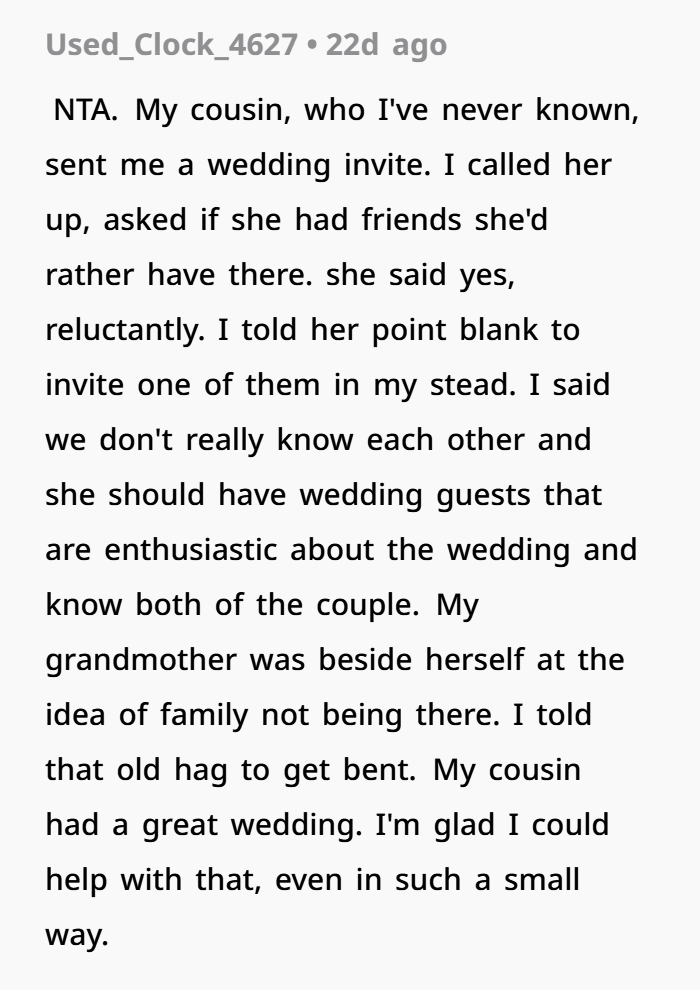
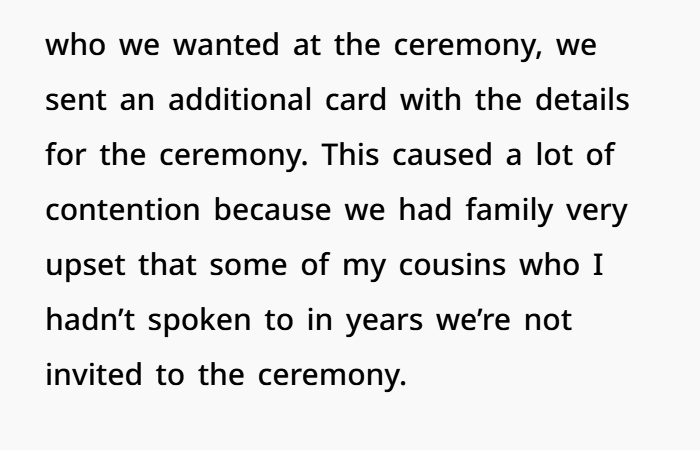
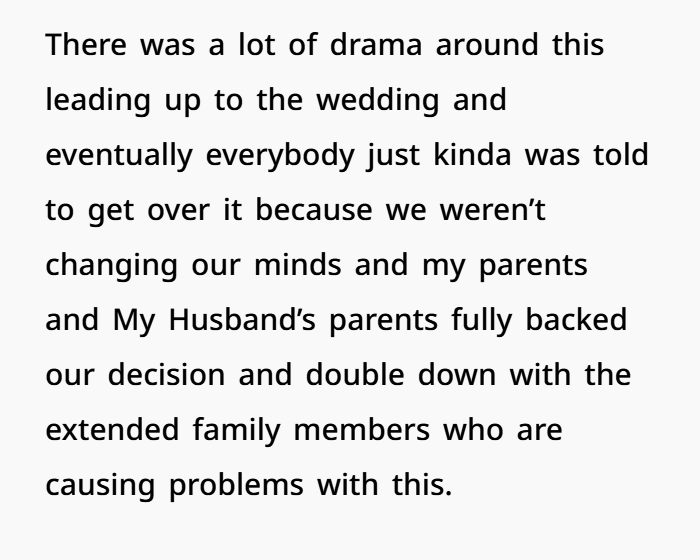
Almost ten years ago, a woman and her husband made a simple decision about their wedding. They wanted a small ceremony with their closest family members and friends, followed by a bigger reception for their extended family. Not everyone was happy with the wedding guest list. Some cousins felt left out because they were invited to the reception but not the ceremony. However, both families’ parents supported the couple and encouraged them to enjoy their wedding without giving in to family pressure.
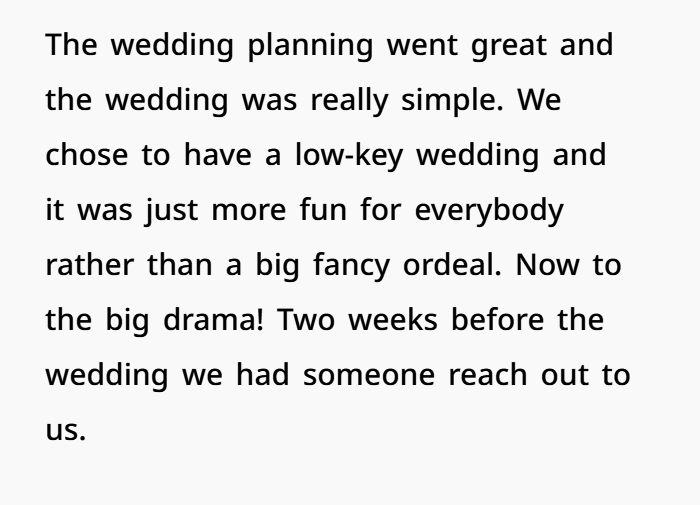
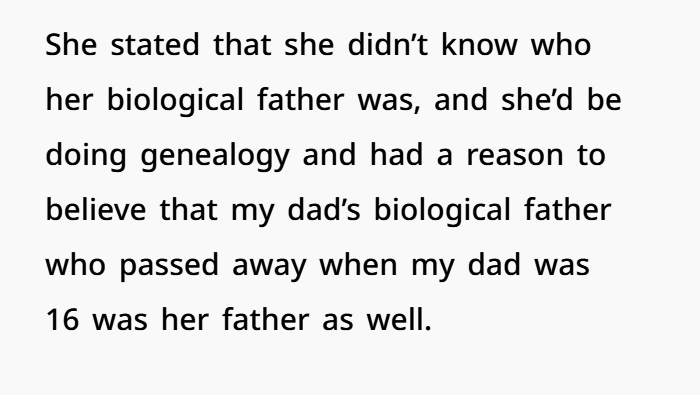
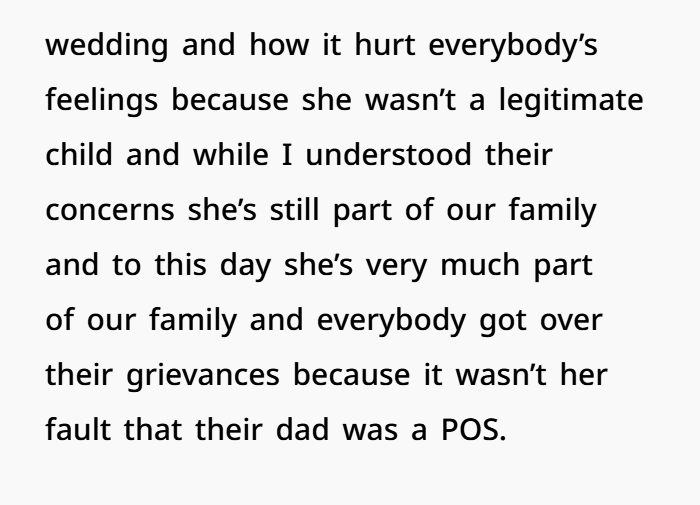
Two weeks before the big day, the family received an unexpected message. A woman had been researching her family history and believed she could be the daughter of the bride’s paternal grandfather. After checking the details, the family learned that she was actually the bride’s father’s half-sister. She wanted to meet the relatives she had recently discovered. The bride’s parents asked if she could join the wedding, and the bride had no problem welcoming her into the family celebration.
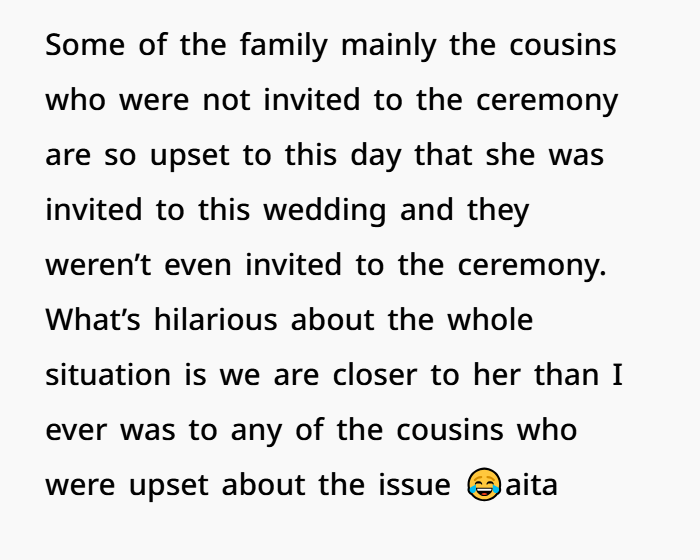
The new aunt arrived with her family and soon became part of the wedding preparations. She helped where she could, attended the private ceremony, and returned for the reception. Unfortunately, some paternal relatives did not agree with the decision. They felt that it was unfair to invite someone who had only recently been discovered while leaving certain cousins out of the ceremony. They also questioned the new aunt’s place in the family. Their reaction created tension during what was supposed to be a happy family occasion.
Years later, the bride says that some cousins still hold on to their disappointment. However, she has developed a strong bond with her aunt and considers her an important part of her life. She feels that her wedding guest list was a personal decision and that she had every right to welcome someone she wanted there. The experience shows that family relationships are not always based on how long people have known each other. Sometimes, shared understanding, kindness, and time together create stronger connections than family history alone.
Family Acceptance and Wedding Etiquette: Who Should Be on the Wedding Guest List?
Wedding planning can be exciting, but deciding who should be invited is not always easy.
Every family has different traditions, expectations, and opinions about wedding invitations. Sometimes, even a small guest list decision can create a disagreement that lasts for years.
That is what happened in this story.
A bride discovered that her father had a half-sister he had never known about. When the family learned about this unexpected relationship, the bride welcomed the woman and included her in the wedding celebration.
Some cousins were unhappy because the couple had originally planned a small ceremony for close family and friends.
This situation brings up an interesting question: Should family connections be based on biology, personal relationships, or the time people have spent together?
Why Biological Family Connections Can Be Surprising
Family history is not always as simple as it seems.
Sometimes, people discover relatives they never knew existed. These discoveries can happen through family conversations, old documents, DNA testing, or genetic genealogy research.
In this case, the newly discovered woman was the bride’s father’s half-sister. They shared one biological parent, but the family had not known about their connection for many years.
Today, consumer DNA testing has made it easier for people to learn more about their family background.
It can help people discover half-siblings, cousins, and other relatives.
The International Society of Genetic Genealogy offers resources for people interested in DNA testing and family history research.
However, sharing DNA does not automatically mean two people will have a close relationship.
A strong family connection develops through communication, trust, time, and shared experiences.
The bride decided to give her newly discovered aunt an opportunity to become part of the family.
Instead of focusing on the circumstances of her birth, she focused on building a new relationship.
Wedding Guest List Rules Are Different for Every Couple
One of the main reasons behind this disagreement was the wedding guest list.
The couple had decided to keep their ceremony small and invite only close family members and friends.
Extended relatives were invited to the reception instead.
This is a common choice in modern wedding planning.
Some couples want a private wedding ceremony, while others prefer a large celebration with everyone they know.
The right choice depends on several things, including:
- Wedding budget and venue costs.
- Number of available seats.
- Personal preferences.
- Family traditions.
- The type of wedding celebration the couple wants.
When the bride invited her newly discovered aunt, some cousins felt that the original invitation rules were no longer being followed.
They may have believed that if one relative could attend the ceremony, other relatives should have received the same invitation.
Their disappointment is understandable.
However, a wedding is a personal event. The couple usually decides how to organize their guest list and which relationships they want to celebrate.
An invitation to the reception does not always include an invitation to the ceremony.
Why Children Should Not Be Judged by Their Parents’ Choices
Another important part of this story involves the circumstances of the aunt’s birth.
Some relatives reportedly questioned whether she should be considered a legitimate member of the family because her parents were not married.
This kind of thinking comes from older social beliefs that treated children differently depending on their parents’ marital status.
But children are not responsible for their parents’ decisions.
The United Nations Convention on the Rights of the Child supports protection against discrimination based on a child’s birth or their parents’ circumstances.
Every person deserves dignity and respect.
The grandfather made his own choices. His daughter should not be blamed for the situation into which she was born.
Her biological connection to the family remains real, regardless of the circumstances surrounding her birth.
The bride’s decision to welcome her aunt showed that family acceptance should be based on respect rather than old social judgments.
How Family Traditions Affect Relationships
Family traditions can be meaningful, especially during important occasions such as weddings, holidays, and family gatherings.
However, problems can arise when relatives expect everyone to follow the same traditions.
For example, some families believe all close relatives should attend the wedding ceremony. Other couples prefer a smaller celebration with only a few people.
Neither approach is automatically wrong.
The difficulty begins when people interpret different wedding choices as personal rejection.
Family systems theory, developed by psychiatrist Murray Bowen, helps explain how emotions and relationships within a family can influence one another.
When one person feels left out, other family members may become involved. A small disagreement can slowly turn into a much larger family issue.
This appears to be part of what happened in this story.
Instead of focusing on the new family connection, the disagreement became about who deserved to attend the wedding ceremony.
Why Some Family Disagreements Last for Years
The wedding happened almost ten years ago, but some cousins are still upset.
This is interesting because the original disagreement was about a single event.
Sometimes, old family conflicts continue because people remember how a situation made them feel.
The cousins may still believe they were treated unfairly. The bride may believe that welcoming her newly discovered aunt was the right thing to do.
Both sides may have different memories and opinions about what happened.
However, the relationships that developed afterward tell another part of the story.
The aunt eventually became closer to the bride than some of the cousins who originally complained.
This is a reminder that family relationships need more than shared ancestry.
People become close by spending time together, supporting one another, and building trust.
A relative you meet later in life can become just as important as someone you have known since childhood.
How to Handle Wedding Guest List Disagreements
Wedding guest list disagreements can be stressful, especially when several relatives have different expectations.
A few simple steps can help couples manage these situations:
Set clear wedding plans early.
Decide whether the ceremony will be small or large before sending invitations.
Communicate politely.
Let relatives know if the wedding ceremony and reception have different guest lists.
Stay within your wedding budget.
Do not invite more people than your venue or budget can comfortably accommodate.
Respect personal relationships.
The couple should have room to decide which people they want to include in their celebration.
Avoid personal criticism.
Disagreements about invitations should not become arguments about someone’s family background or personal history.
These simple wedding etiquette tips can help make planning less stressful.
Final Thoughts on Family Acceptance
This story is about more than a wedding invitation.
It shows how unexpected family discoveries can change relationships and challenge traditional ideas about belonging.
The bride wanted to welcome a woman who had recently become part of her family history. Her cousins felt disappointed because they were not invited to the ceremony.
Both feelings can exist, but the couple still had the right to make their own wedding decisions.
The newly discovered aunt should not have been judged because of her parents’ choices.
Family is not only about how long you have known someone or whether you share the same DNA. It is also about acceptance, kindness, and the relationships you choose to build.
See The Comments Below