Teen Suspects His Older Brother Is Having an Inappropriate Relationship With Their Mother

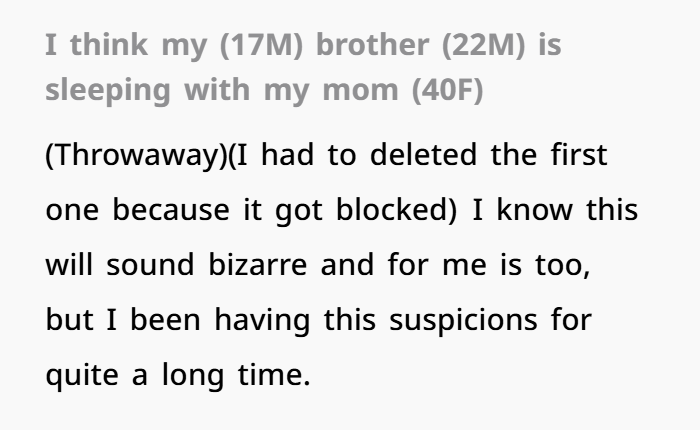
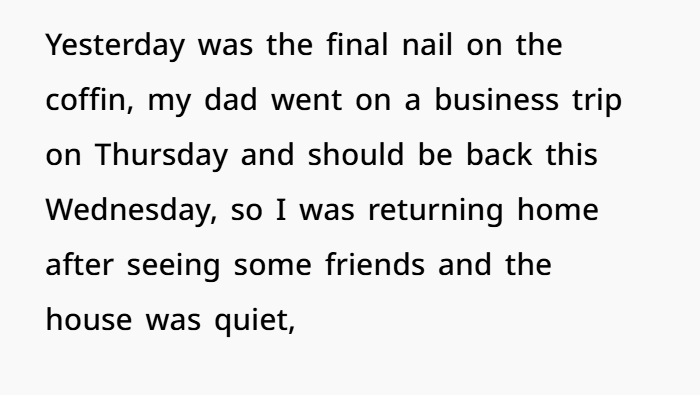
A 17-year-old boy became worried about the close bond between his mother and his 22-year-old brother. He said they often cuddle and spend time alone together, especially when his father travels for work.
His concerns grew after he came home and heard unusual sounds from his parents’ bedroom. A short time later, he saw his mother and brother eating dinner. Both looked surprised to see him. Without clear proof, the teenager is considering family counseling and mental health support before making any accusations.
The teenager has no clear evidence that anything inappropriate happened, but the situation has left him frightened and uncomfortable. He is now unsure whether to tell his father or speak privately with another trusted adult.


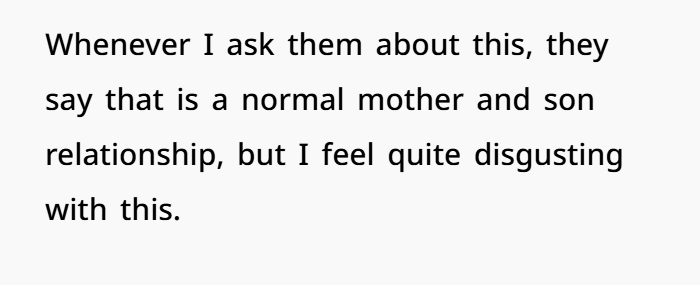
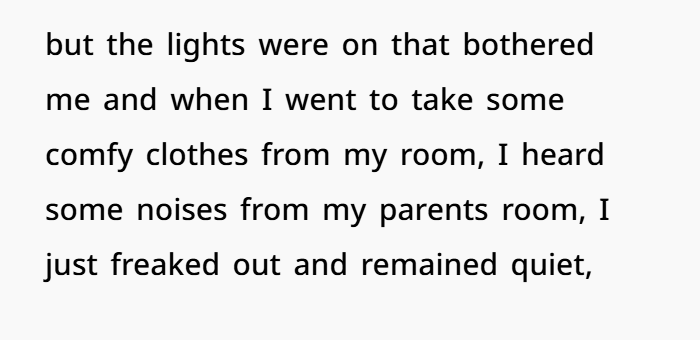



The teenager’s discomfort should not be dismissed, but unusual behavior and unexplained sounds do not prove that a sexual relationship exists. Cuddling, spending time together, or appearing surprised can have innocent explanations. At the same time, repeated behavior that makes a minor feel unsafe or confused deserves careful attention.
In sensitive family situations, there is an important difference between an observation and a conclusion.
The teenager directly observed his mother and brother being physically close. He also heard noises from a bedroom. However, his belief about what those details mean remains an allegation rather than an established fact.
Making an immediate accusation could create a serious family conflict, damage relationships, or place the teenager in an unsafe position. A safer approach would be to record only the facts he personally witnessed without secretly filming anyone, entering private rooms, or trying to collect intimate material.
When Family Boundaries Become Unclear
Healthy families may show affection in different ways, but appropriate boundaries remain important—especially when one family member feels pressured, confused, or unsafe.
The Rape, Abuse & Incest National Network explains that inappropriate family dynamics do not always involve confirmed physical contact. A parent may sometimes rely on a child as a substitute partner or emotional confidant, creating what specialists describe as emotional or covert incest. This does not prove that such a dynamic exists in this family, but it helps explain why certain forms of closeness can feel confusing to other family members.
Physical intimacy between close blood relatives is generally described as incest and may carry serious criminal consequences depending on the jurisdiction. In the United States, for example, Cornell Law School’s Legal Information Institute notes that laws prohibit sexual contact between certain close relatives, although specific definitions and penalties vary. A qualified family law attorney can explain the relevant local laws and reporting requirements.
What Should the Teenager Do?
Because the person raising the concern is only 17, he should not attempt to confront his mother and brother together or investigate them alone. A confrontation could become emotionally intense and might expose him to anger, manipulation, or retaliation.
Instead, he could speak privately with a safe and dependable adult, such as:
- His father, if he believes his father will remain calm and protect him
- A trusted relative who is not closely involved in the conflict
- A school counselor, teacher, doctor, or licensed therapist
- A child-protection professional or confidential support service
Childhelp advises teenagers dealing with possible abuse or troubling family behavior to contact a safe adult, such as a relative, teacher, or coach. Its National Child Abuse Hotline also offers confidential guidance and can help someone understand available reporting and safety options.
If the teenager chooses to tell his father, he should describe only what he personally observed. For example, he could say that he heard noises from the bedroom and felt uncomfortable about the repeated physical closeness. He should avoid presenting his suspicion as a confirmed fact.
The Importance of a Personal Safety Plan
Before discussing the matter, the teenager should consider where he could go if the conversation caused an argument. A trusted relative’s home, a neighbor’s house, or another safe location could provide temporary protection.
He should also keep access to:
- A working phone
- Emergency contact numbers
- Identification and essential medication
- A trusted adult who knows about the concern
- Professional mental health counseling or crisis support
Organizations specializing in child welfare use structured safety and risk assessments to examine possible threats and determine whether a young person is safe. This is one reason trained professionals may be better equipped to evaluate the situation than strangers commenting online.
If anyone is in immediate danger, emergency services or local child protection services should be contacted without delay.
Hurtful Online Reactions Made the Situation Worse
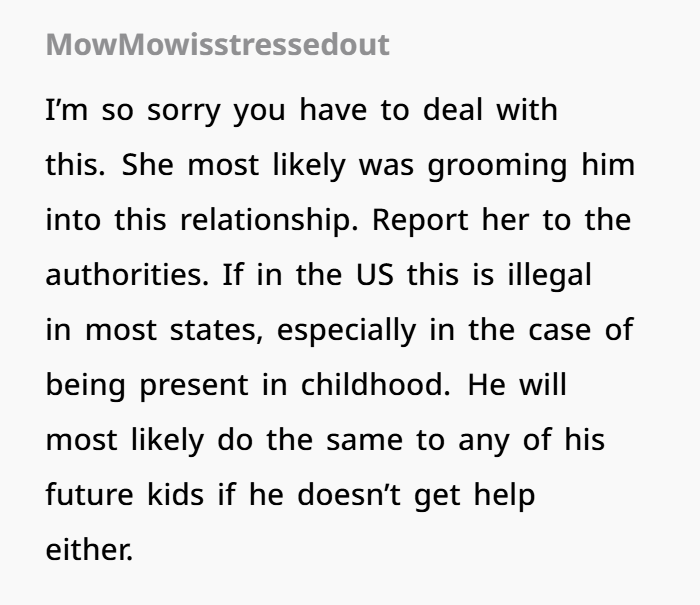
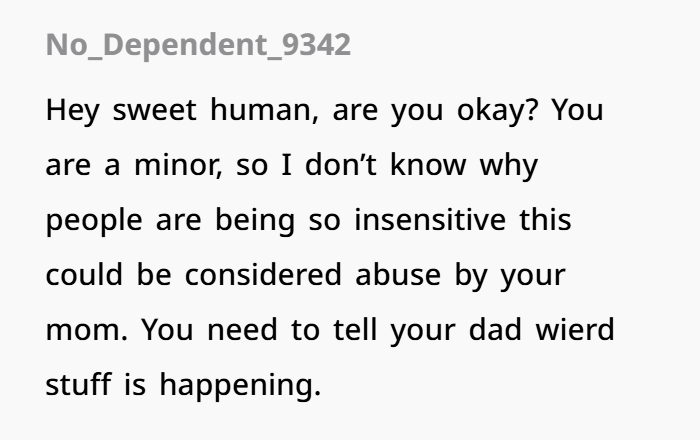
After sharing the story online, the teenager reportedly received jokes, insults, and dismissive comments. Those responses left him feeling humiliated rather than supported.
Even when an allegation sounds unusual, mocking a frightened minor is not helpful. The suspicion may ultimately be mistaken, but his fear and confusion are still real. A responsible response should encourage safety, factual communication, professional guidance, and appropriate family counseling.
The Childhelp crisis service connects concerned individuals with trained counselors who can provide emotional support, safety planning, and referrals. This type of confidential professional support may be more constructive than relying on anonymous online reactions.
See the comments to know what people said





The teenager does not currently have enough evidence to state that his mother and brother are involved in a sexual relationship. However, he also should not ignore behavior that makes him feel unsafe inside his own home.
The most responsible next step would be to speak privately with a trusted adult or licensed counselor, report only the facts he personally observed, and avoid conducting his own investigation. Professional family therapy, confidential counseling, or appropriate legal advice may help determine whether the situation involves misunderstood affection, unhealthy emotional boundaries, or a more serious family safety issue.