My Daughter-in-Law Says I Favor My Daughter’s Kids—Am I Wrong for Helping My Daughter?


This story follows a mother who is facing a challenge with her two adult children. She loves both of them and wants to support their families, but she discovers that her actions may have made one child feel less important.
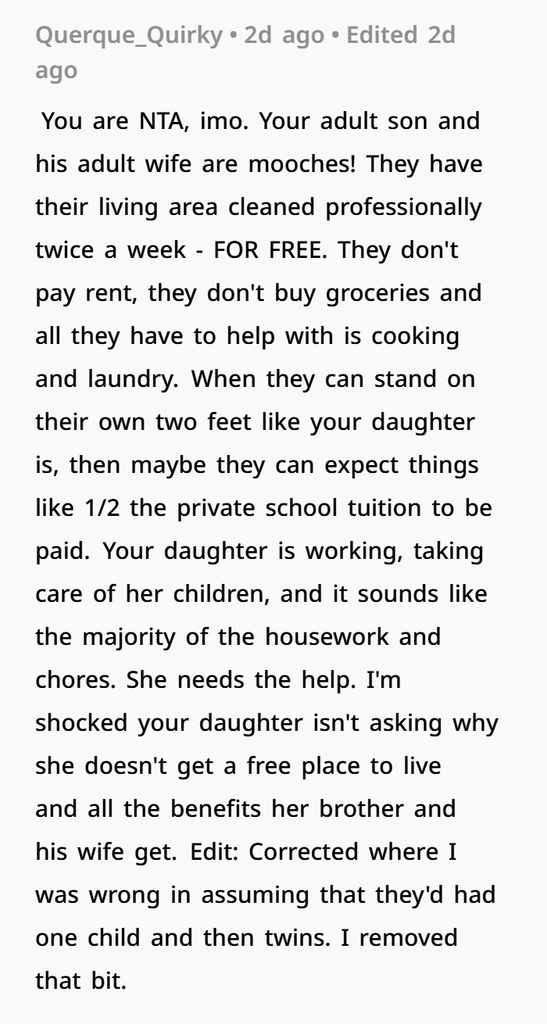
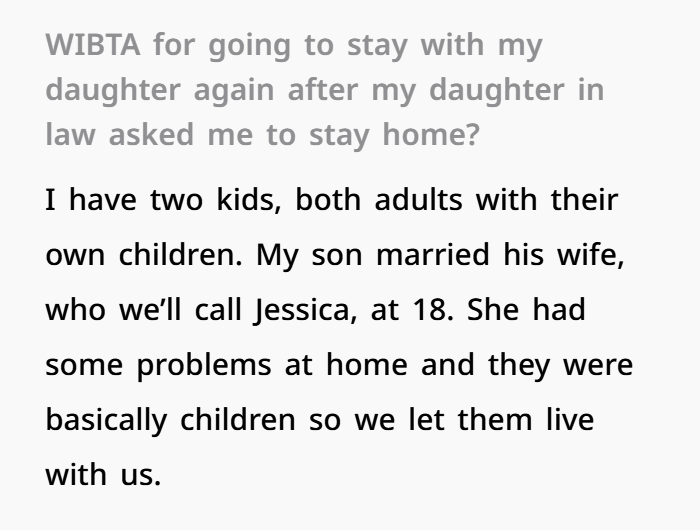
Her son and his wife, Jessica, moved into the mother’s home when they were young and needed support. Since then, they have built a comfortable living situation together. They have enough room, share household duties, and the mother feels positive about helping them.
At the same time, her daughter has also needed extra help. The daughter has two children, and the mother regularly visits to provide childcare support and help with family responsibilities. Because her daughter needed more hands-on help, the mother spent a lot of time there.
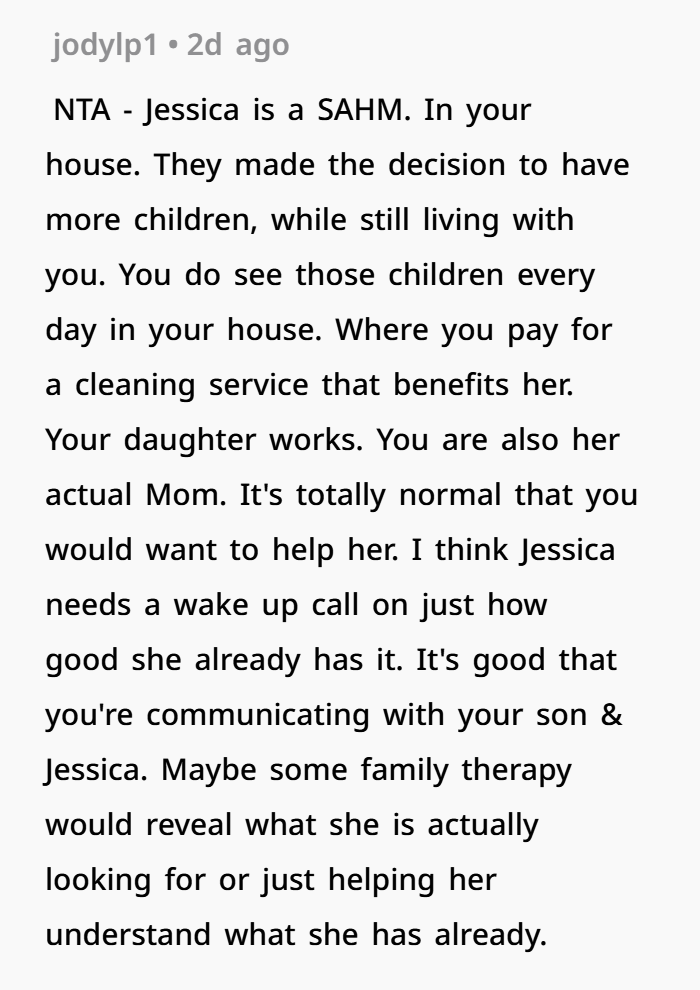
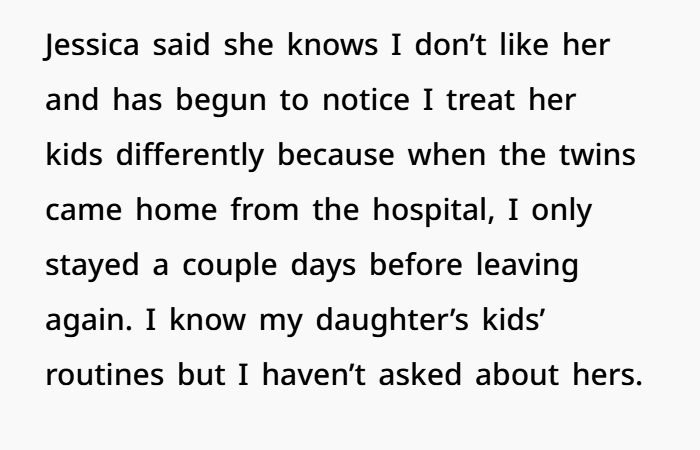
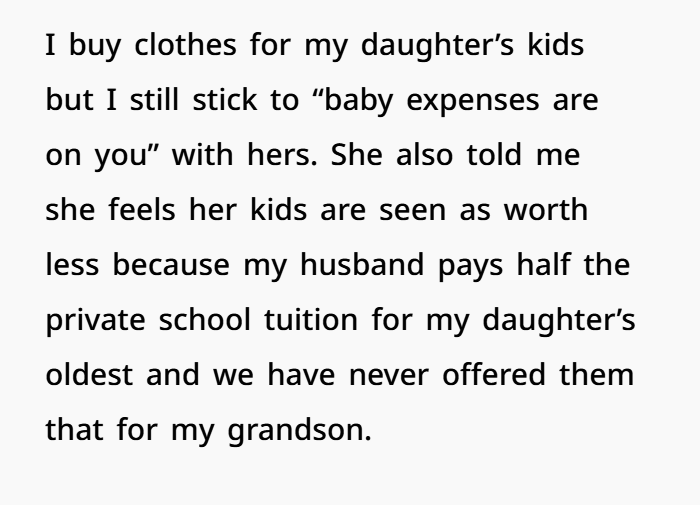
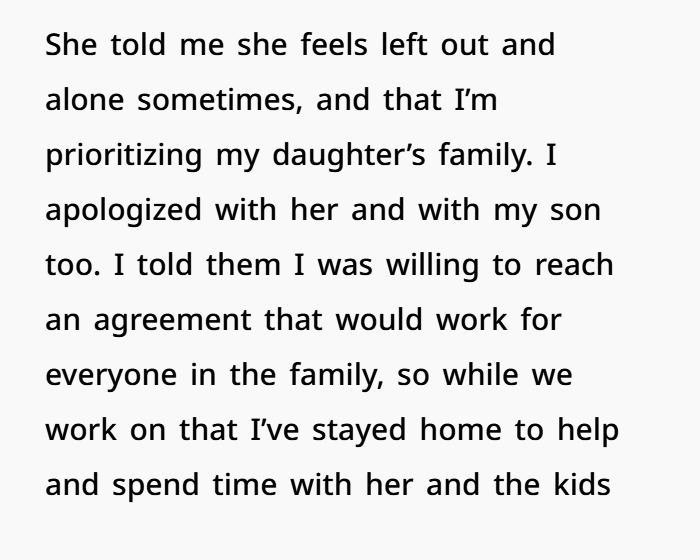
Jessica eventually shared that she felt hurt because she believed the support was not equal. She noticed differences in visits, gifts, and financial help between the two families. After hearing Jessica’s feelings, the mother realized her actions may have looked like favoritism. She apologized and is now trying to find a healthy way to support both of her children and grandchildren.



Family Support, Fairness, and Feeling Valued
Family relationships can become complicated when people have different ideas about what feels fair.
Many parents try to support their children in different ways depending on their needs. However, family members may not always see those reasons. Sometimes, what feels fair to one person can feel unfair to another.
This situation shows an important difference between equal treatment and fair treatment.
Treating everyone exactly the same is not always possible. Sometimes one family member needs more help because of their situation. But when support looks unequal from the outside, it can create hurt feelings and misunderstandings.
Why Family Members See Things Differently
From OP’s point of view, helping her daughter makes sense.
Her daughter has work, a household, and children who need support. OP spends time helping because she feels there is a real need.
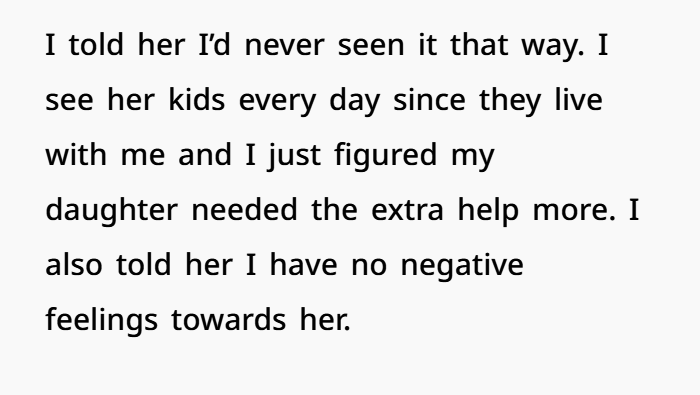
At the same time, OP lives with her son and Jessica. Because they share a home, OP may feel that she naturally spends more time with them every day.
To OP, this is not favoritism. She believes she is simply helping where she is needed most.
However, Jessica may see the situation differently.
She may notice that OP:
- Visits her daughter often
- Helps with her daughter’s children
- Provides financial support to her daughter’s family
- Seems more involved with that side of the family
Even if OP has good reasons, Jessica may still feel hurt or overlooked.
Why Perceived Favoritism Can Hurt
Family members often judge fairness by what they see.
They do not always know the full story behind someone’s choices.
In families, people may compare:
- How much time they receive
- How much attention others receive
- How much financial support is given
- How involved grandparents are with grandchildren
This can become especially sensitive when grandchildren are involved.
A grandparent’s time, attention, and support can feel like a sign of how important each family branch is.
Sometimes the feeling of being treated differently can hurt more than the actual difference.
Living Together Does Not Always Create Closeness
OP may believe that living with Jessica and the twins means they already receive enough attention.
But being physically close does not always create an emotional connection.
Family relationships still need effort.
A grandparent can live in the same home and still need to make an effort to build a strong bond.
Simple actions can make a big difference, such as:
- Asking about the children’s daily routines
- Remembering important milestones
- Spending quality time together
- Showing interest in their lives
- Supporting parents emotionally
Small moments can help family members feel appreciated.
Money and Family Relationships
Financial support can be one of the most difficult topics in families.
OP and her husband have the right to decide how they use their money.
Helping one adult child does not automatically mean loving another child less.
However, money can create tension when family members do not understand the reasons behind different choices.
To avoid misunderstandings, families can create clear expectations.
Some families choose to:
- Help only during emergencies
- Give similar support to all grandchildren
- Explain why certain financial help is being provided
- Set clear boundaries around money
Open communication can prevent many conflicts.
Different Expectations Can Create Hurt Feelings
A bigger issue in this situation may be that OP and Jessica expected different things from their relationship.
Jessica may have hoped that living together would create a close mother-and-daughter relationship.
OP may have viewed the living arrangement in a more practical way — helping her son and his wife during an important stage of life.
Neither person may have had bad intentions.
The problem is that these expectations were never clearly discussed.
When people have different hopes for a relationship, misunderstandings can easily happen.
Finding a Better Balance
The solution does not have to be stopping all support for OP’s daughter.
Giving up one relationship to fix another may create more problems.
Instead, OP can focus on making Jessica and the twins feel valued.
Helpful steps may include:
- Spending intentional time with Jessica and the twins
- Asking about their needs and feelings
- Celebrating special moments
- Creating clear financial boundaries
- Showing appreciation for Jessica as a person, not only as her son’s wife
Sometimes people do not need more help. They need to feel seen and important.
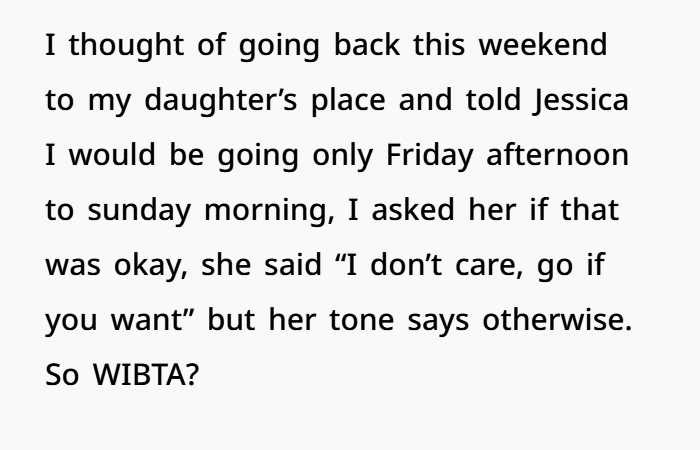
The Weekend Visit Is Not the Real Issue
The question of whether OP visits her daughter for the weekend is only one small part of a bigger issue.
The real concern is whether Jessica feels that OP cares about their relationship.
If OP leaves without creating any changes, Jessica may feel that the conversation did not matter.
But if OP continues supporting her daughter while also making an effort with Jessica, both relationships can improve.
Building Strong Adult Family Relationships
Adult family relationships require ongoing care and communication.
Good intentions are important, but actions also send messages.
OP does not have to choose between her daughter and her daughter-in-law.
She can support different family members in different ways while making sure everyone feels respected and valued.
A healthy family is not built by treating everyone exactly the same.
It is built by showing love, understanding, fairness, and respect for each person’s needs.
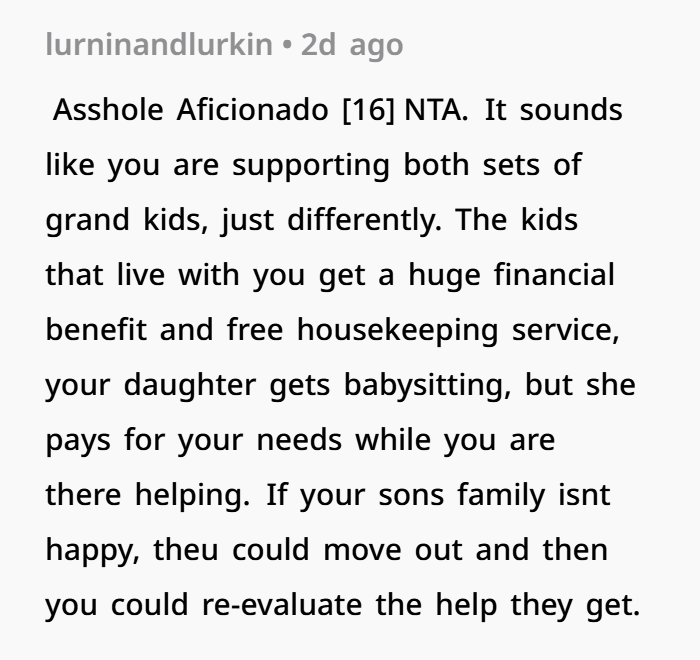
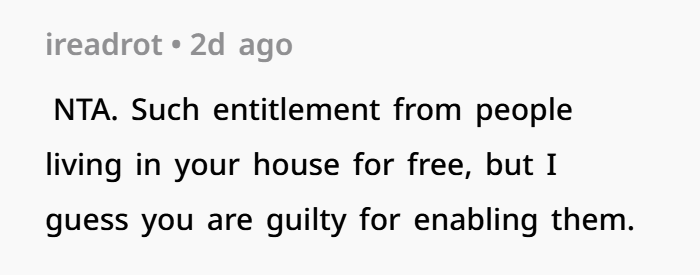
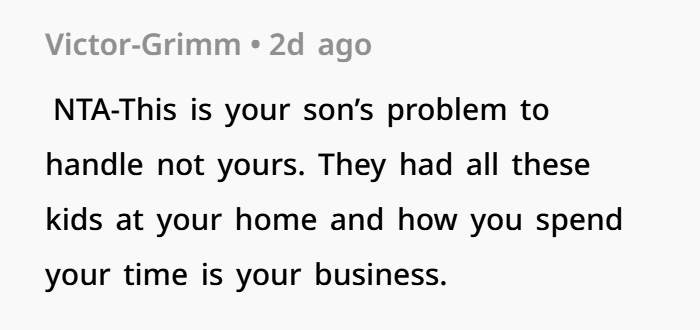
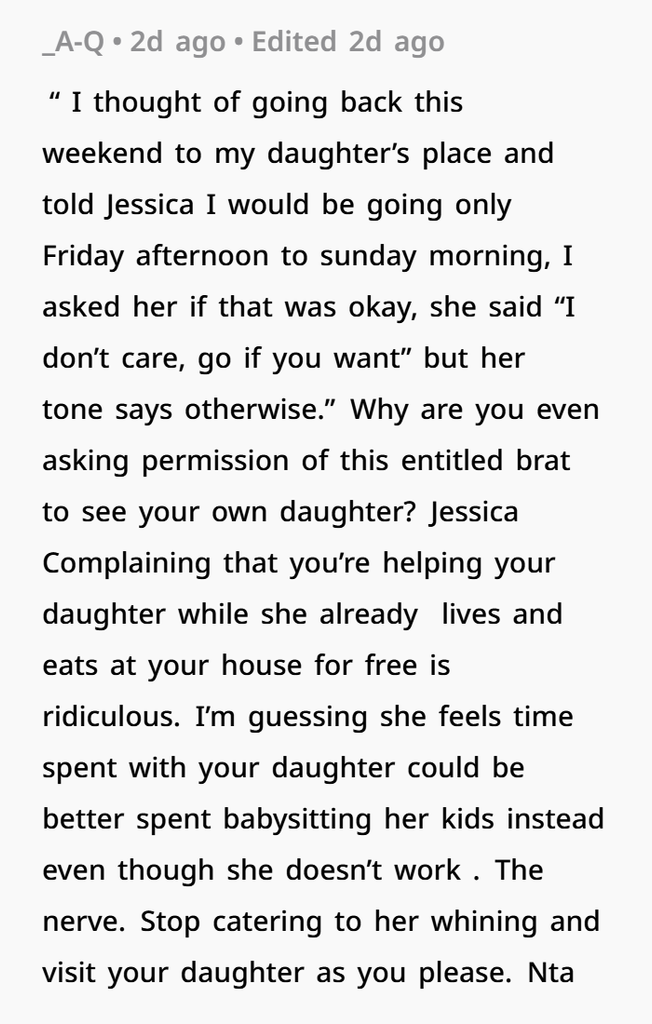
Comments From The Community