Woman Got Promoted After Getting Close to Her Boss


A young marketing professional faced a difficult time early in her career. She had student debt, money problems, and struggled to manage her expenses. At first, she loved her job and believed that hard work would help her build a successful career.
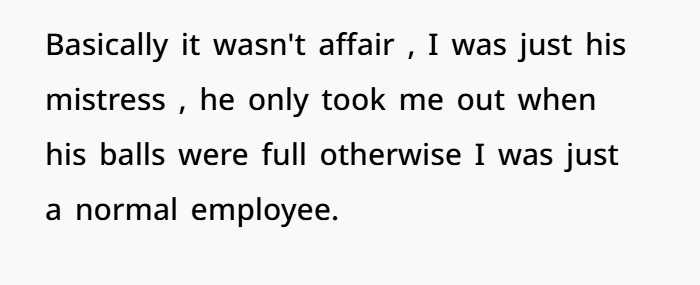
Things started to change when her senior manager began giving her special attention. He offered expensive gifts, flexible work hours, and extra support that other employees did not receive.
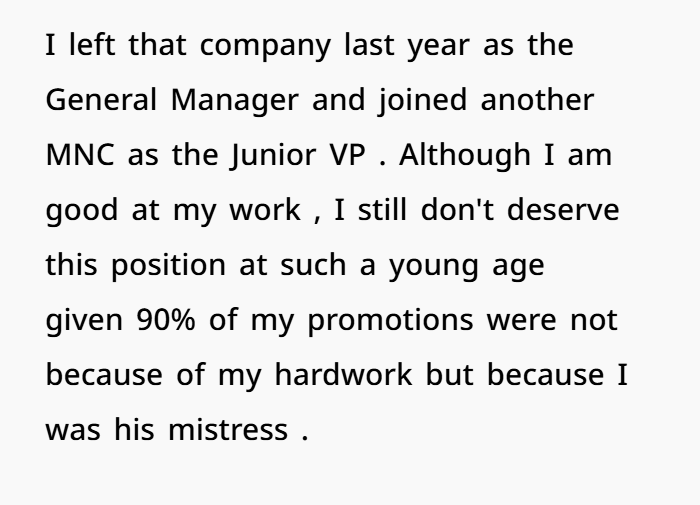
Over time, their personal relationship became connected with her career growth. She later moved into higher positions, becoming a General Manager and then joining another multinational company as a Junior Vice President.
Even though she believed she had the skills to do the job, she still questioned if her career success came from her talent and hard work or from the relationship she had with someone who had power over her career.
Her story raises difficult questions about workplace ethics, favoritism, corporate culture, and the hidden impact of power dynamics between employees and managers.

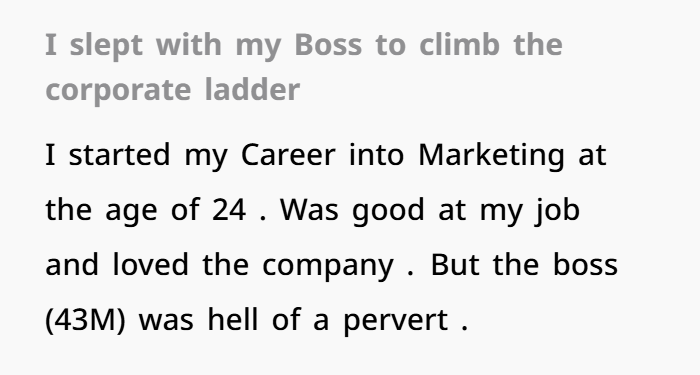

Building a successful career is usually linked with skills, experience, networking, and dedication. But in some workplaces, personal relationships with powerful people can create opportunities that are not available to everyone.
This story follows a young marketing employee who entered the corporate world at the age of 24. She was talented, enjoyed her work, and felt connected to the company where she started her career.
However, behind the professional environment was a senior manager who had a reputation for making female employees uncomfortable. His behavior created an uncomfortable workplace atmosphere, especially for women around him.
Workplace harassment and inappropriate behavior from people in positions of authority remain serious concerns in many industries. According to the U.S. Equal Employment Opportunity Commission (EEOC), sexual harassment can include unwanted sexual advances, requests for sexual favors, and other verbal or physical conduct of a sexual nature.
Financial Pressure Created a Vulnerable Situation
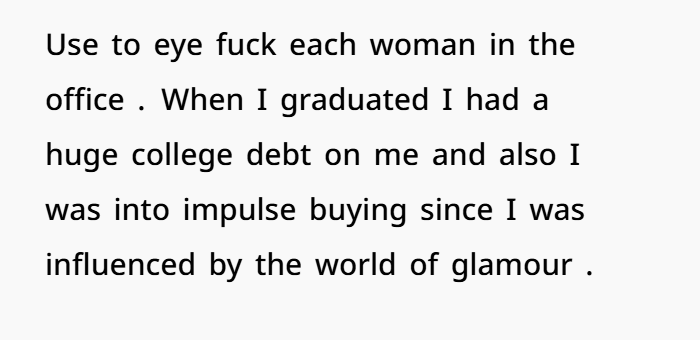
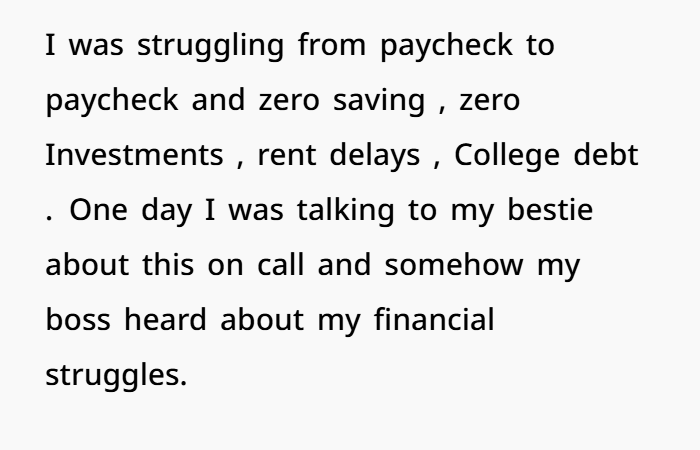
After graduating, the employee was dealing with heavy financial stress. Student loan payments, rent problems, and poor saving habits left her living paycheck to paycheck.
At the same time, she was influenced by a glamorous lifestyle that encouraged spending beyond her means. Without savings or investments, she felt trapped and worried about her financial future.
Financial stress can affect career decisions because people under pressure may look for quick solutions. This is why topics like salary growth, career advancement, and financial planning have become major concerns for young professionals.
Many employees now focus on improving financial security through better money management, investment planning, and career development rather than depending only on salary increases.
When the Boss Started Giving Special Treatment
The situation changed after the boss learned about her financial struggles. Slowly, he began inviting her into his office more often and trying to build a personal connection.
At first, she ignored his behavior. But later, he gave her an expensive necklace despite her refusal. After that came more gifts, birthday celebrations, special attention, and flexible working arrangements that were not offered to other employees.
This type of favoritism can create problems inside organizations. When managers provide special benefits to one employee because of a personal relationship, it can damage workplace trust and create concerns about fairness.
Research on workplace relationships shows that relationships between supervisors and employees can become complicated when professional decisions are influenced by personal feelings. Harvard Business Review has published discussions about workplace power dynamics, leadership behavior, and ethical management practices.
A Relationship Between Power and Career Advancement
Eventually, the employee decided to respond to the attention she was receiving. What started as flirting turned into a personal relationship with her boss.
The relationship continued for nearly two years. During that time, she received promotions, salary increases, gifts, and workplace benefits.
However, she later described feeling uncomfortable with the situation. She believed that although she was capable and worked hard, many of her career opportunities came because she was connected to someone with power inside the company.
This brings up one of the biggest debates in corporate environments: Can someone truly separate career success from personal relationships when one person controls the other’s professional future?
The Hidden Risks of Office Relationships
Romantic relationships at work are not always forbidden, but they can create serious risks, especially when there is a direct reporting relationship between two people.
A relationship between a manager and an employee can create concerns about:
- Favoritism in promotions
- Unequal treatment among coworkers
- Conflicts of interest
- Workplace reputation issues
- Emotional stress after the relationship ends
Many companies now create workplace relationship policies to prevent situations where personal relationships affect hiring, promotions, or performance reviews.
Organizations often encourage employees to report conflicts of interest and maintain professional boundaries. The Society for Human Resource Management (SHRM) regularly covers workplace policies related to employee relationships, ethics, and human resource management.
Success, Guilt, and the Question of Merit
After leaving the company, the woman moved into a higher leadership role at another multinational company. She became a General Manager before taking a Junior Vice President position.
She believes she has the ability to perform the job, but she struggles with the feeling that she did not earn the position completely through her own effort.
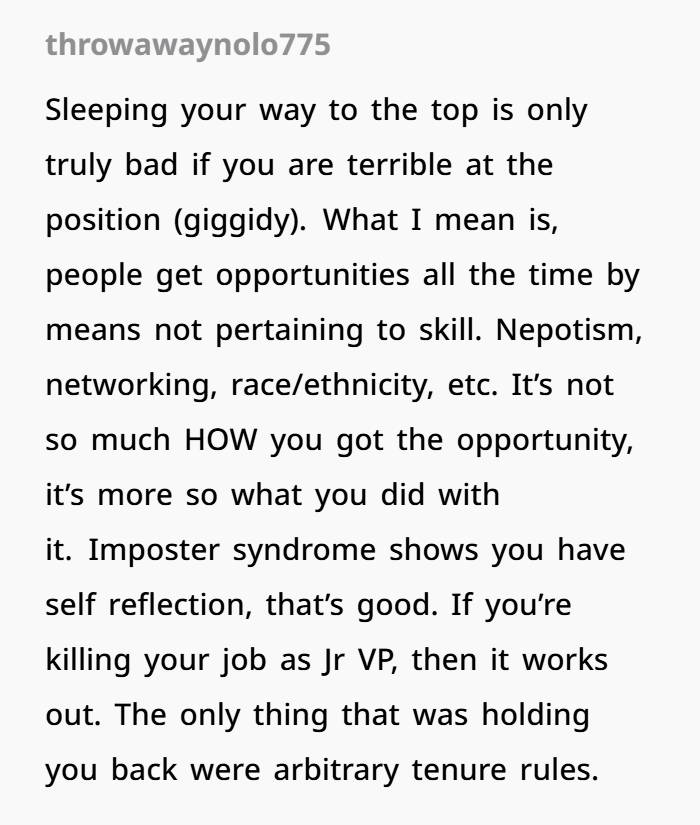
This internal conflict is common among people who feel their success came through unexpected advantages, connections, or opportunities. Career growth is often influenced by many factors, including skills, relationships, timing, and workplace politics.
However, professional success also requires maintaining performance after reaching a position. A promotion may open a door, but long-term success depends on leadership ability, decision-making, and results.
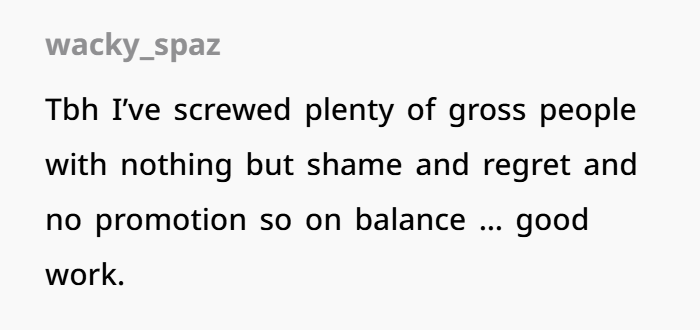
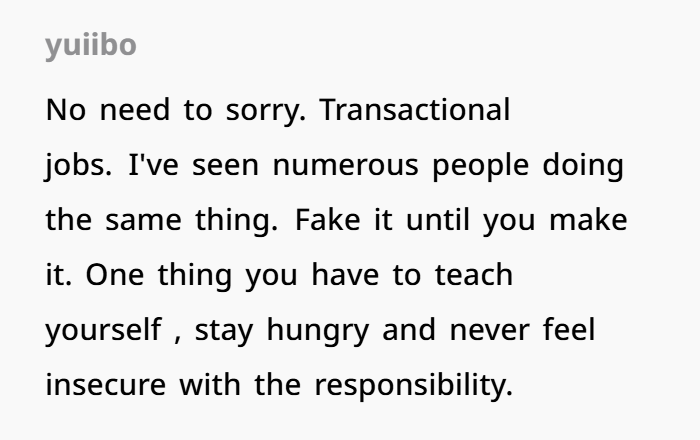
See the comments to know what people said




This story is not only about one workplace relationship. It highlights larger issues surrounding corporate culture, workplace ethics, power imbalance, and career advancement.
It shows how financial struggles and ambition can sometimes push people into difficult choices. It also raises important questions about fairness in the workplace and how companies can create environments where promotions are based on talent, performance, and equal opportunities.
Career growth should ideally come from skills, experience, and hard work. When personal relationships become connected to professional success, the consequences can follow a person long after they leave the workplace.