My Son Says He Can’t Respect Me Anymore Because I’m Dating Someone His Age

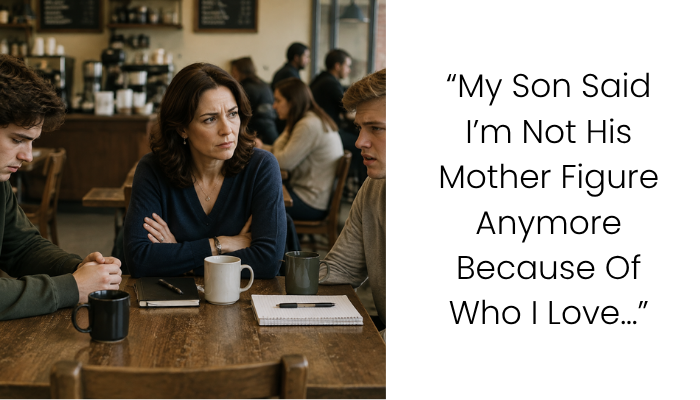
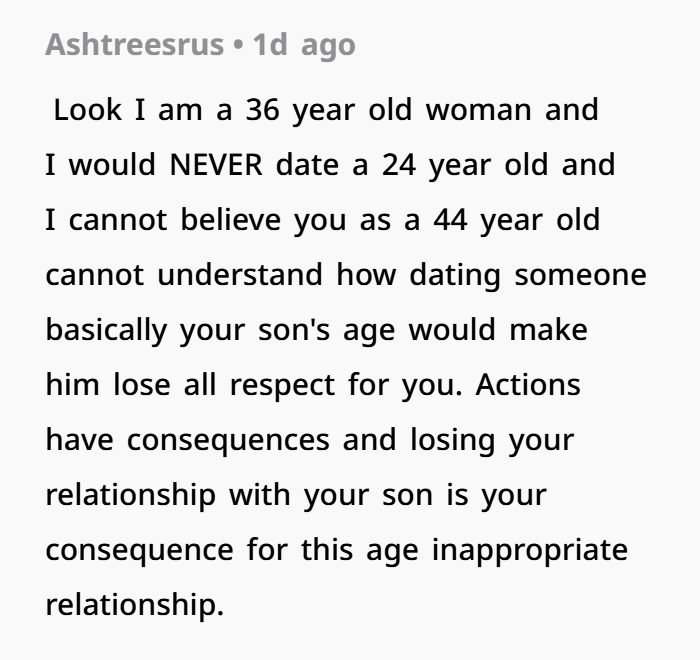
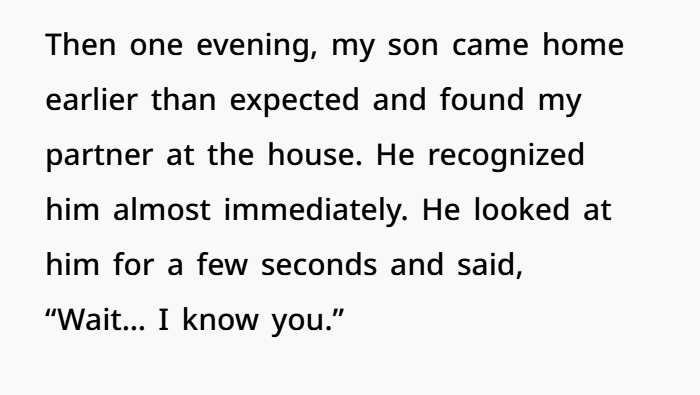
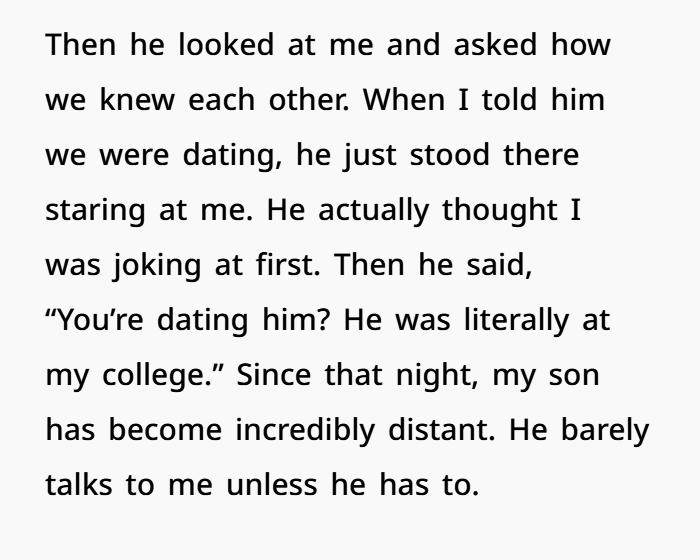
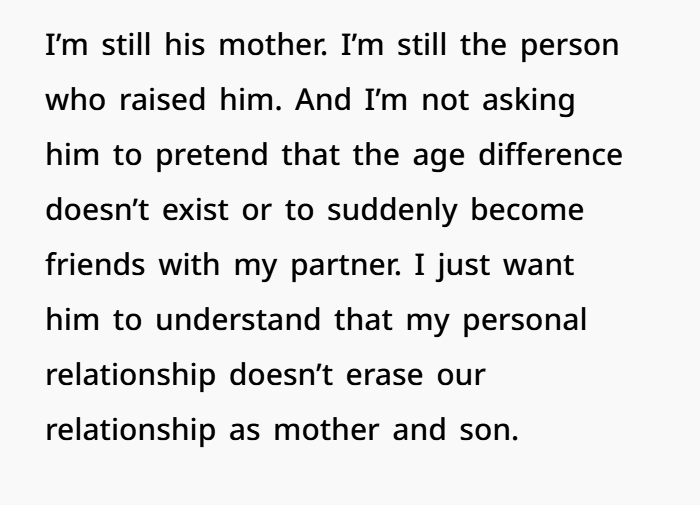
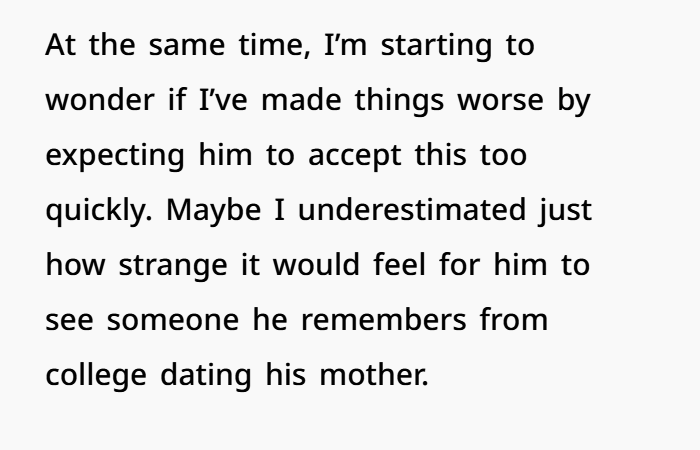
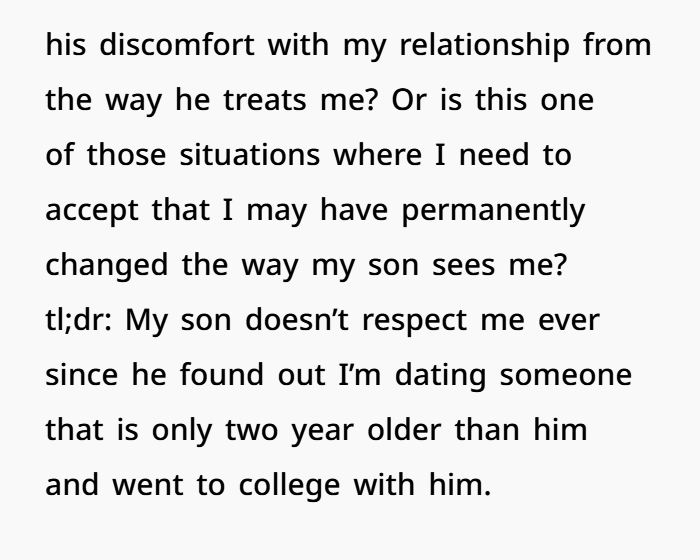
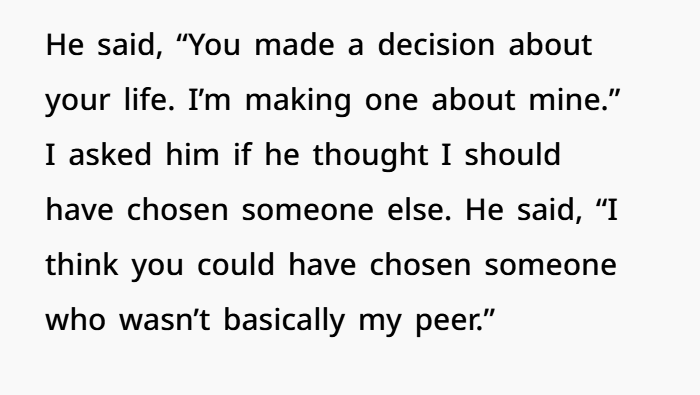
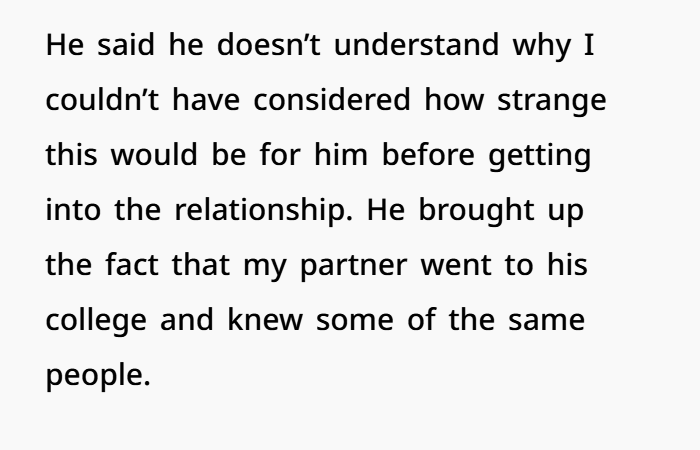
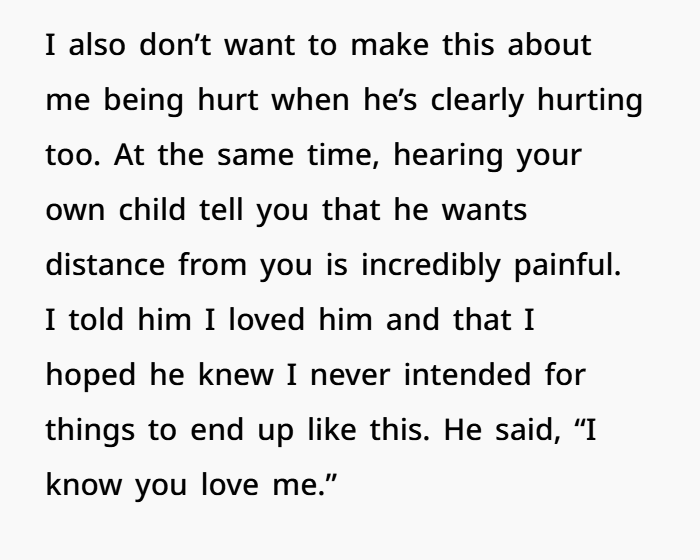
A 44-year-old woman shared a story about a challenging moment with her adult son. She started a romantic relationship with a man who was just two years older than her son. Since they attended the same college and had some similar connections, her son found the situation difficult to understand.
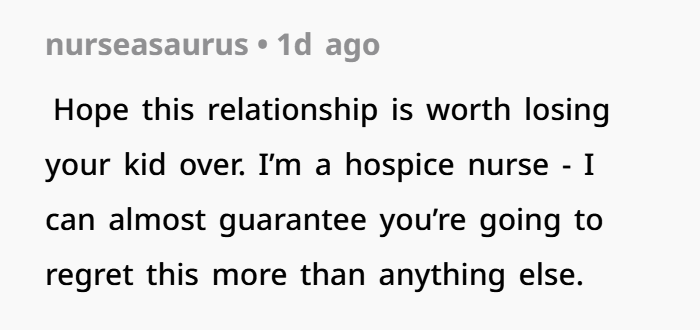
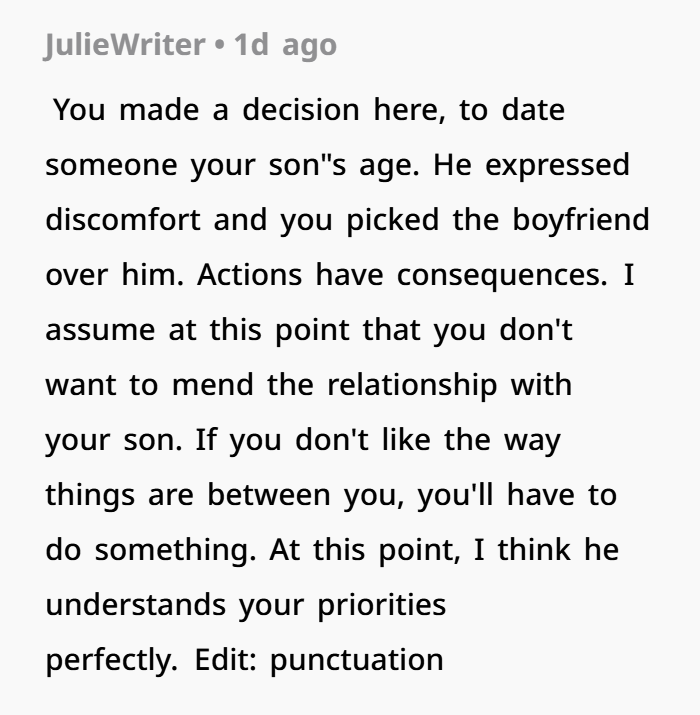
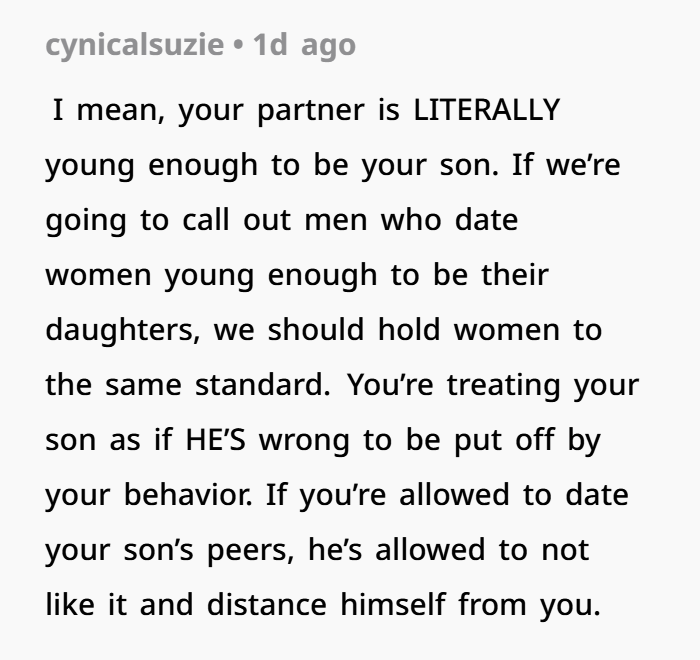
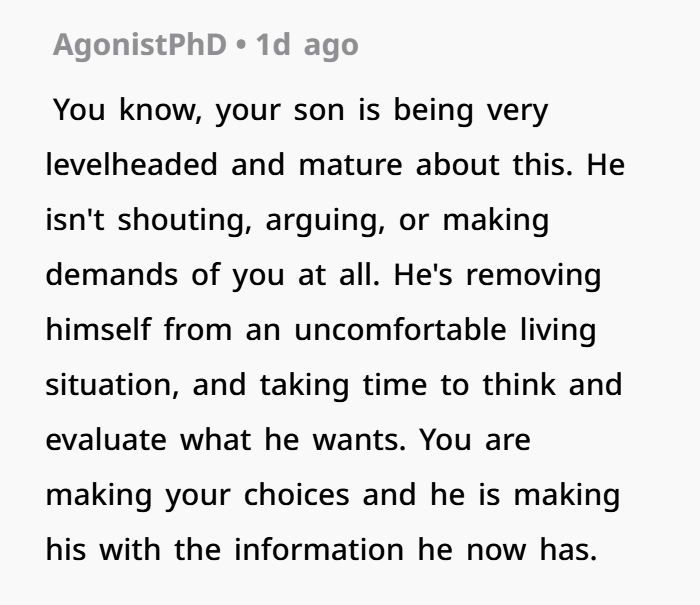
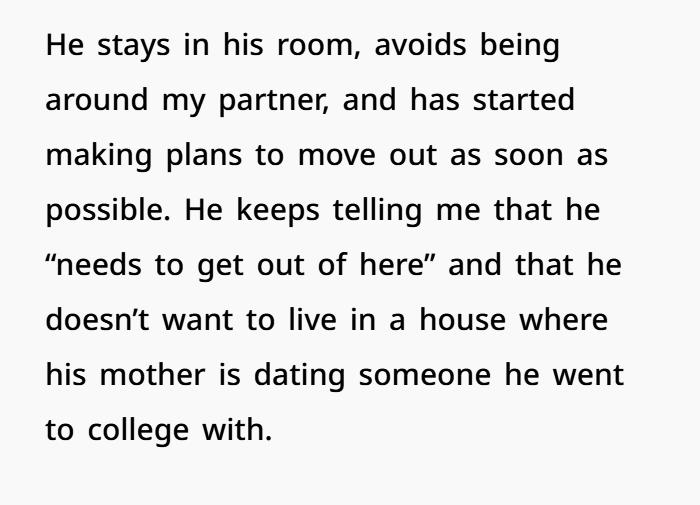
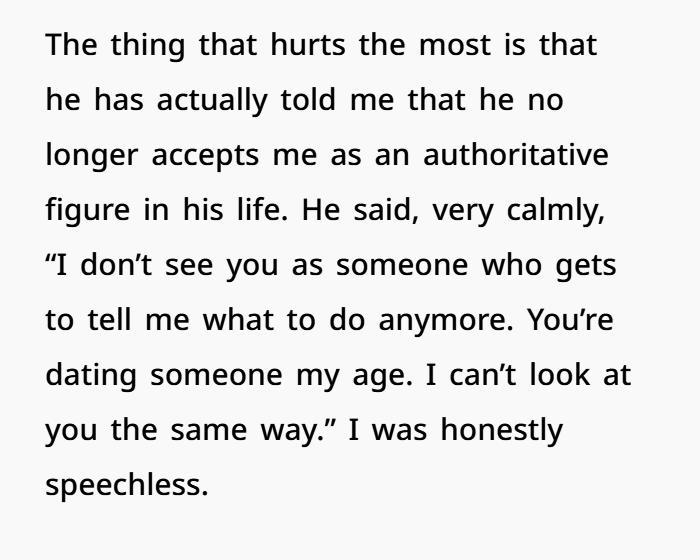
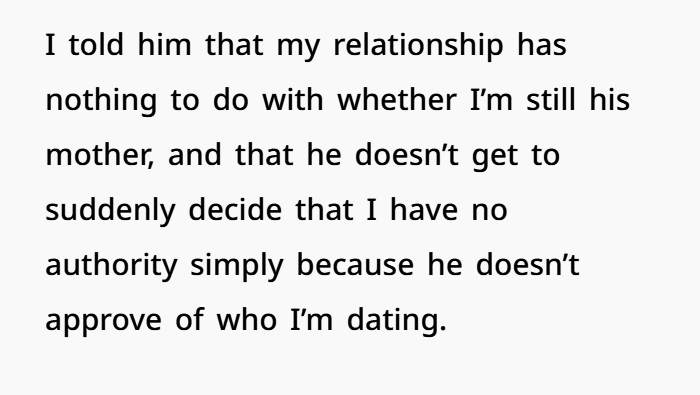
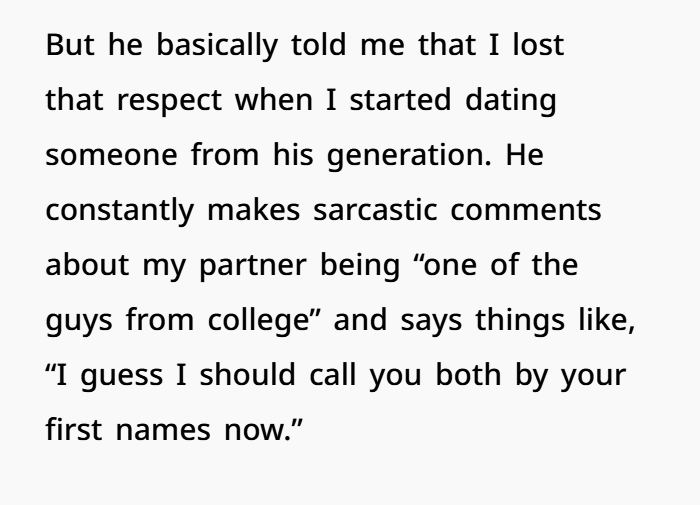
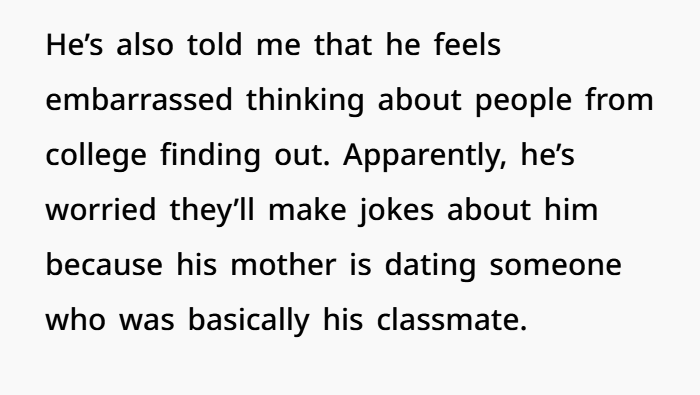
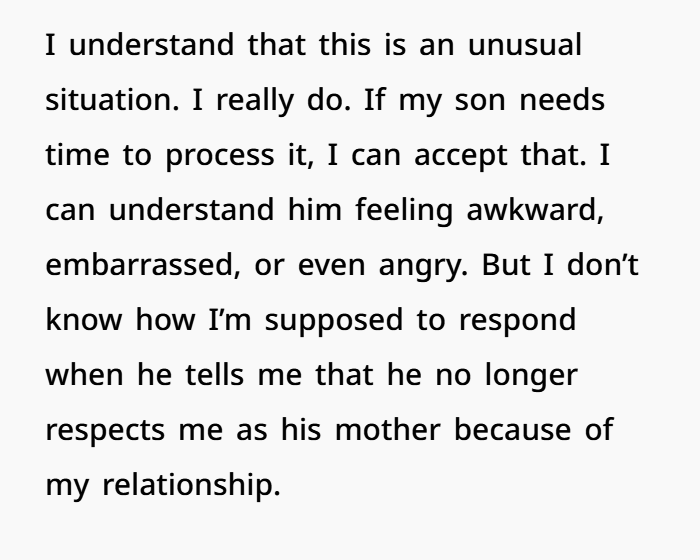
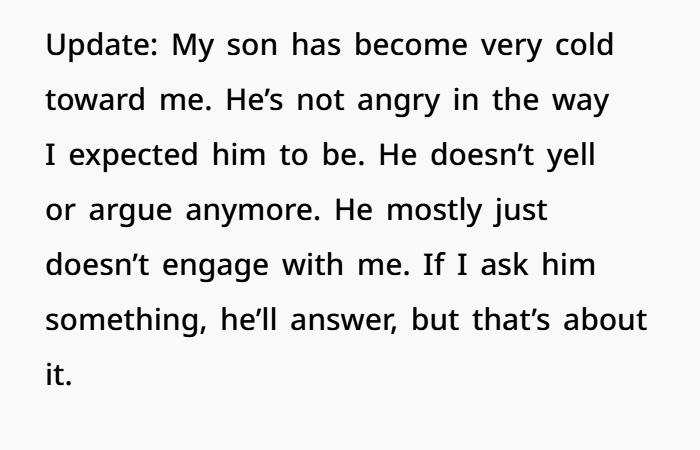
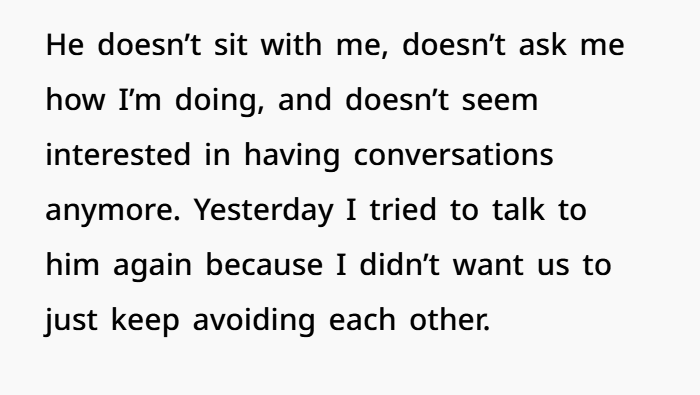
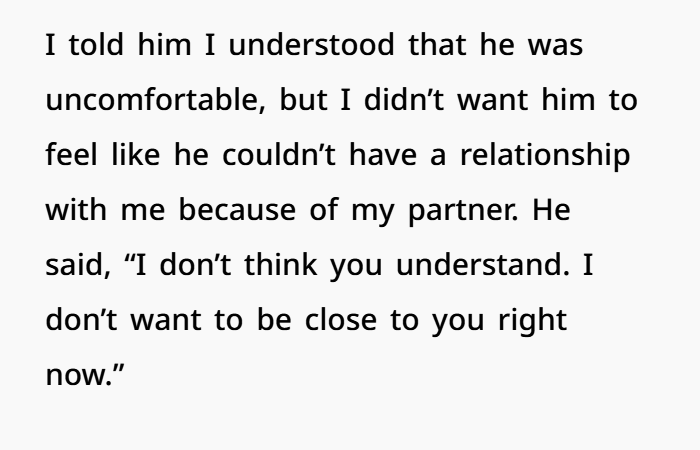
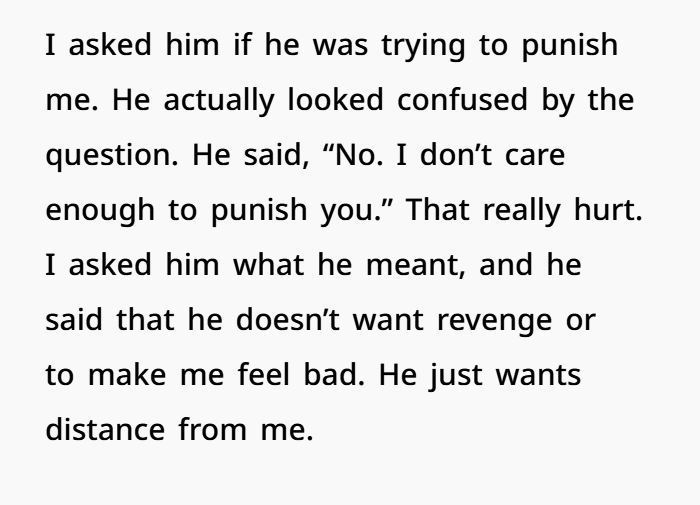
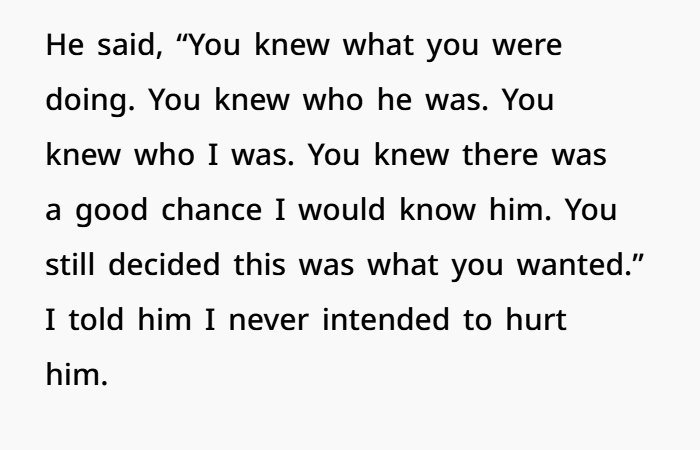
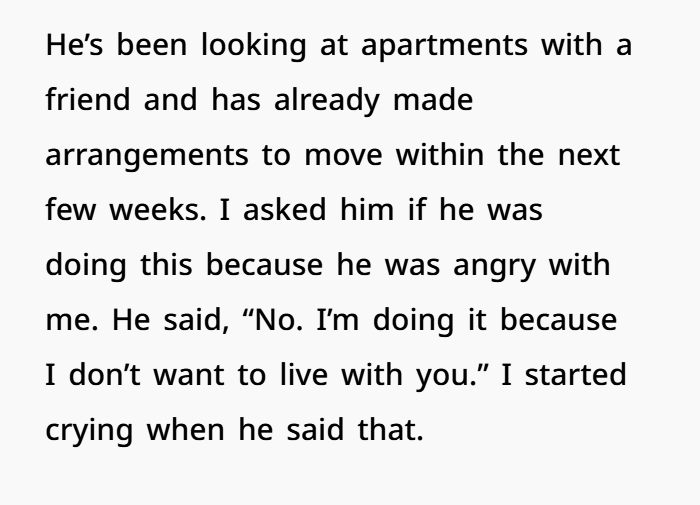
After learning about the relationship, her son became upset and distant. He said he no longer saw his mother in the same way and felt uncomfortable with the situation. He believed the relationship affected their family relationship and changed how he viewed her.
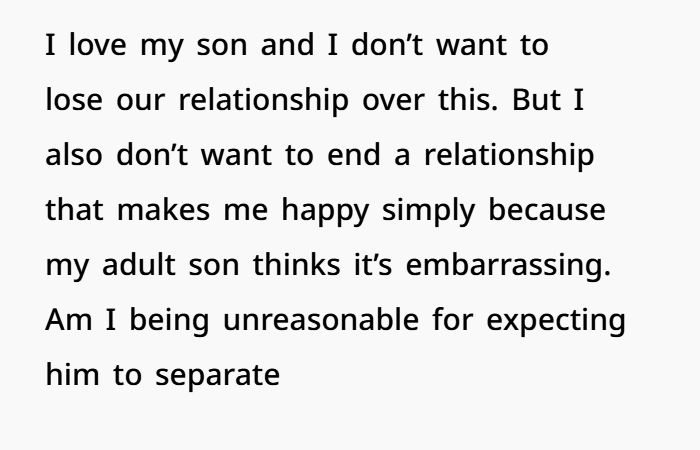
The mother says she cares about her son and understands why he has strong feelings. At the same time, she believes that parents can have their own personal lives and relationships while still being supportive and present for their children.
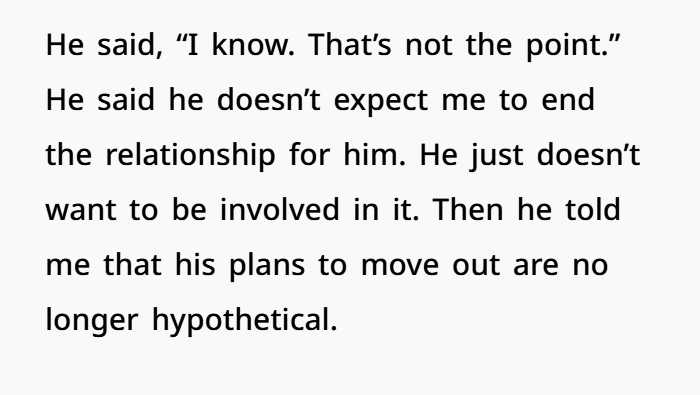
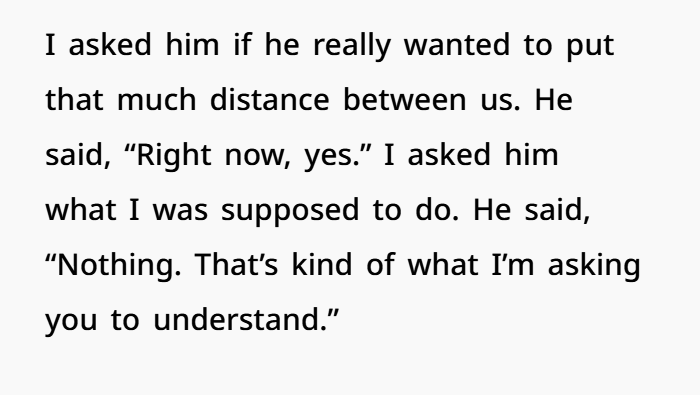
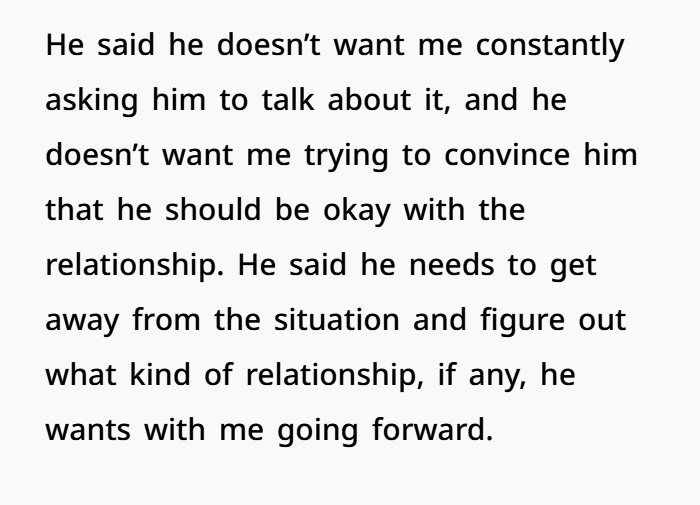
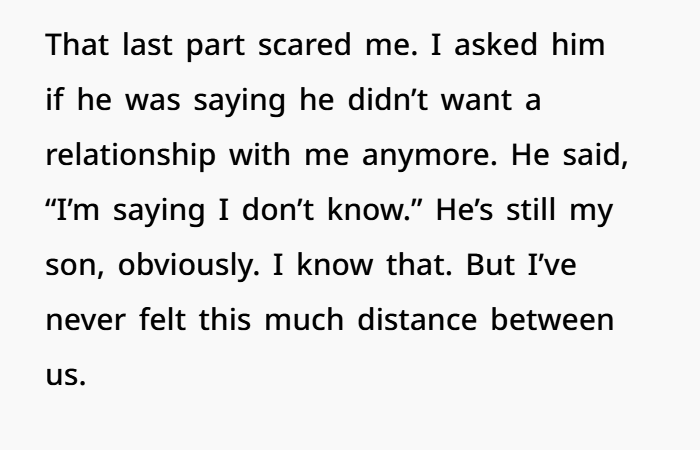
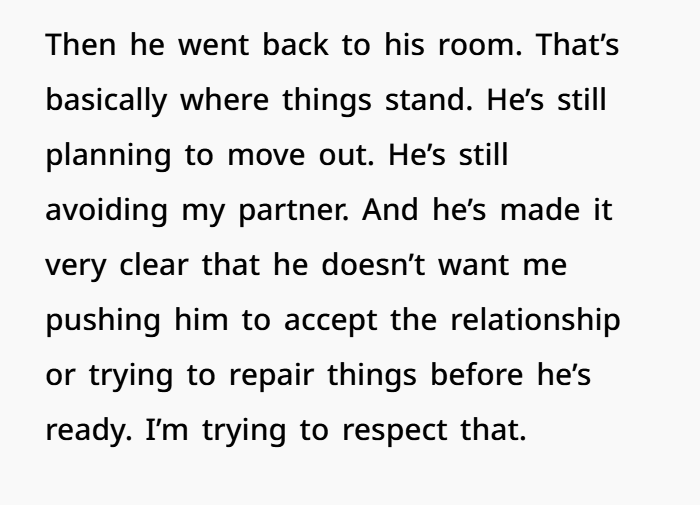
Her son has decided to move out so he can have time and space to deal with his emotions. The mother is now wondering what the best choice is. She wants to protect their bond but also knows that rebuilding trust and understanding may take patience, honest communication, and respect from both sides.


When a Parent’s Dating Choices Affect an Adult Child’s Relationship
Family relationships can change as children grow into adults. When a child becomes an adult, the relationship with their parents often changes from rules and control to respect, understanding, and communication.
However, some personal choices can create emotional challenges. One example is when a parent starts a relationship that an adult child finds difficult to accept.
This type of situation can involve many feelings, including love, disappointment, confusion, trust issues, and family boundaries. Both the parent and the child may feel hurt, even when both sides have valid reasons.
A Parent Has the Right to Choose Happiness
Parents are also individuals with their own needs, feelings, and personal lives. After divorce, loss, or major life changes, many people find love and companionship again.
A person in their 40s or 50s can still build a healthy and meaningful relationship. Age alone does not decide whether a relationship can work. A strong relationship is usually based on respect, honesty, emotional support, and shared values.
From the mother’s point of view, she is an adult making her own life choices. She does not need permission from her adult child to find happiness.
At the same time, personal choices can sometimes affect family members emotionally. This does not mean others should control those choices, but it does mean their feelings deserve to be understood.
Why the Son May Be Struggling
For the son, this situation may not only be about the age difference.
The bigger issue may be that his mother’s partner is connected to his own generation and social circle. They went to the same college, knew similar people, and came from a similar environment.
This can make the situation feel more personal and uncomfortable.
Many adult children see their parents as people who belong to a different stage of life. Parents are often viewed as guides, protectors, and stable figures. When that image changes suddenly, it can create emotional stress.
The son may feel confused because the person he sees as his mother is now also making choices that feel closer to his own world.
Family Boundaries and Emotional Health
Family boundaries are important in every relationship. Healthy boundaries allow people to make their own decisions while also respecting each other’s feelings.
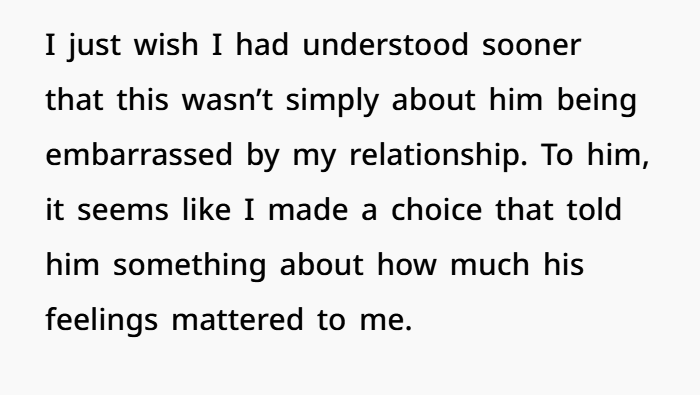
The son saying that he no longer sees his mother the same way may not mean he wants to control her life. It may mean he feels shocked and needs time to adjust.
There is a difference between:
“You cannot do this.”
and
“I am struggling with this, and I need some space.”
The first statement tries to control another person. The second statement expresses a personal boundary.
Understanding emotional boundaries can help families handle difficult situations in a healthier way.
Personal Freedom vs Family Feelings
Adults have the right to make their own choices about relationships, marriage, lifestyle, and personal happiness.
However, important life decisions can still affect the people closest to them.
For example, someone may decide to move, change careers, or start a new relationship. They have the freedom to make that choice, but family members may still need time to process the change.
Respecting someone’s feelings does not mean giving them control over your life.
The Mother’s Emotional Challenge
Being rejected by your own child can be deeply painful for a parent.
Many parents spend years building their identity around caring for their children. When an adult child creates distance, the parent may feel sadness, loneliness, or fear of losing the relationship.
The mother’s goal may not need to be proving that her relationship is right. Instead, she may focus on showing her son that their relationship as mother and son still matters.
Trust and connection often return through patience, kindness, and open communication.
The Son May Need Time
The son may not be ready to accept the situation immediately. Trying to force acceptance can sometimes create more distance.
People often need time to understand strong emotions and adjust to unexpected changes.
Moving out or creating some physical distance may actually help reduce daily tension. Space can give both people a chance to think clearly and process their feelings.
Distance does not always mean the relationship is over. Sometimes it allows people to rebuild a healthier connection.
Can Their Relationship Heal?
The future of their relationship may depend on whether both people can accept that they have different feelings.
The son may never fully support his mother’s romantic relationship. The mother may never agree with her son’s reaction. But they may still find a way to respect each other.
A healthy family relationship does not require everyone to have the same opinion.
It requires patience, understanding, and emotional maturity.
Both people are experiencing a sense of loss. The son may be missing the version of his mother he was used to. The mother may be grieving the closeness she feels she is losing.
Healing may come when they stop trying to change each other and start focusing on rebuilding trust.
At the end of the day, two things can be true at the same time: a parent can have the right to find happiness, and an adult child can need time to accept a major change.
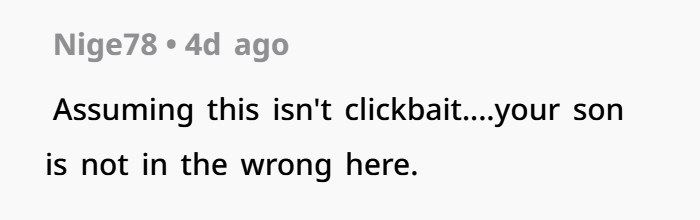
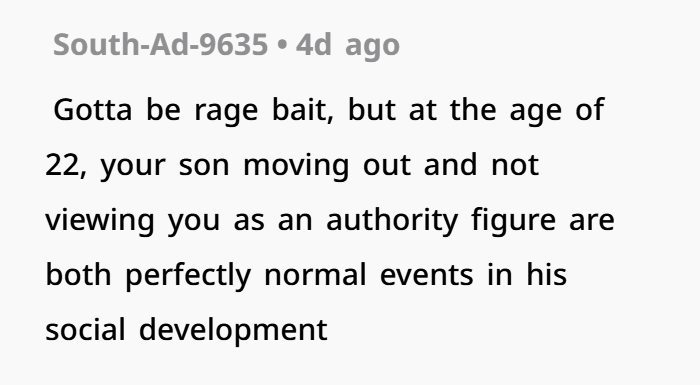
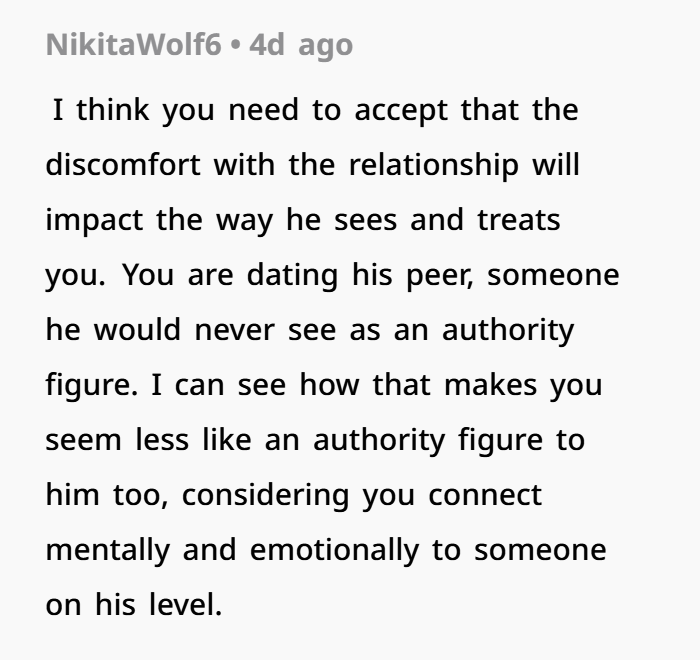
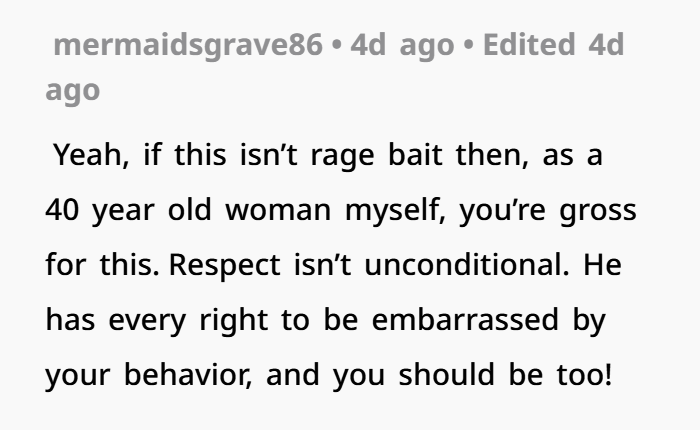
See The Comments Below