11 Weird Old Jobs Women Used to Do (That Don’t Even Exist Anymore)
Back in 1979, the big obstacle stopping white-collar women from climbing as high as men finally got a name. Pingv co-founder Katherine Lawrence reportedly called it the “glass ceiling.” And honestly, it stuck because it was true. Fast-forward to now, and the World Economic Forum says we’re still more than 120 years away from real gender parity. Kinda wild, right?
Even today, women lead in a few sectors… but mostly in the lower-paid roles. In the U.S., most early-childhood teachers are women. Same in healthcare — women make up almost 80% of the workforce, yet men are still more likely to be the actual physicians. The salary gaps and workplace discrimination really show up there.
But there are some niche careers where women totally take the lead. In South Korea, the famous free divers called haenyeo make their living collecting abalone. They dive, they work, they raise kids — all while the men go off to do the dangerous boat fishing. Japan has something similar with the ama divers, many of them middle-aged women, and the skill gets passed down from mother to daughter like a family treasure.
In other parts of the world, women even work as professional mourners at funerals. In Romania, the Church isn’t a big fan of it, but the job still exists. In Greece, the tradition — called moirology — goes all the way back to ancient times. And funny enough, more men are joining the industry now, which kind of shows that gender equality moves in unexpected ways.
But some old female-only roles? Yeah… they didn’t survive the changing labor market, modern laws, and evolving women’s rights.
And honestly, some of those jobs were so strange they would never fly today.
Radium dial painter
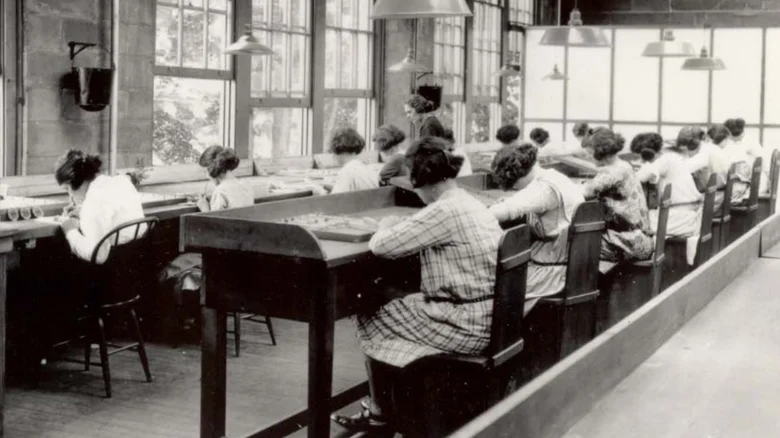
Before smartphones and fancy wearables, people were obsessed with anything that glowed in the dark. In the 1910s, radium was the big hype. After its discovery in 1898, everyone thought it had magic “health benefits,” so it showed up in tons of products — especially glow-in-the-dark watches and clocks.
In the U.S., factories popped up everywhere, hiring mostly young women to paint the tiny numbers and hands on watch dials. It was super delicate work. They dusted the dials with luminescent powder and used radium-filled paint to make everything glow. But there was one huge problem: workers were told to shape their paintbrushes with their lips. Yup… literally putting radioactive material in their mouths. Many even painted their nails and teeth for fun because they thought it was harmless.
But the reality was brutal. The “Radium Girls,” as they were later called, swallowed tiny bits of radium every day. Over time, it caused horrific illnesses — bone decay, jaw necrosis, and other symptoms of severe radiation poisoning. Some women died painfully. And even worse, companies like the United States Radium Corporation and Raydium Dial Company kept insisting radium was totally safe. They denied responsibility while the lawsuits piled up, blaming anything but the toxic exposure their workers faced.
A few women won small settlements, but most never got proper compensation — a tragic example of workplace injustice and lack of workers’ rights. Still, their fight changed history. Their suffering pushed governments, especially in Britain, to create much stronger worker-safety rules and occupational health standards.
Their story is heartbreaking, but it became a turning point in protecting workers from dangerous materials and corporate negligence.
Human computer

In 2025, Meta CEO Mark Zuckerberg stirred up a whole storm when he told Joe Rogan that corporate America was basically “neutered” by inclusive policies. Wild comment, especially since he also said he supports women succeeding. But honestly, his take kinda shows what the U.S. tech industry looks like today — mostly white men running the show.
But here’s the twist: it wasn’t always like this. For almost a full century, from around 1890 to the 1980s, women — including Black and Indigenous women — were the backbone of early tech. They were the real engines behind the science, the calculations, the data, the logic… basically everything we now call STEM careers and computer science jobs.
It all started in the late 1800s when Williamina Fleming, who originally worked as a housemaid, joined the Harvard Observatory. She and about 14 other women proved they were way more reliable (and cheaper, of course) than men for detailed calculations. In the 1930s, the Works Progress Administration hired women to do complex math that men considered boring and repetitive. Their skills kept the numbers running.
Then came WWII. Suddenly there was a massive hiring boom. Women worked on everything — from the Manhattan Project to NASA’s Apollo missions. They handled high-pressure calculations, early programming, and the kind of work that literally shaped modern tech and national security.
But even with their insane stamina and skills, female “human computers” faced two big threats:
- The digital machines they helped create.
- Men realizing the jobs were actually valuable.
By the 1970s and 1980s, women were pushed out — or slowly edged out — while the rise of home computers was marketed mainly to boys. And that shift basically shaped the tech labor market for decades.
Today, another female-dominated part of Silicon Valley feels super unlikely. By 2024, only about 33% of digital-sector jobs in the U.S. were held by women. And half of them leave before their mid-30s because of burnout, lack of support, salary gaps, or just toxic workplace cultures.
It’s kind of ironic — the tech industry that started with women is now struggling to keep them.
Herb strewer
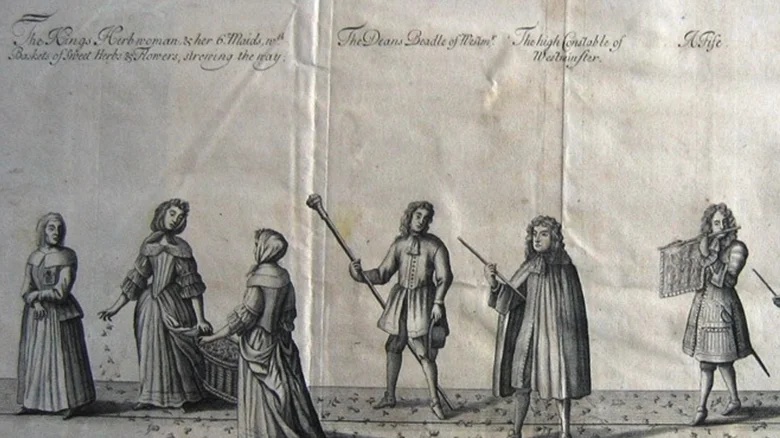
Being royal has always come with strange traditions, and honestly, some of them feel straight out of a fantasy movie. One of the most unusual jobs — and one done only by women — was the herb strewer. The role began in 1625 during the coronation of King Charles I. The job was exactly what it sounds like: women scattered herbs and flowers like lavender and pennyroyal anywhere the king walked, both inside the palace and outside.
It wasn’t just for “pretty vibes,” either. London stank back then. The Thames was basically a giant sewage dump before modern toilets existed. So the herbs helped cover the awful smell. The first herb strewer was Bridget Rumney, who earned £24 a year — which is over £4,000 today (around $5,200). Not bad for the era.
Mary Rayner was the last full-time herb strewer in the 1700s. After that, the job became more ceremonial. In 1821, Anne Fellowes was hired for King George IV’s coronation. She and six other “herbswomen” scattered flowers all the way to Westminster Abbey. They were the only women allowed at the event.
Eventually, Queen Victoria ended the tradition completely. Funny enough, Jessica Fellowes — niece of the “Downton Abbey” writer — actually applied to bring the role back for King Charles III’s coronation. The palace politely said no. And just like that, the herb strewer stays a job lost to history.
Leech finder
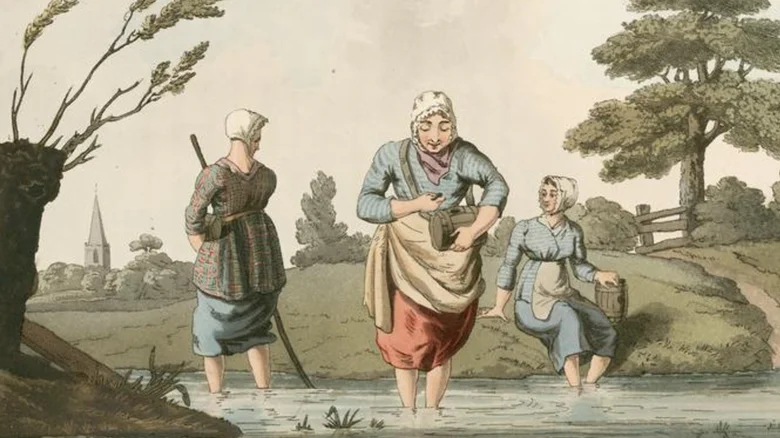
Women in medicine have often been erased from history books, labeled as witches, or just straight-up ignored. But one very strange medical job women were allowed to do was leech finding — and it’s just as intense as it sounds. Yes, some men did it, but women made up most of the workforce because it was one of the few ways they could earn extra money.
Artist George Walker even painted them in 1814 — calm Scottish women standing in marsh water with their skirts lifted. But the real scene wasn’t calm at all. These women walked into freezing bogs with bare legs because leeches were attracted to warm skin. And they had to let the leeches latch on for a while so they could be pulled off easily. Not every wound closed fast, and the blood loss could be rough. On top of that, leeches carried diseases, so the job wasn’t just gross — it was dangerous.
The work was usually seasonal, but by the 1800s, demand exploded. Thousands of leeches were needed for medical treatments, putting the species — and the women’s income — at risk. Doctors used leeches for almost everything back then, thanks to old medical beliefs about “balancing the blood.”
But as science improved and people understood germs and modern healthcare, bloodletting fell out of fashion. That shift finally ended the leech finder’s job. Today, medicinal leeches still exist, but they’re raised safely in labs and even at the London Zoo — not on the legs of exhausted women standing in freezing water.
Match woman
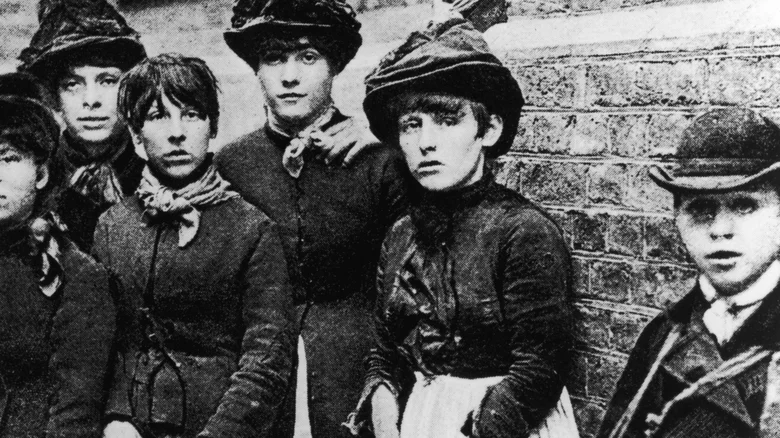
Before our world became lit up by electricity and solar energy, people relied on candles and matches. And that older industry — especially the match factories — depended heavily on women. When friction matches were accidentally discovered in 1827, it changed everything. By 1861, William Bryant and Francis May opened a booming factory in East London, and hundreds of women, many of them Irish immigrants, went to work there.
But the work was brutal. Long hours. Terrible conditions. Wages so low they could be cut for pretty much any reason. And worst of all, the women worked with white phosphorus, a toxic chemical that caused a horrifying disease called “phossy jaw.” Other countries had banned it, but the U.K. still allowed it. The more money the match companies made, the more these women suffered. Some got sick. Some died. And the bosses replaced them like nothing happened.
Everything changed in 1888. Annie Besant wrote an expose called “White Slavery in London,” blowing open the truth about the factory conditions. The owners tried to force workers to deny the story — even firing one woman to scare the rest. Huge mistake. Her coworkers walked out, launched a strike, and shocked the whole country. They got public support, political support, and within a month, they won. The women earned better conditions and the right to form their own union — a huge win that helped shape future U.K. labor laws and workplace safety standards.
These “match women” didn’t just make matches. They sparked one of the most important worker-rights movements in British history.
Necessary women
Back in the 15th century, royal life came with some seriously strange job titles. One of the most powerful jobs in King Henry VI’s court was the groom of the stool — basically the person who helped the king with his bathroom needs. Yes… that job. When Mary I and Elizabeth I ruled, the role went to a woman instead, and she became known as the lady of the bedchamber.
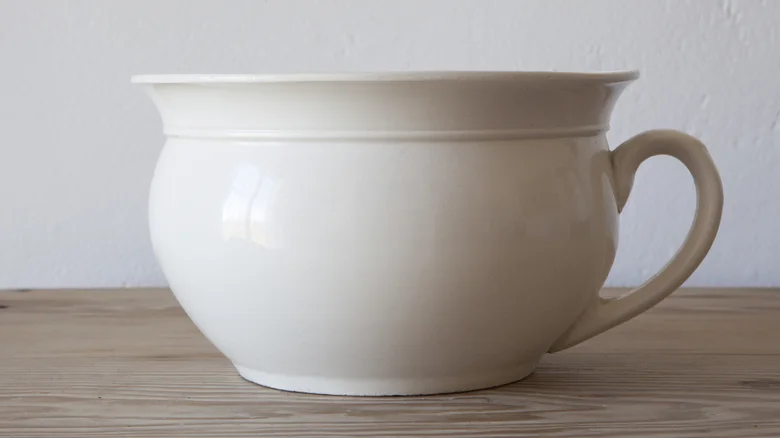
It sounds odd today, but the job came with perks: access to the monarch, a place to live, and even hand-me-down clothes. When Edward VII finally got rid of the position in 1901, wealthy families still needed someone to clean out their chamber pots. And like most domestic labor, that job fell on women.
Ordinary people usually dumped their waste into the street for “night soil men” to collect, but rich households had maids who were expected to keep everything spotless. That’s where the role of the Necessary Woman came in. First recorded in the 1600s, the Necessary Woman for the House of Lords had to clean, empty, and replace chamber pots several times a day so that every guest’s, uh… needs… were taken care of. Glamorous? Not even close.
The job was finally abolished in 1850, and modern sanitation slowly took over. By 1905, London’s women finally got their own public toilets. And the Necessary Woman — like so many other forgotten female jobs — became part of history.
Ornatrix slave
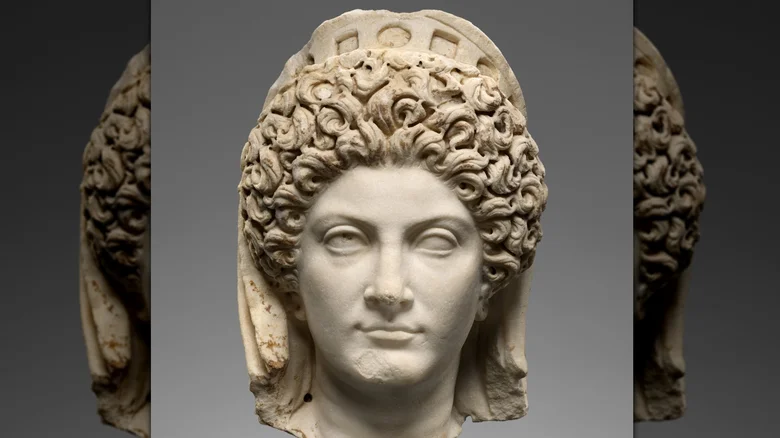
Today, about 90% of people working in hair and beauty are women — even though many still earn less than men. But the industry has always been female-dominated in one way or another. Back in ancient Rome, a woman’s hairstyle wasn’t just about looking cute. It was a full-on status symbol. And that’s where the ornatrix came in — a specialist enslaved woman who handled her mistress’s hair and beauty routine.
This wasn’t a chill, friendly salon vibe. No comfy chairs. No small talk. The ornatrix lived completely at her owner’s mercy. If her mistress wanted gray hairs yanked out or a towering hairstyle built from scratch, she had to do it. Mess up, and the punishment could be whipping — something that would never happen in any modern beauty salon.
And the tools? Honestly terrible. Roman “beauty hacks” included rotting leeches, pigeon poop, and even urine. They also used lead-coated combs and weird mixes of earthworms, ash, and crushed walnut shells to cover gray hair. Blonde hair was tricky too — sometimes linked to prostitution — so dyeing had its own risks.
Ornatrices also dressed their mistresses, whitened their skin, and applied makeup made from soot and rust. One slip, one crooked braid, one wrong color… and they could be beaten or worse. Roman poet Ovid even warned wealthy women not to take their bad hair days out on their slaves — and suggested they station a guard at the door so no one would see their “disaster hair.”
Rowing madam
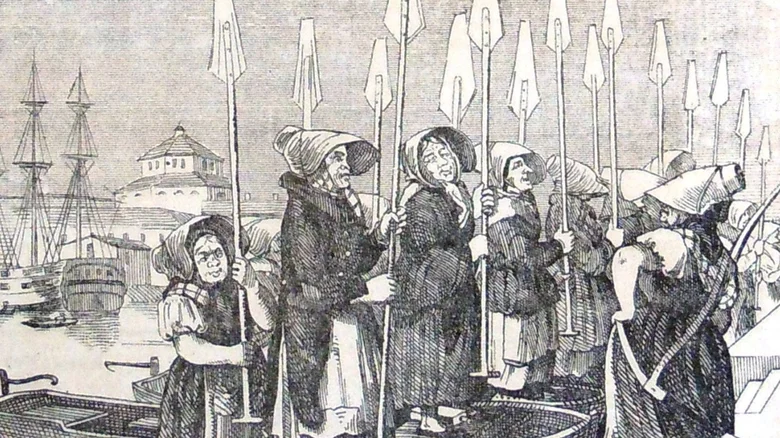
Walking around 17th-century Stockholm wasn’t easy. The streets were rough and uneven, so locals used the city’s waterways like a big transport system. And powering a lot of those boats were the roddarmadammer — the rowing madams. These were strong, outspoken women who worked incredibly hard and often supported their whole families.
Each longboat needed up to three women. The boats had to be sturdy, clean, and properly numbered. And the women were expected to behave in a “sober and orderly” way, according to rules written in 1759… although nobody really enforced them.
For nearly 200 years, these women owned the waterways. Then, in 1844, trouble hit. Some Royal Navy carpenters planned to start their own competing boat service. The rower women weren’t having it. They went straight to the Chamber of Commerce with a respectful but powerful letter, reminding officials that they were women, mothers, and the only breadwinners for many homes. They begged them to block the competition.
And it actually worked. By the 1870s, around 200 rowing women still operated boats. Eventually, steam-powered ferries took over and the job faded away. But the rowing madams are still a big part of Stockholm’s history. Makes you wonder — will people talk about women Uber drivers the same way in 100 years?
Vestal Virgin
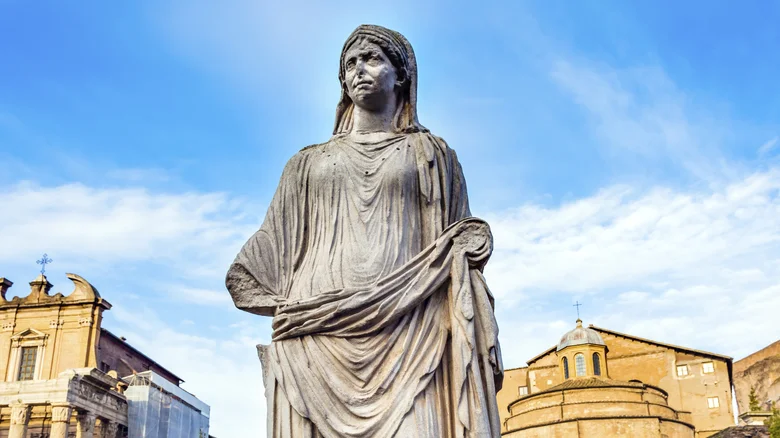
Now picture this: You’re a girl between 6 and 10, from a respected Roman family, and instead of going to school, you’re chosen to join a goddess-worshipping cult for 30 years. That was the life of a Vestal Virgin.
There were usually six of them. And even though they had to stay completely chaste, they had huge social power. They could vote. Own property. Free enslaved people. And get this — if a prisoner saw a Vestal Virgin on the way to execution, he’d be pardoned instantly.
After serving for three decades, a Vestal could leave, get married, and live a normal life… if she wanted. Many chose to stay because the role came with huge respect.
But the job wasn’t all privilege. If a Vestal let the sacred flame go out, she was beaten. And breaking the vow of chastity was considered a massive crime. The Romans couldn’t kill a Vestal — it was forbidden — and no one could be buried inside the city walls. So a ruler named Tarquinius Priscus found a workaround: a condemned Vestal was locked in a room with a little food and water… and left to die.
It’s one of the darkest examples of how ancient cultures mixed religion, politics, and women’s lives in terrifying ways.
Switchboard operator
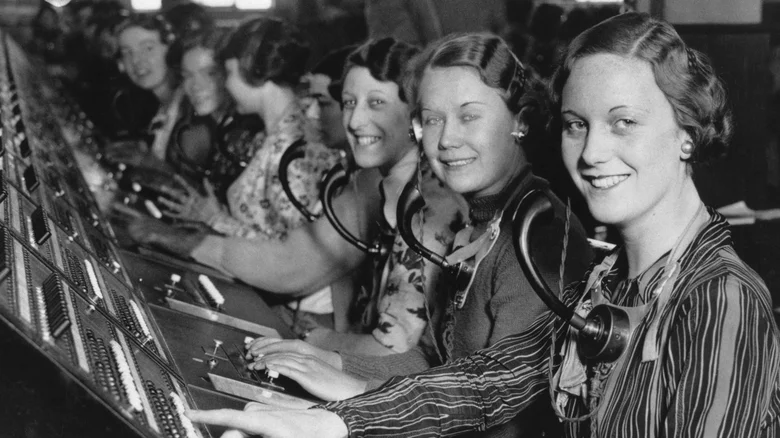
It’s wild to think there was a time when you couldn’t make a phone call without another person connecting you — and most of those operators were women. In the early 1900s, as the U.S. phone system was growing, teenage boys were actually the first switchboard operators. But they were loud, impatient, and honestly not great at the job. So companies replaced them with young women, who were seen as more polite and reliable.
Being a “telephone girl” was considered a huge step up from working in a factory or as a maid. But, of course, women earned way less than men. And getting hired wasn’t easy. You had to be young, unmarried, well-behaved, educated, and from a “respectable” family. Women with accents were often rejected, and elocution lessons were part of the training — basically customer service with extra judgment.
The job itself was intense. Long hours — sometimes 12 straight. Tiny workspace. Heavy headsets. And a nonstop flow of calls. At big companies, women handled 250 to 350 calls an hour. That’s one call every 10–15 seconds. No breaks. No slow days.
By 1946, about 250,000 women were running switchboards across the country. They were the backbone of early telecommunications, and they knew it. They pushed for better workplace protections, maternity leave, and other women’s rights long before these were mainstream ideas. Eventually, technology advanced, automatic dialing took over, and the job slowly disappeared — but switchboard operators shaped the early labor movement in ways we rarely talk about.
Vivandiére
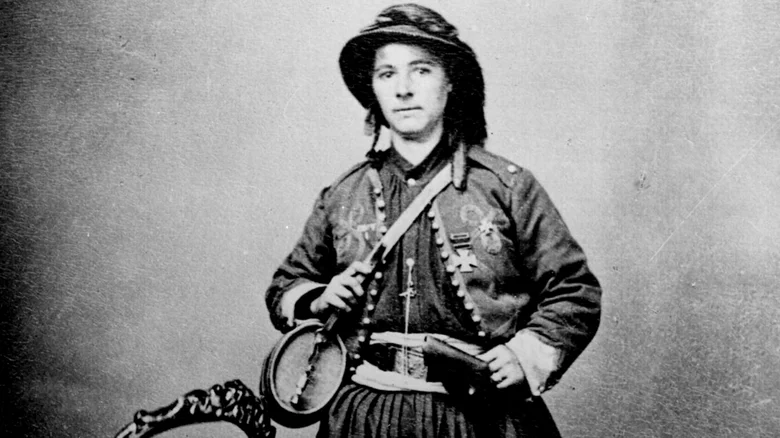
Wars span thousands of years, and while men usually get the spotlight, women were out there on the battlefield too — often in ways people forget. One of those roles was the vivandiére, also called a cantinière. They first appeared in 18th-century France and were basically the “mobile supply shop” for soldiers. They brought food, wine, tobacco, stationery, medical supplies — even wig powder. Think Amazon, but on foot, in a war zone.
Vivandiéres were easy to spot. They wore a military-style uniform with a short skirt over trousers, and they carried a small keg of brandy called a tonnelet across their shoulder. They weren’t viewed as camp followers or hangers-on. In France, they were respected, essential, and seen as morale-boosters. They kept soldiers fed, kept desertion down, and some even fought alongside the men when things got desperate.
Their bravery wasn’t limited to France. In the American Civil War, vivandiéres — sometimes called “daughters of the regiment” — served on both sides. One of the most famous was Marie Tepe, or “French Mary,” who fought at Fredericksburg and Gettysburg. Many of these women also acted as battlefield medics, treating wounded men while bullets were still flying.
Despite their courage, Union General Ulysses S. Grant banned all women from battlefields in 1864. But in France, vivandiéres kept serving right up until World War I.
These women weren’t just helpers. They were fighters, caregivers, and crucial support staff long before the world acknowledged women in military roles.