
“I’m Done Being the Default Caregiver” When Boundaries Are Your Only Way Out
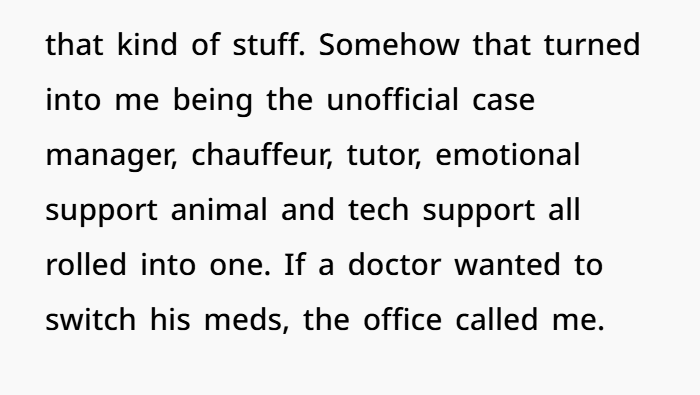
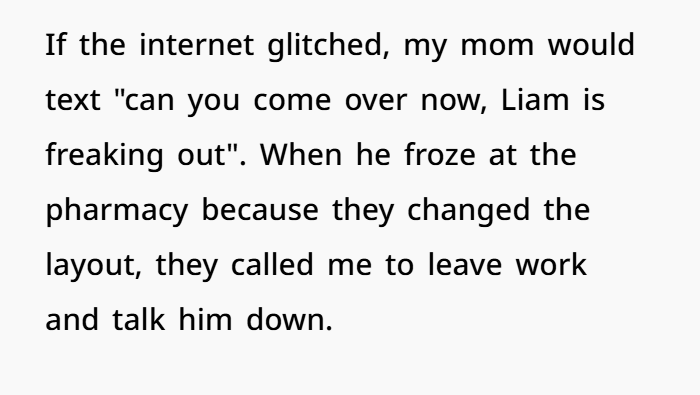
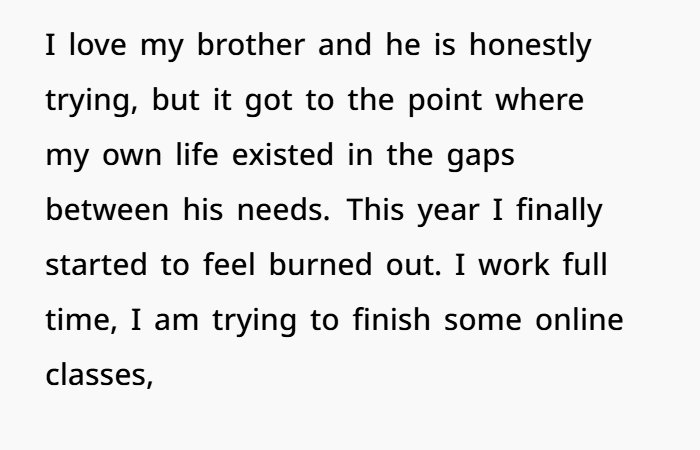
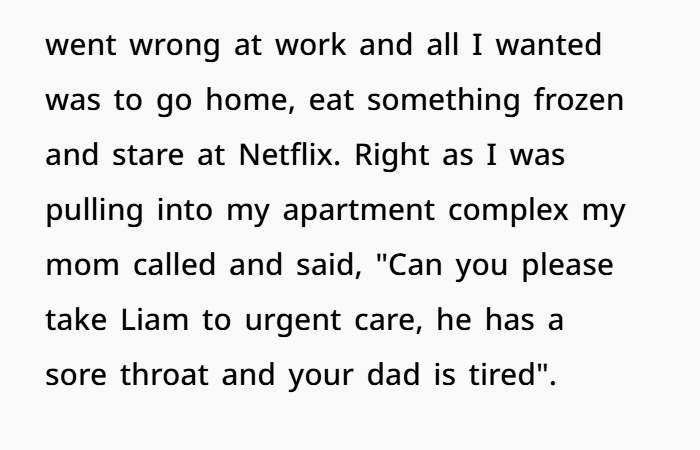
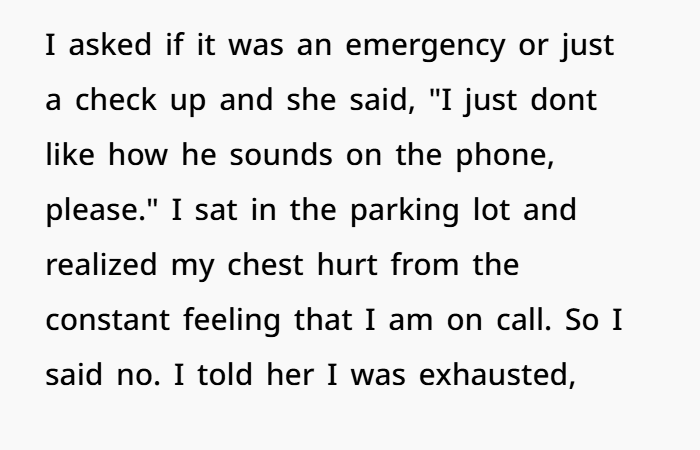
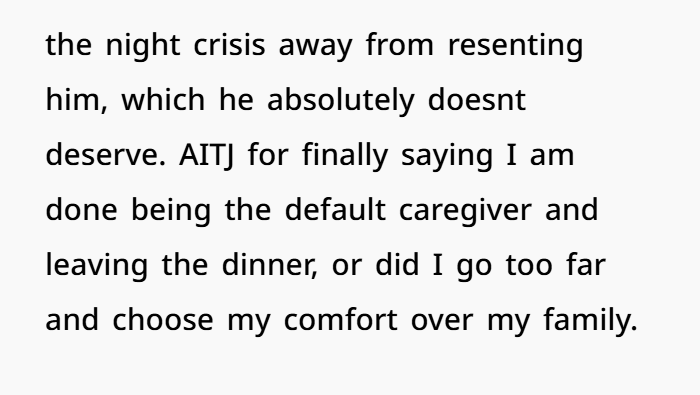
You’re 29, female, and for the last three years you’ve essentially carried the weight of being your younger brother’s full‑time caregiver — driving him to dr’s appointments, dealing with pharmacy/phobia crises, acting as defacto mental‑health support, tech help, emotional caretaker, you name it. What started as a temporary “help for a little while” slowly morphed into a full-blown lifestyle: your life existed around his needs, at the expense of your own.
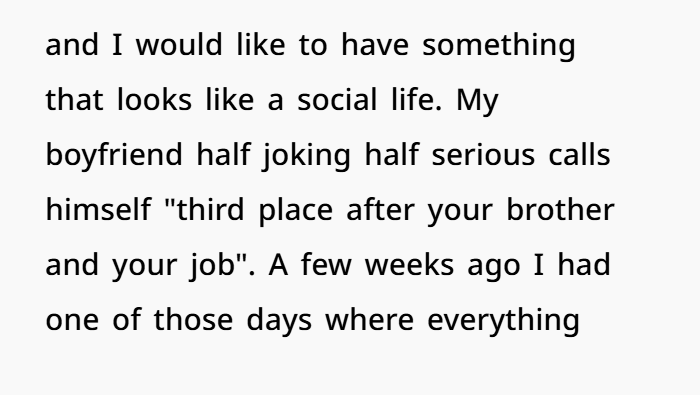
You loved him, and cared about your family, so you gave. But gradually you reached a breaking point: exhaustion, resentment, identity loss. You work full-time, are trying to finish school, want a social life, maybe build a partnership — but your brother’s needs swallowed all free space. Plus, your parents and aunt consistently treated your help as a given, rather than a generous sacrifice.
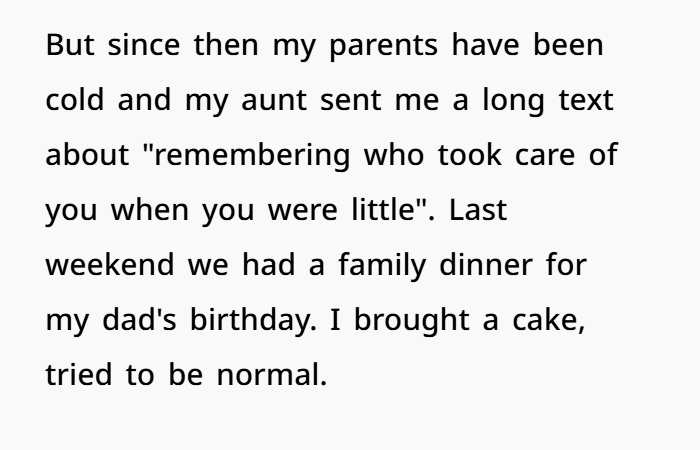
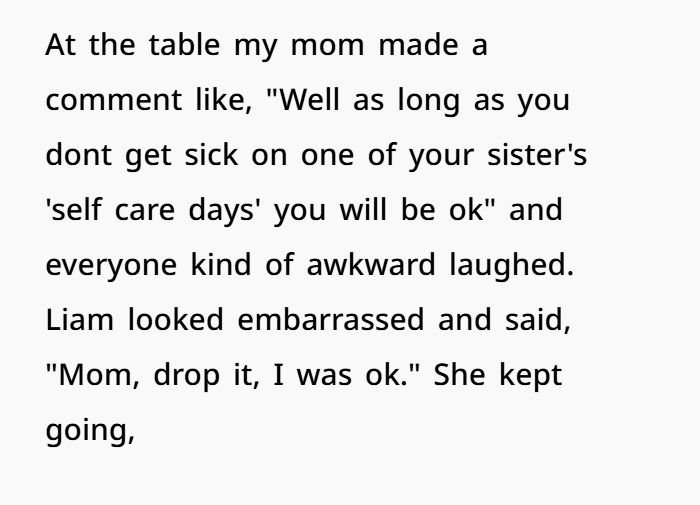
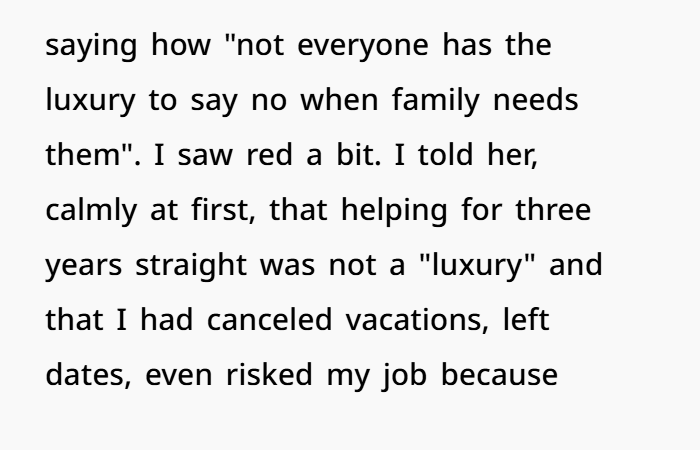
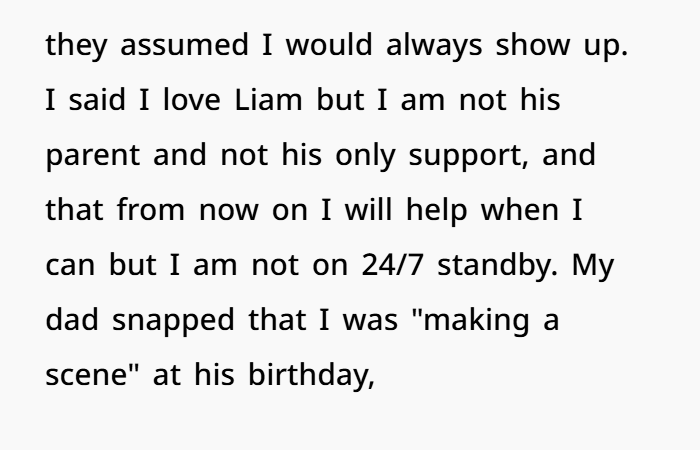
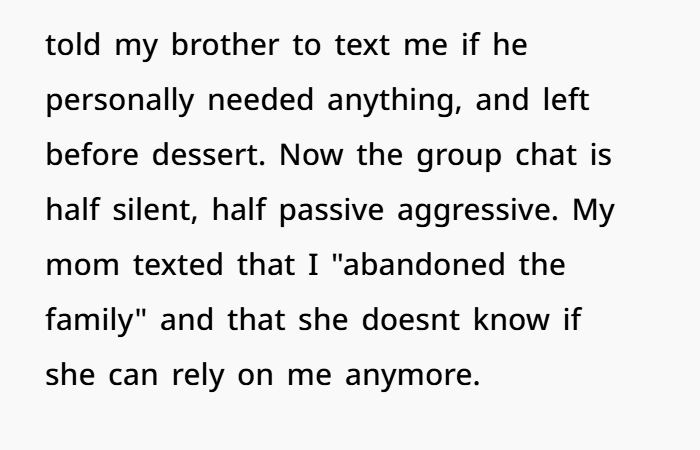
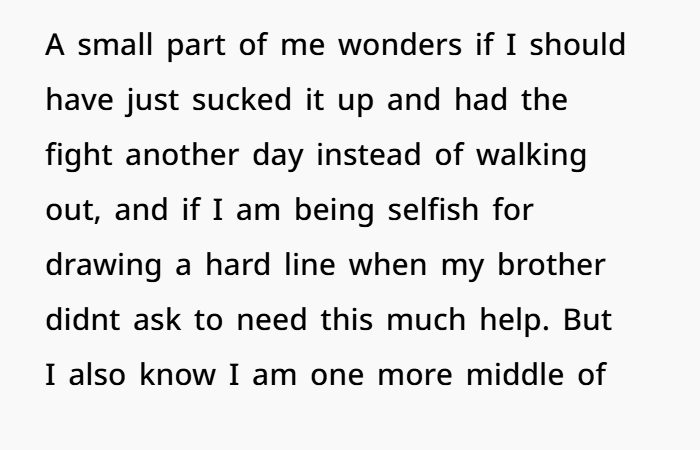
So at your dad’s birthday dinner — with your patience run dry, and after your mom’s jabs and your family’s passive‑aggressive vibe — you told them you were done being the default caregiver. You left. You said you’d still help when you can, but you refuse to be “on call 24/7.” Now there’s tension, guilt-trips, family pressure. And you wonder: Were you out of line? Selfish? A jerk?
You’re basically expected to put family first but, without boundaries in place, things can get complicated fast

One woman moved back home to take care of her autistic brother, not expecting to be saddled with full-time caregiver duty


The Real Costs of Caregiving — Why Setting Boundaries Isn’t Just Okay, It’s Necessary
Taking on long-term care for a sibling — especially one with autism and complex needs — can be deeply meaningful. But it can also be emotionally, mentally, and physically draining. Research and expert opinion show that caregiving without boundaries often leads to “caregiver burden” or “caregiver burnout.” Wikipedia+2HelpGuide.org+2

📉 What’s the toll when you’re “always on call”
- Caregivers often face chronic stress, anxiety, exhaustion, even depression when the demands become constant. Caregiver.com+2PMC+2
- Many lose time for their own life — hobbies, social relationships, personal growth — because caregiving becomes their sole identity. HelpGuide.org+2Rainbow+2
- Over time, caregivers may feel resentment or guilt — either for wanting a break, or for being unable to provide more. TeleHope Health+1
- Physically, it can lead to health problems — stress affects sleep, immunity, emotional stability. Caregiver.com+1
So when you say “I’m exhausted, I can’t keep doing this,” you’re not just whining — you’re responding to a real, documented burden.
🧱 Why “unsaid expectations” and “emotional labor” pile up fast
With a sibling in need (autistic, anxious, needing help with simple tasks), it’s easy for families to fall into a pattern: one person gradually shoulders more, because they “can handle it,” or because others don’t know how. What starts as “temporary help” becomes “permanent duty.” As many sibling‑caregiver guides note, this often occurs without a plan, without rotation, without respite. AARP+2Autism Awareness Australia+2
But that’s not healthy for anyone — least of all you.
- You’re not your brother’s parent or sole support; you’re his sibling. That doesn’t obligate you to drop your entire life for his needs.
- Caring for someone with autism can be a shared family responsibility — or better yet met with formal supports, a “circle of care,” or community resources. AARP+1
- Without boundaries, what’s supposed to be “help” becomes an unspoken expectation. And expectations — especially around family — can drown you if you never push back.
🛑 Why drawing a “hard line” can save you — and can help everyone long‑term
Setting boundaries is not abandoning your brother. In fact, experts say boundaries are a key part of sustainable caregiving. Trualta+1

- A boundary protects your mental health and allows you to maintain your own identity and life beyond caregiving. HelpGuide.org+1
- It prevents “burnout,” which often hurts both the caregiver and the person receiving care: living always on high alert, emotionally depleted, resentful. PMC+1
- A boundary forces the family to re-examine — to distribute care more fairly, get outside help, tap extended family, or access services/support groups. AARP+1
- It teaches your brother (and everyone) that you care — but you’re not responsible forever. Realistic limits can lead to healthier relationships and more consistent support, rather than you burning out and resenting him. Rainbow+1
So … AITJ?
No. You are not the jerk.
You reached the limits of what’s healthy for you. You communicated — calmly, clearly — that you still care about your brother, but you can’t be the “default caregiver” forever. You offered help when you can, but refused to be on call 24/7. That’s reasonable, responsible, and mature.
If guilt, family pressure, or old‑school “duty” ideas make you second‑guess it — know this: self‑care is not selfish, especially when caring ceaselessly threatens your mental health.
Yes, walking out on the dinner might have felt dramatic — but it was a line you needed to draw. Sometimes you need that dramatic moment to shake everyone off autopilot.
Your family may be upset now — or guilty, or defensive. That’s fine. Their discomfort doesn’t mean you’re wrong.
What Happens Next — And What You Might Do (If You Want to Keep the Peace, or at Least the Door Open)
If you want to ease tension but keep your boundary intact, here are a few ideas:
- Maybe propose a family meeting: sit down (without dinner distraction), lay out what’s realistic — you can help sometimes, but not as sole caregiver. Suggest splitting tasks among parents, siblings, other relatives — or even looking into external support.
- Suggest some outside help: local support groups, respite services, community resources. A “circle of care” lightens your load and gives your brother more stable support.
- Stay firm on your limit — but kind. You’re not rejecting your brother; you’re rejecting an unsustainable, unfair dynamic.
- Take care of yourself: therapy, social life, hobbies. Remind yourself your feelings matter.
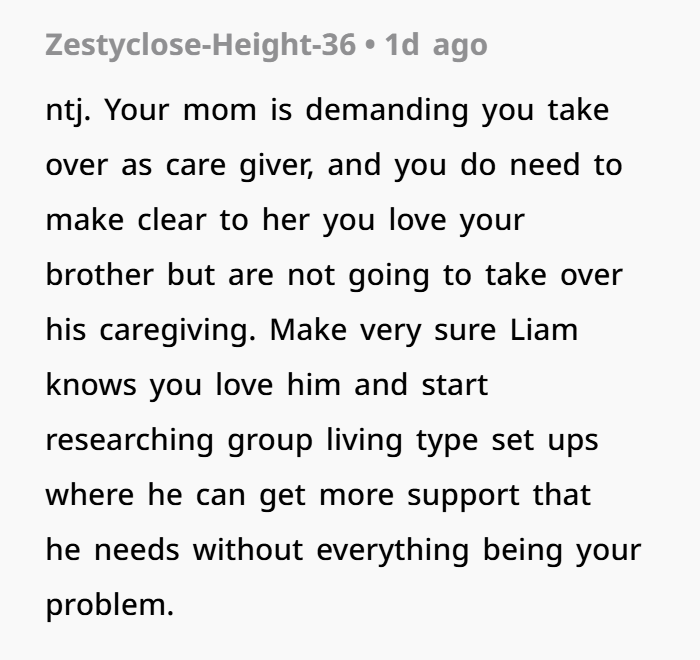
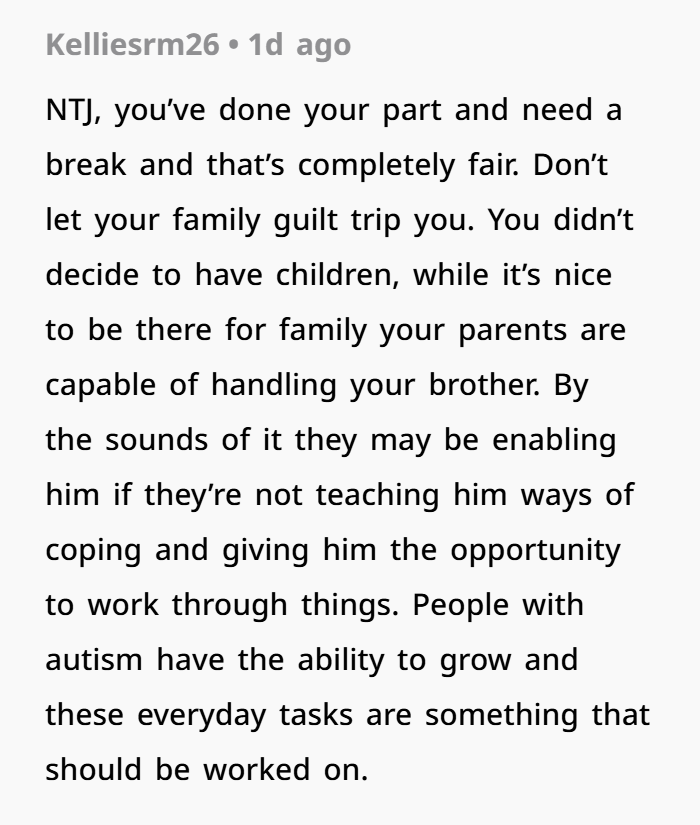
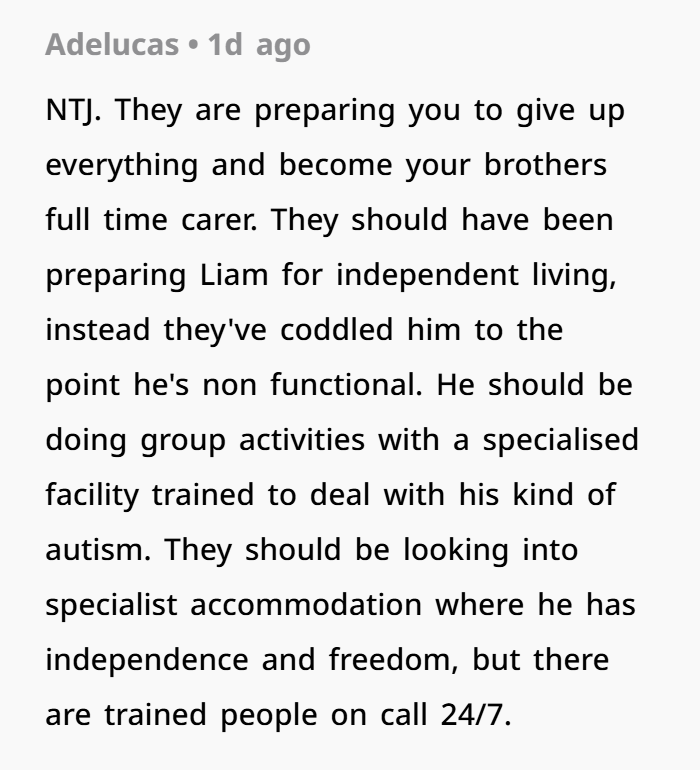
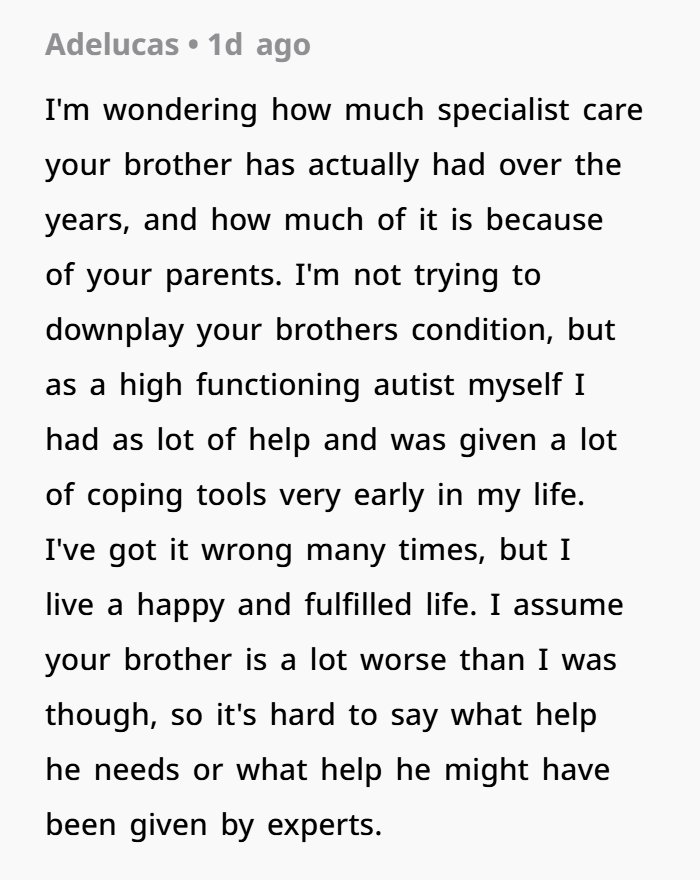
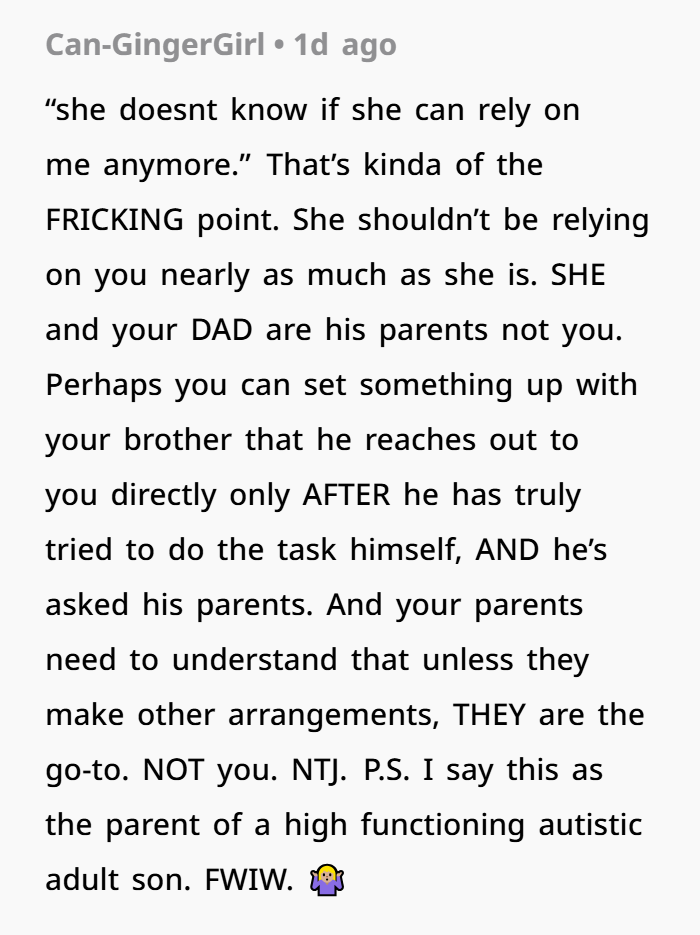
In the comments, readers all agreed that the woman was not the jerk in the whole mess and slammed her parents for being such slackers when it came to helping out


It’s easy for family to view caregiving as a duty or even a moral “should.” But that mindset often overlooks the real cost: mental health, missed opportunities, lost identity, constant exhaustion, resentment.
You didn’t walk away because you don’t care — you walked away because caring with no boundaries wasn’t sustainable. And sometimes the healthiest, most loving choice is the one that looks hardest: telling your family you deserve time to breathe, time to live your own life.