She Married My Son, Not My Wall: I Refused to Erase My Family’s Past for My Insecure Daughter-in-Law
Family photos are more than just decoration — they’re time capsules. They tell stories, preserve love, and connect generations. So when a mother is asked to take down photos of her grandson’s mother (her son’s ex) to appease her son’s new wife, it raises more than just a few eyebrows. Is it a small ask for the sake of peace, or an unreasonable attempt to rewrite family history?
In this case, a mom in her late 50s, lovingly covered in memories displayed across her home, refused to erase the past to satisfy her new daughter-in-law’s jealousy. And now, with holidays around the corner, tensions are flaring, family lines are being drawn, and everyone’s wondering: Who’s really in the wrong here?
It’s a free world, and every person can decorate their house how they want, even if it upsets someone else

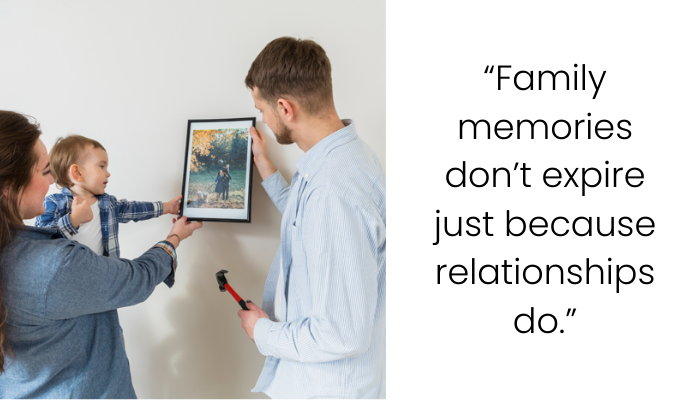
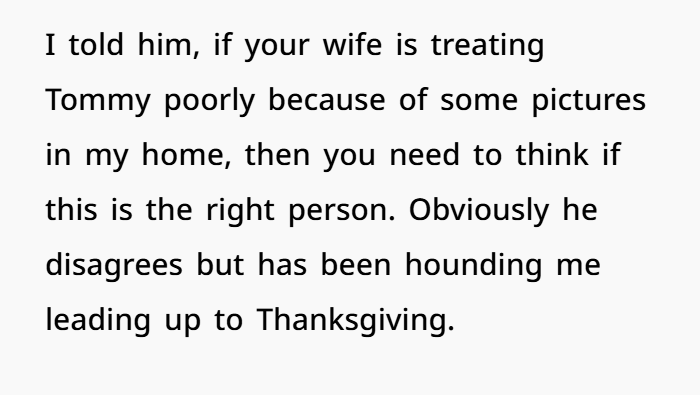
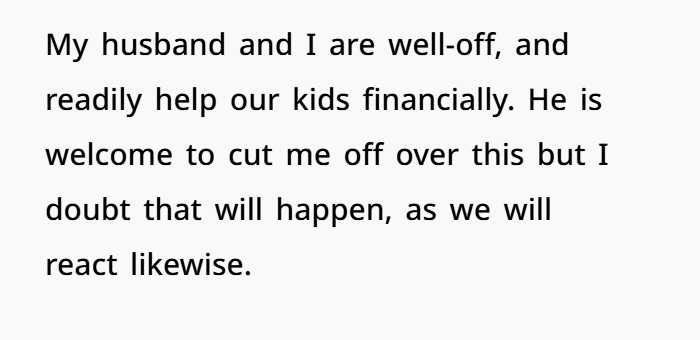
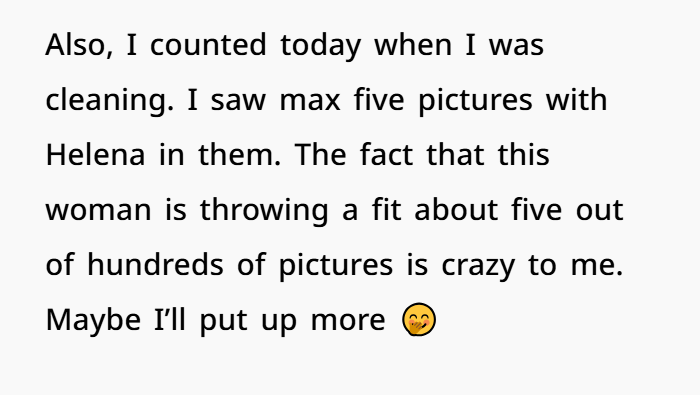
The poster had pictures of everyone in her family on the walls of her house, including her son’s ex’s pictures with him and their kid
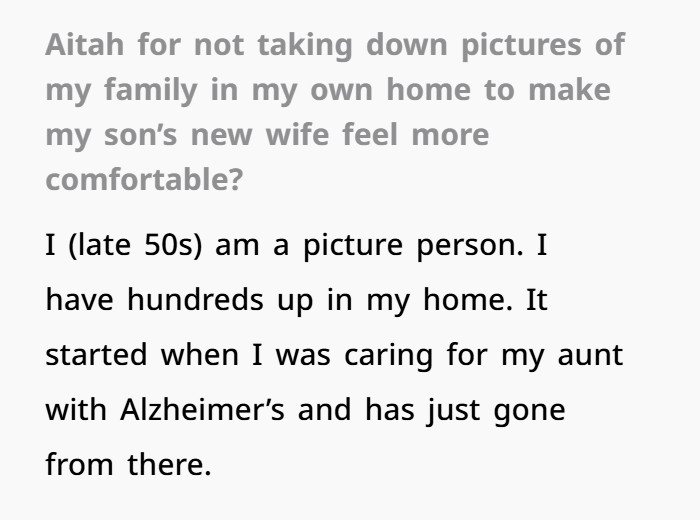
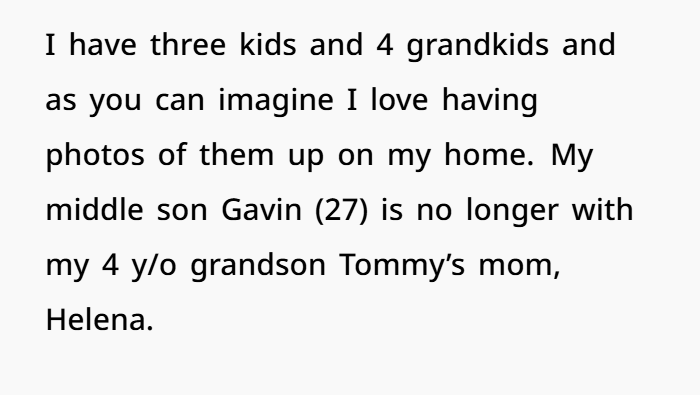
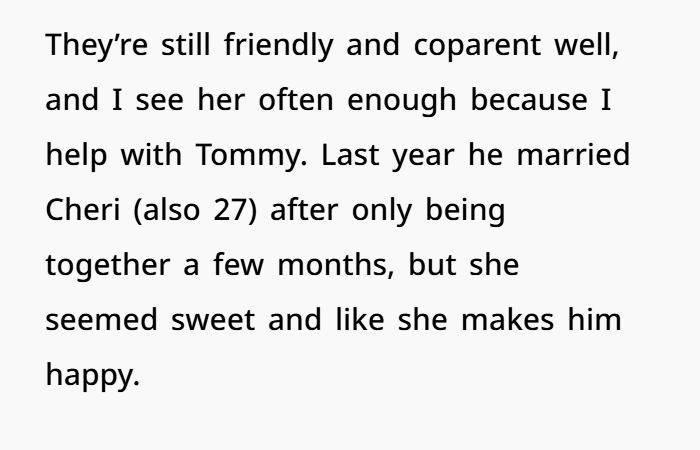
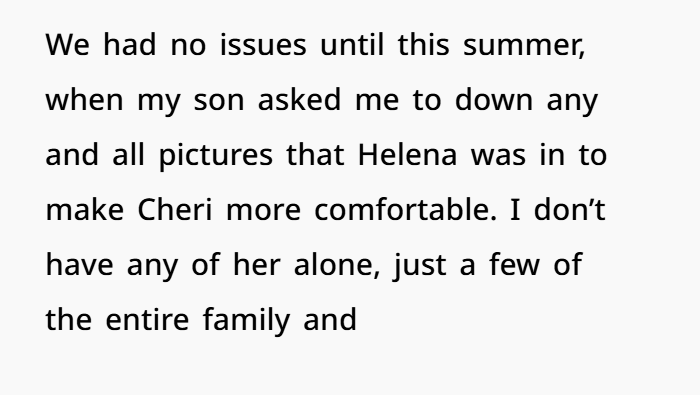
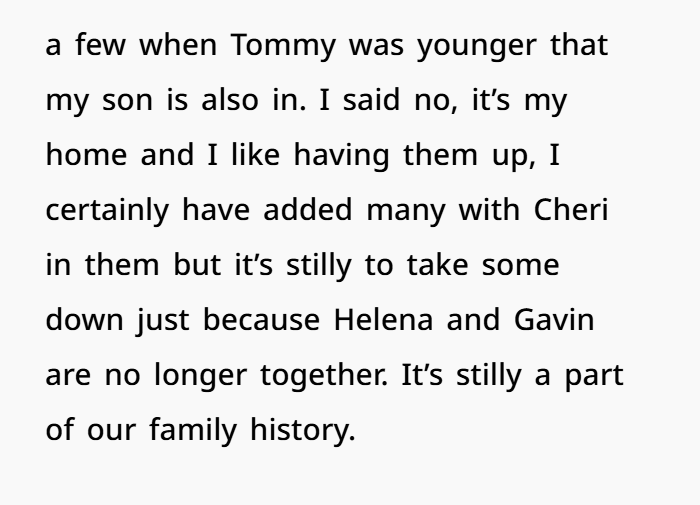
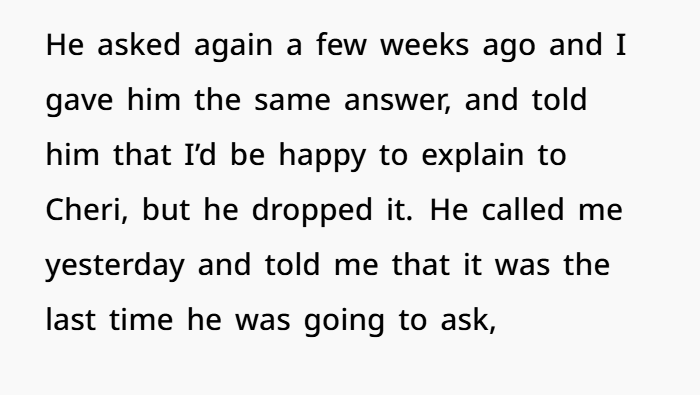
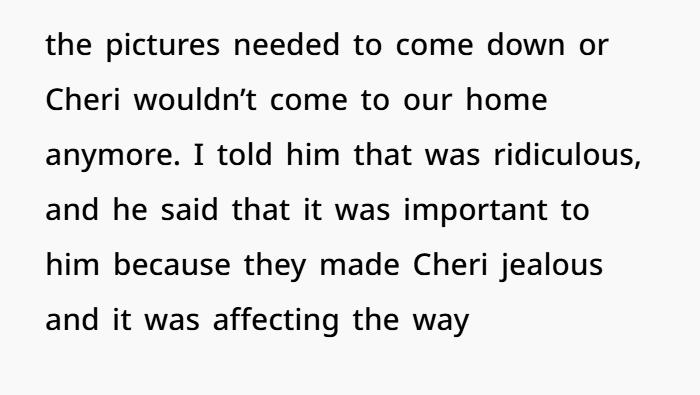
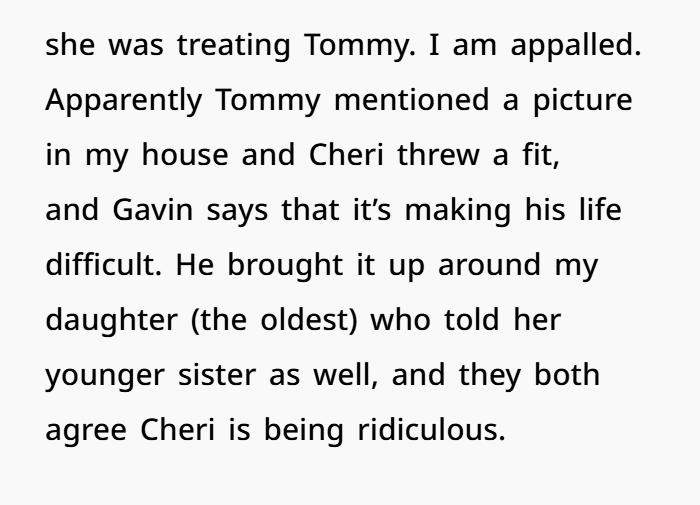
This situation hits on something surprisingly universal — that tug-of-war between honoring the past and protecting the present. But when those values collide, especially in a blended family setting, things get messy fast.
Let’s break it all down — in plain language, with real insight, legal precedent, social norms, and even a few lessons for anyone walking on similar eggshells.

📸 The Photo Wall Isn’t the Problem — Insecurity Is
Let’s start with the obvious: there are five photos featuring Helena in a house that has hundreds of family pictures. That’s not a shrine to the ex — it’s a slice of life.
From a psychological perspective, photos serve more than decorative purposes. They reinforce identity, belonging, memory, and continuity, especially in older adults. A 2020 study in The Gerontologist journal confirmed that memory objects like photos are critical for emotional well-being and help anchor individuals during life changes — like dealing with death, illness, or even children moving out. Removing those photos isn’t just redecorating. It’s asking someone to amputate emotional anchors.
Cheri isn’t asking for a compromise — she’s demanding a revisionist history. That kind of control move has red flags written all over it.
💔 Blended Families Come with Baggage — But Boundaries Are Everything
Cheri married a man with a child. That child has a mother. That mother — Helena — still exists. And while it might sting that Helena is still visually present in family history, it’s not about romantic rivalry. It’s about reality.
A 2018 Pew Research study on blended families found that over 60% of step-parents reported some form of tension surrounding their partner’s ex. Most of it stemmed not from direct conflict, but from unresolved insecurity and lack of boundaries. When the new partner feels “less-than” or threatened, even benign things (like photos) can become triggers.
But here’s the truth: you can’t erase a child’s parent without erasing part of that child. And when you try, like in Cheri’s case, you risk hurting the very relationships you’re trying to build — especially with a child like Tommy who’s already navigating complex dynamics.
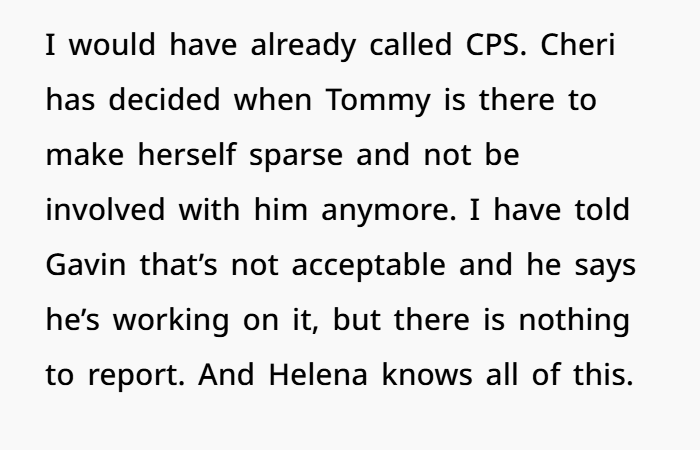
Cheri refusing to engage with Tommy after a photo tantrum? That’s emotional withdrawal, and it is concerning.
🚩 This Is About Control, Not Comfort
Let’s call it what it is: Cheri’s demand isn’t about decor or comfort. It’s about control.
Ultimatums like “take the pictures down or we won’t come over” are classic emotional manipulation tactics. According to Dr. Susan Heitler, clinical psychologist and author of The Power of Two, manipulative behavior often disguises itself as boundary-setting but is really about control and avoidance of uncomfortable feelings.
In this situation:
- Cheri’s uncomfortable with the past.
- Instead of working through her insecurity, she blames the environment.
- She demands changes from others to avoid doing emotional work herself.
And Gavin enabling this by “hounding” his mom is him avoiding his own discomfort — a common pattern in conflict-avoidant partners.
⚖️ There’s No Legal Obligation to “Make Everyone Comfortable” in Your Own Home
From a legal perspective? You are 100% within your rights to display family photos of your choosing.
This is your private residence. There are no cohabitation laws or domestic agreements that give a daughter-in-law the right to dictate decor — even if those photos include a former family member.
In cases involving grandparents and blended families, courts usually prioritize the well-being and continuity of care for children. If anything, having consistent visuals of family (including their other biological parent) is often considered beneficial for the child’s mental and emotional stability. Trying to scrub Helena out of visual family memories can even be interpreted as alienation — something family courts frown on deeply.
So no, you’re not doing anything wrong — morally, socially, or legally.
🧠 Why “Pretend the Ex Doesn’t Exist” Backfires Every Time
Research from The Journal of Child Psychology and Psychiatry shows that children in divorced or blended families do better when all adults in their life cooperate and acknowledge each other’s roles. Pretending an ex doesn’t exist — especially when they’re a co-parent — can confuse and hurt the child.

Tommy, at 4 years old, is just starting to form lasting memories. Seeing photos of his mom with his dad in grandma’s house? That’s comforting to a kid who splits time between homes. It tells him, “My family might look different now, but we’re still connected.”
Cheri trying to remove that? That’s insecurity at its most selfish. And frankly, it’s a poor look for someone claiming to love a man who has a child.
🎯 “Pick Your Battles” — But Pick the Right Side Too
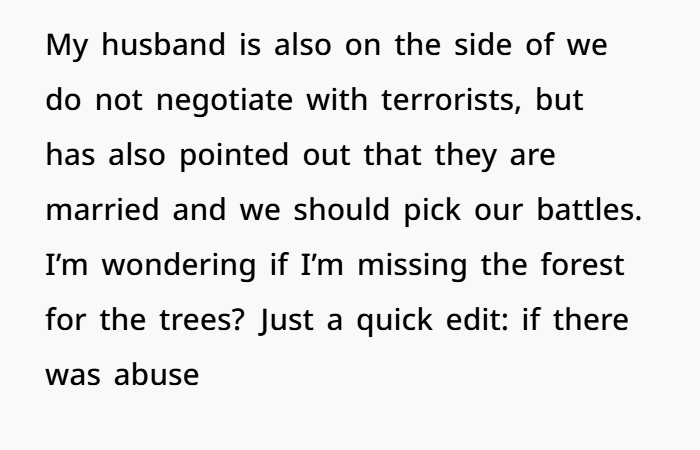
Your husband says “we don’t negotiate with terrorists” — a little spicy, but not wrong. And he’s right about picking battles. The trick is making sure you’re picking the right ones.
This isn’t about a table setting or which side dish to bring for Thanksgiving. This is about setting the tone for what kind of family culture you accept.
If you cave now:
- You teach Cheri that tantrums win.
- You tell your grandson his mom is something to hide.
- You show your son that emotional manipulation works better than reason.
If you hold your ground:
- You reaffirm boundaries.
- You protect your home’s history.
- You send a message: “You’re welcome here, but not at the cost of erasing people we love.”
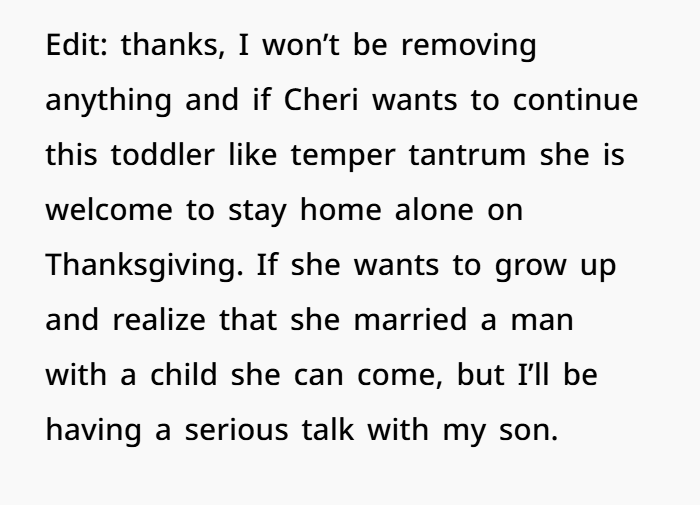
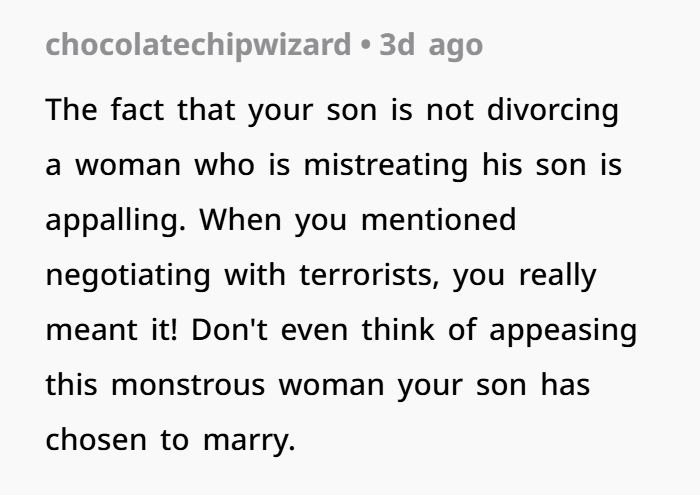
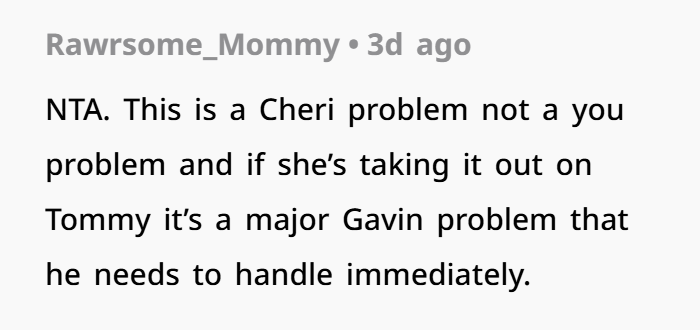
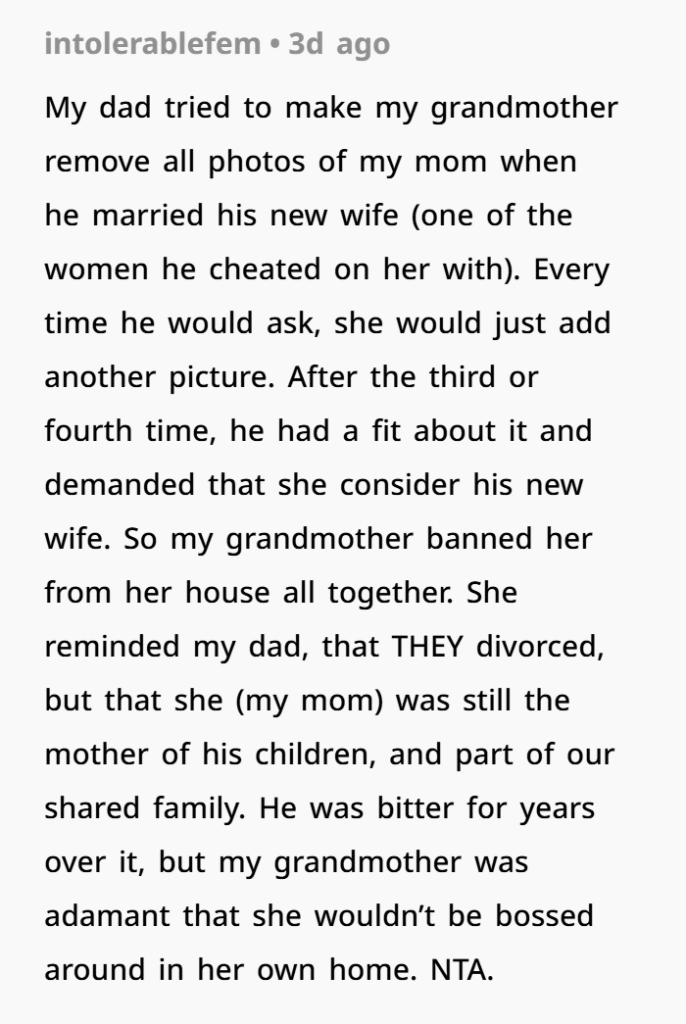
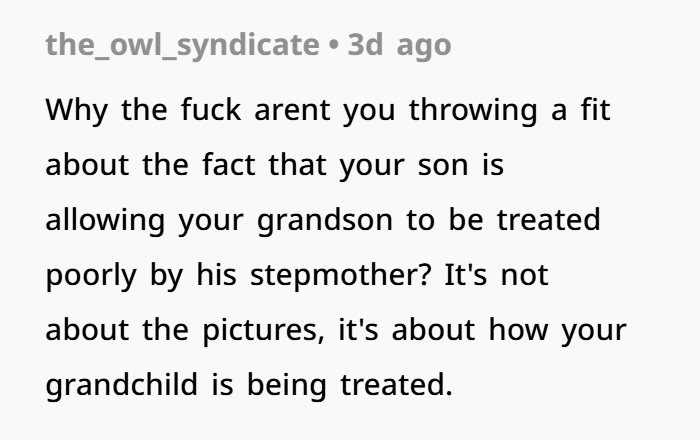
Netizens applauded her for not giving in to the woman’s toddler-like tantrums, and many claimed that she was a walking red flag


Cheri is new to the family. That doesn’t mean she gets to bulldoze over the roots.
Photos tell stories. And in your house, those stories matter — even if some chapters didn’t end the way people hoped. Helena isn’t a threat. She’s part of a chapter, and a part of your grandson’s story.
Cheri’s not obligated to love it. But she is obligated — as a stepmother, an adult, and a wife — to accept it without turning a child into collateral damage.
You’re not the AH. You’re the historian of your family. And history shouldn’t be rewritten just to soothe someone’s insecurity.