I Looked Back on My Childhood Habit With My Little Brother


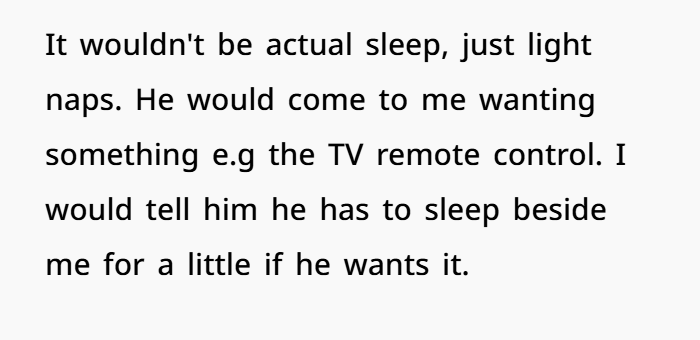
A man shared a personal memory from his teenage years and early adulthood. When he was between 17 and 22 years old, he would sometimes ask his younger brother, who was around 5 to 10 years old, to lie beside him for a short nap before giving him something he wanted, like the TV remote.
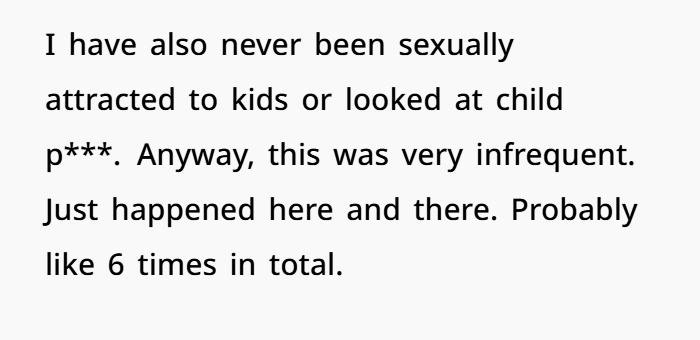
He said these moments were never sexual and that he never had any attraction toward children. He explained that he simply liked having his little brother close and enjoyed the feeling of being near him.
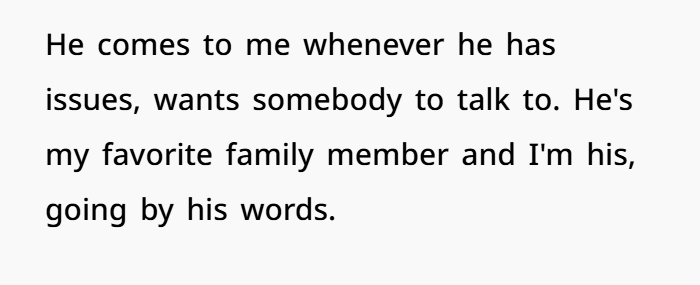
Years later, he began questioning his actions and felt ashamed, worried that the behavior may have crossed a line. At the same time, he shared that their relationship today is strong, with his younger brother still trusting him and turning to him for support.







Many people look back at moments from their younger years and suddenly see them differently. Things that once felt normal can feel confusing when viewed through an adult lens.
That seems to be what happened in this story.
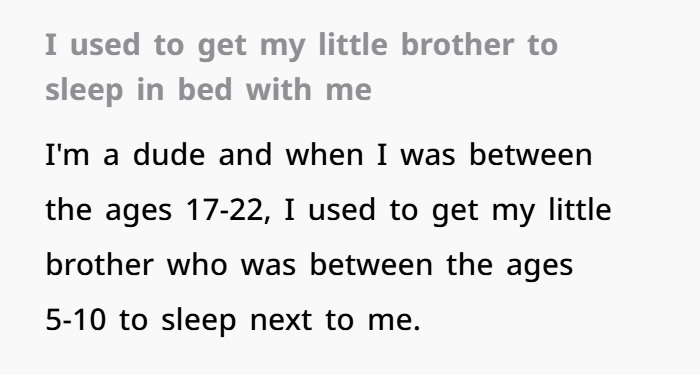
A man shared that when he was between 17 and 22 years old, he would sometimes ask his younger brother, who was around 5 to 10 years old at the time, to lie beside him for a short nap before he gave him something he wanted.
The situation was simple but unusual. His younger brother might come asking for something, such as the TV remote. Instead of handing it over immediately, he would ask his little brother to stay beside him for a while first.
The younger child often seemed annoyed and impatient. He would wait for the short “nap” to end and ask when he could leave. Sometimes, when the child tried to get up, the older brother admitted that he would pull him closer before eventually letting him go.
Looking back years later, he felt uncomfortable about those memories.
Understanding Physical Affection Between Siblings
Physical affection between family members can look different in every household. Some siblings hug often, sit close together, or show affection through playful behavior.
According to guidance from organizations focused on child development, healthy family relationships often include affection, comfort, and emotional support while also respecting a child’s personal boundaries. The American Academy of Pediatrics discusses the importance of healthy child development, emotional safety, and respectful relationships between children and caregivers.
The key issue in situations involving children is not only the intention behind an action but also whether the child feels comfortable and has the ability to freely say no.
Young children may agree to things because they want approval, attention, or rewards from older family members. This is why experts often encourage adults to respect children’s choices and personal space.
Feeling Guilty Does Not Automatically Define Someone’s Character
One of the biggest struggles in the story is the man’s fear that his past behavior means something terrible about who he is.
He explained clearly that he never experienced sexual feelings during these moments and has never been sexually attracted to children. He also said the behavior happened only a few times and stopped years ago.
Experts who study human behavior often separate unwanted thoughts, confusing memories, mistakes, and harmful patterns. A person’s concern about their own actions can sometimes come from recognizing that something may not have respected another person’s comfort.
The important question becomes: what happened, what impact did it have, and what understanding does the person have now?
The Importance of Childhood Consent and Personal Space
Children are still learning how to understand boundaries. They may not always have the confidence to speak up when an older person asks them to do something.
Organizations like the National Society for the Prevention of Cruelty to Children (NSPCC) provide information about child safety, appropriate boundaries, and helping children feel safe in relationships.
Healthy sibling relationships usually involve:
- Respecting personal space
- Allowing children to say no
- Avoiding pressure or guilt
- Building trust through kindness and support
Affection itself is not the problem. The concern comes when a child feels forced, uncomfortable, or unable to choose freely.
His Current Relationship With His Brother Matters Too
The man also shared that their relationship today is very close. His younger brother still comes to him when he has problems and considers him one of his closest family members.
That does not erase the questions he has about the past, but it shows that their relationship has continued to develop over many years.
Strong family bonds are usually built through consistent actions over time — being supportive, listening, helping, and making someone feel respected.
When People Reevaluate Their Past
Many adults experience moments where they question things they did years earlier. Growing older often changes the way people understand childhood, family roles, and personal boundaries.
A behavior from the past may deserve reflection without immediately becoming the only thing that defines a person.
For anyone struggling with intense guilt about past actions, speaking with a licensed mental health professional can help organize those feelings and understand them in a healthier way. Resources such as the American Psychological Association provide information about mental health support and finding professional guidance.
See the comments to know what people said






This story is less about labeling someone and more about understanding how complicated family relationships can be.
The situation involved a teenager and a young child, which means boundaries and power differences matter. At the same time, the person describing it says there was no sexual intent, no pattern of behavior, and that he later stopped.
Looking back at the past with honesty can be uncomfortable, but recognizing boundaries and learning from experiences is part of growing as a person.
For families, the biggest lesson is simple: affection should always come with respect, comfort, and the freedom for every person — especially children — to choose what feels okay for them.