When Your Neighbor Puts Up a Fence on Your Land: What It Means — and What You Can Do
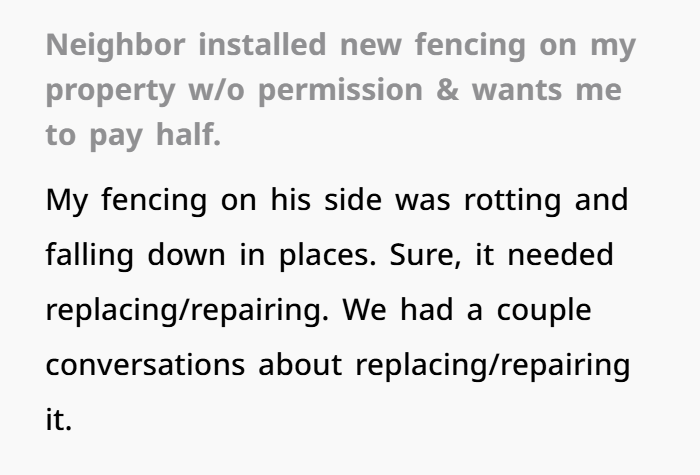
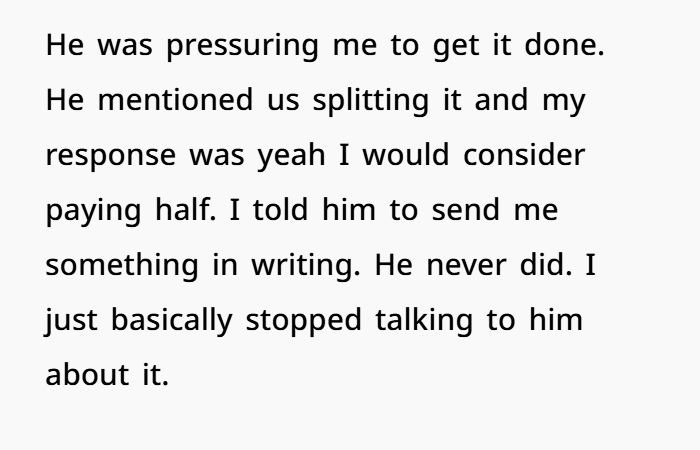
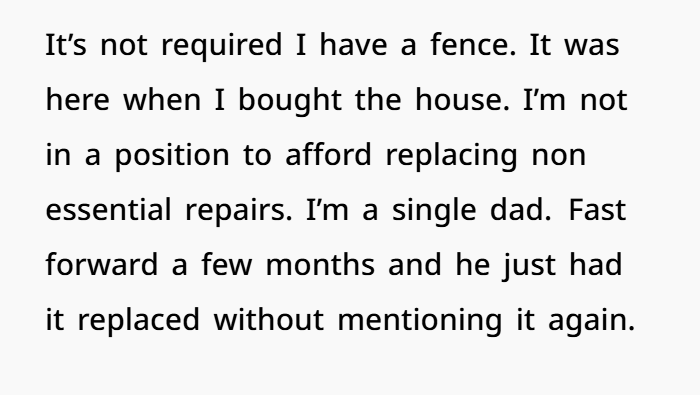
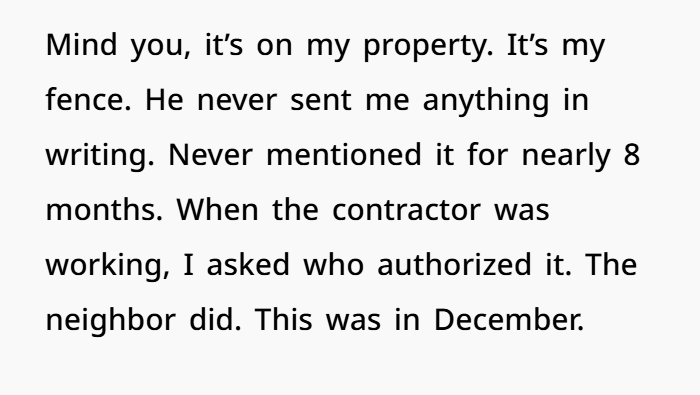
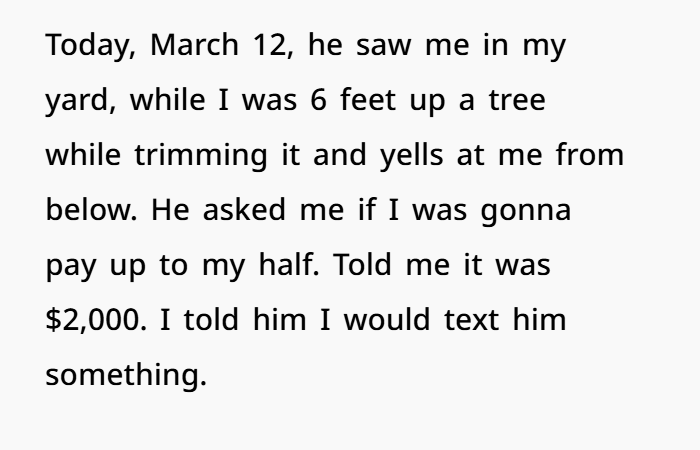
You described a situation where your neighbor replaced a fence — on your property — without written agreement, explicit consent, or clarification of boundary lines. You had discussed the possibility of splitting the cost, but only verbally, and never received anything in writing. Months passed with no follow-up. Then the neighbor went ahead with the project anyway, hired a contractor, and installed a full replacement. Now the neighbor is demanding half of the cost (around $2,000), even though you never formally agreed — let alone signed anything.
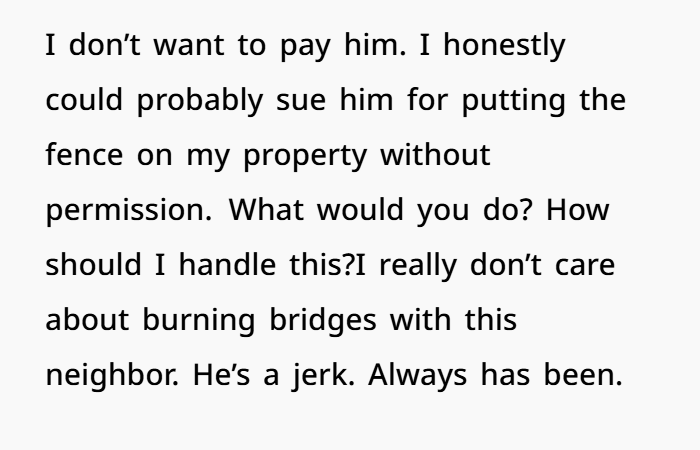
Given that the fence lies on your property, and that you did not authorize the work (in writing or otherwise), you feel justified in refusing payment. You believe you could even sue for the encroachment.
That instinct aligns with many legal principles in property law. But there are some nuances — and risks. It’s worth thinking through what you can realistically do, what you might lose, and how to best protect your rights going forward.
Neighbors can be good, and they can be bad – but the reality sometimes gives us unexpected plot twists with even the nice and sweet folks living next door to us
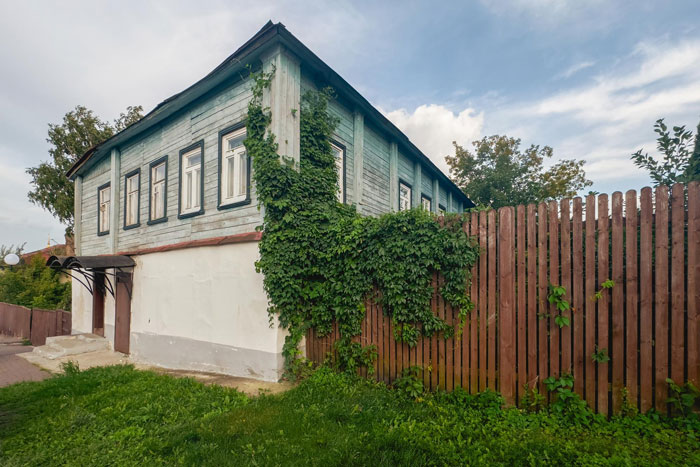
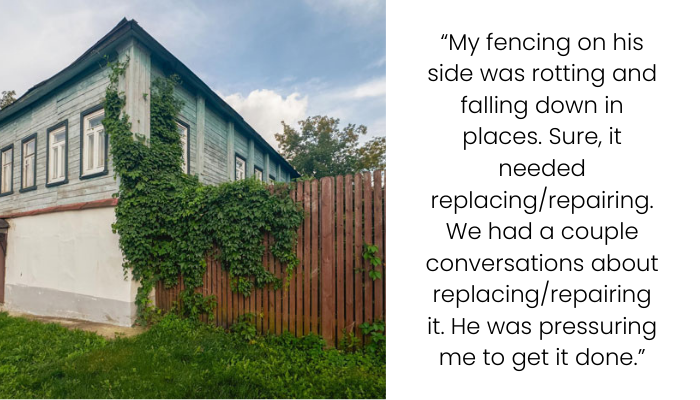
The author of the post is a single dad living next to another man, and the fence between their house is built on his property
Legal Background, What Matters — and What Doesn’t
🔎 1. Why boundary and ownership really matter
- According to legal guides on neighbor fence disputes, what matters first and foremost is who owns the land under/around the fence. A fence built wholly on one owner’s property typically belongs to that owner — not the neighbor who physically installed it. FindLaw+2Rob Robinson Attorney P.A.+2
- If the fence crosses the boundary line, or is means to define the boundary (i.e. a “division fence”), then often both neighbors share responsibility — but only if there is agreement (written or otherwise) or local laws that treat it as a shared fence. FindLaw+1
- Importantly: If a neighbor erects a fence (or any structure) on your property without permission, that may be considered an encroachment. Rob Robinson Attorney P.A.+2Nolo+2
So in your case — where you own the land, did not consent, and never signed anything — you have a strong argument that the fence is on your property and belongs to you alone.
⚠️ 2. Legal risks they (and you) might raise — and your counterarguments

Adverse Possession / Boundary by Acquiescence
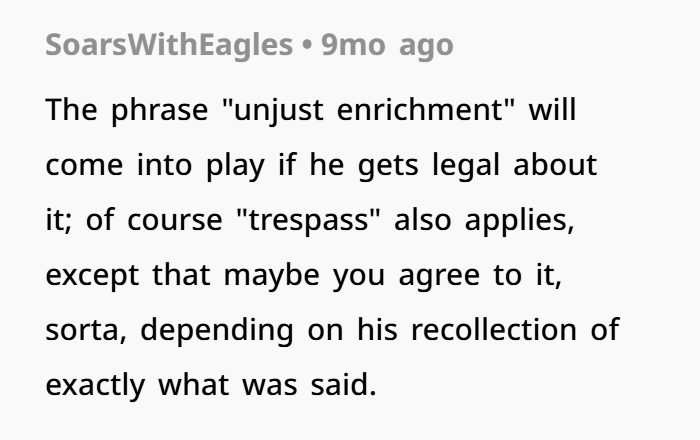
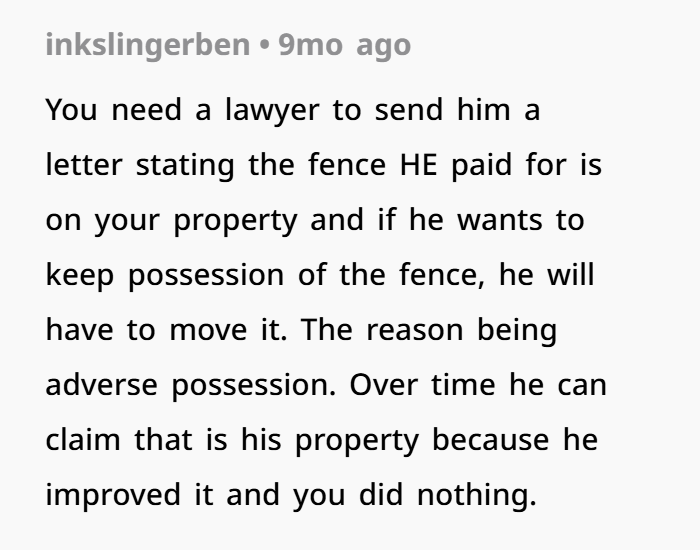
- Over time, if a neighbor uses a portion of your land “openly, continuously, and notoriously,” they — or future owners — might try to argue they acquired ownership via adverse possession or boundary by acquiescence. Litigation & Insolvency Solicitors+2Nolo+2
- To prevent this, property owners typically need to object formally: get a survey done, send a written objection or “cease and desist,” or demand removal. Rob Robinson Attorney P.A.+1
Shared-Fence / Partition-Fence Laws
- In some jurisdictions, a fence running exactly along the boundary is treated as a “shared fence,” and cost/maintenance may be shared, especially if both neighbors benefit. But that typically requires agreement (oral or — ideally — written), and often notice or a “boundary agreement” ahead of construction. FindLaw+2Peterson Law+2
- Without such agreement — and if the fence is not on the true property line — there’s generally no legal obligation on you to share costs. FindLaw+2Cool Cat Fence+2
Removal or Legal Remedy Options
- If the fence encroaches, you have rights. You can ask for removal, demand damages, or even seek a court order (injunction) — depending on damage or value lost. Rob Robinson Attorney P.A.+2FindLaw+2
- Many legal guides recommend obtaining a licensed land survey first. That establishes where your property ends, and where any fence or structure truly sits. Bryan Fagan Law Office+2Rob Robinson Attorney P.A.+2
🛡️ 3. What you should do now — realistic, low‑cost steps
Given your financial situation, a full-blown lawsuit might be expensive and stressful. But you still have options:
- Get a land survey — this will give you solid documentation about where the boundary really lies. If the fence is encroaching on your land, that survey becomes strong evidence.
- Send a formal written notice / demand — politely but firmly inform your neighbor: (a) that you own the land; (b) that you never consented to the fence; (c) demand either removal of the fence or compensation for materials (if you accept partial cost). This gives you a paper trail in case things escalate.
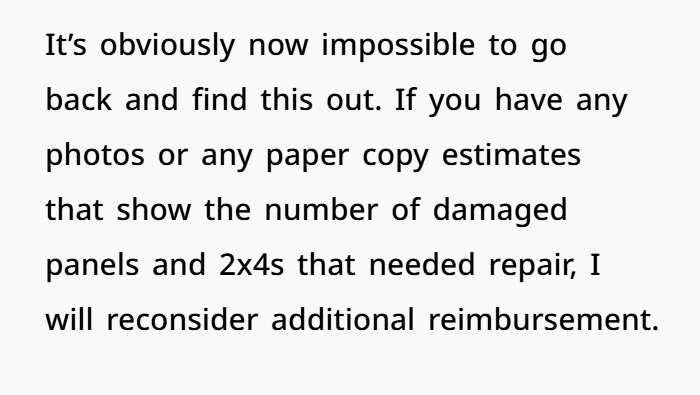
- Negotiate a compromise (if you want to avoid court) — maybe offer reimbursement for only the boards/panels that were truly beyond repair (if you remember which ones). Or propose you build your own fence inside your boundary line (on your side).
- Prepare for legal action (if needed) — if neighbor refuses or demands full payment, you can threaten or actually file for trespass or encroachment in small claims court (or land-court), asking for removal or compensation. Courts in many jurisdictions allow injunctive relief or damages when property is encroached. Rob Robinson Attorney P.A.+2Rob Robinson Attorney P.A.+2
- Prevent future boundary‑by‑acquiescence problems — once you’ve resolved this, consider documenting and formally registering a boundary agreement or marking the property line so no one can claim yours is “abandoned” or shared by default. Peterson Law+1
What I Would Do — If I Were You
If I were you — a single parent, tight on money, no interest in drama — this is what I’d do:
I’d first get a survey to confirm the fence is indeed on my property (not on a shared boundary line). Then I’d send the neighbor a formal letter (text or certified mail) — politely but firmly — saying something like: “You hired a contractor and built a fence on my property without permission. I never agreed, verbally or in writing. Therefore I cannot pay half. If you want to keep the fence in place, you must either pay full cost or remove it.”

Given how things already went down — neighbor never got a written agreement, waited months — I’m guessing they don’t have a strong legal claim anyway. If they still demand money, I’d point out that their failure to get permission (or even a writing) weakens any argument for shared cost. If they push and try to collect, I’d threaten or file for encroachment/trespass, or at least small‑claims court.
If I want to avoid all that hassle — I might offer a very small goodwill amount (just enough to show I’m not being petty) and insist that once that amount is paid and agreed, we call it closed. But I wouldn’t pay the full half, not without proper law‑grounding.
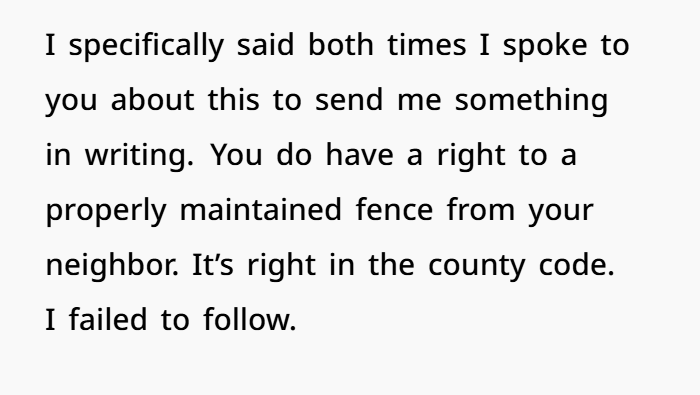
On Your Draft Response — Some Thoughts
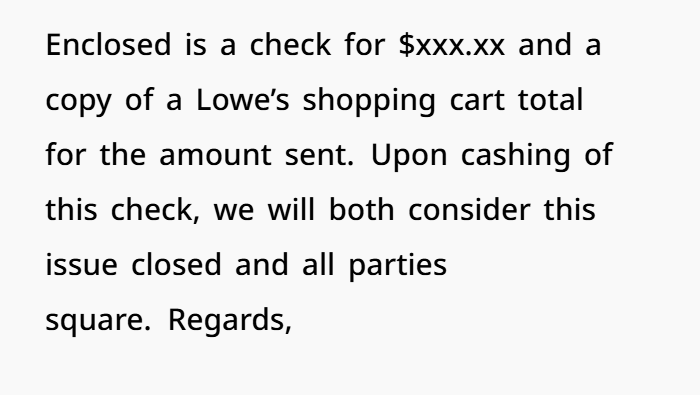
I think your letter / check idea is strong because:
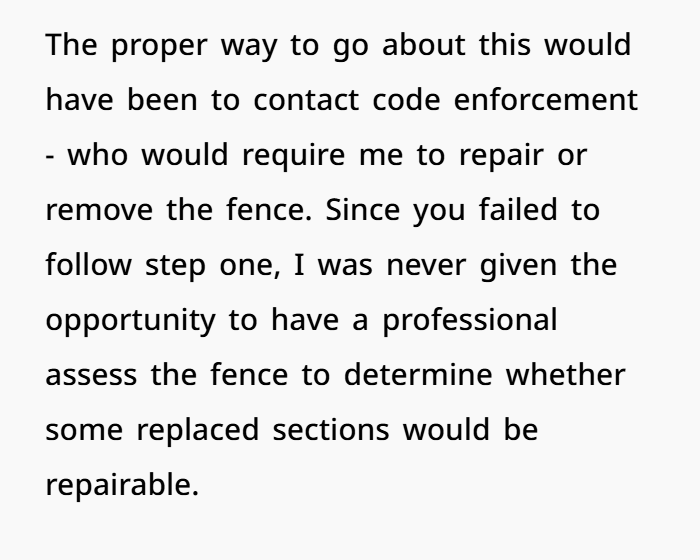
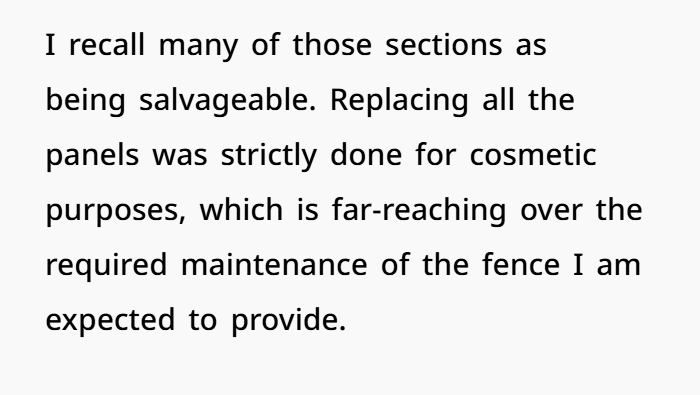
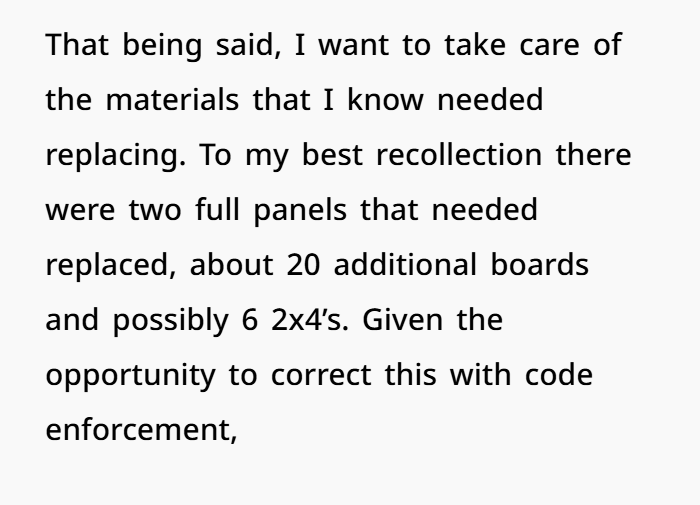
- It acknowledges there were some damaged parts — that shows you’re not totally unreasonable.
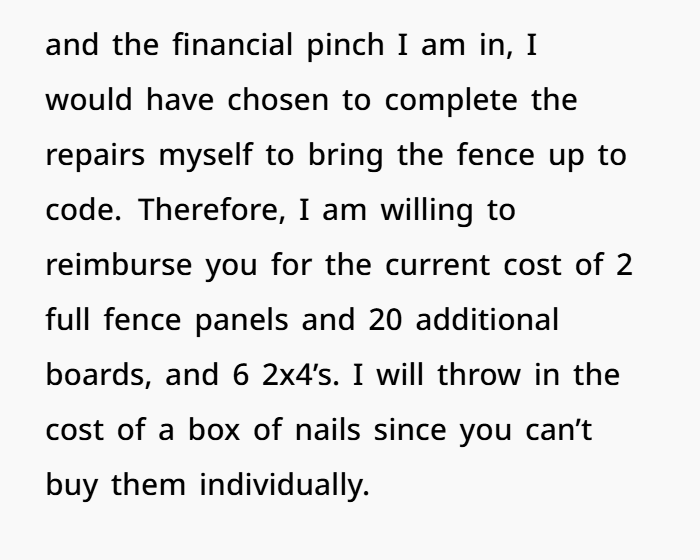
- It limits your liability to only the damaged parts (two panels, some boards, nails) — fair and modest.
- It frames the offer as final settlement. That’s smart, because if neighbor cashes check, that might prevent future claims.
You may want to tweak your draft to be a little more neutral — avoid language like “you’re a jerk,” because that could look bad if things go to court. But overall the approach is reasonable and gives you a strong, defensible position.
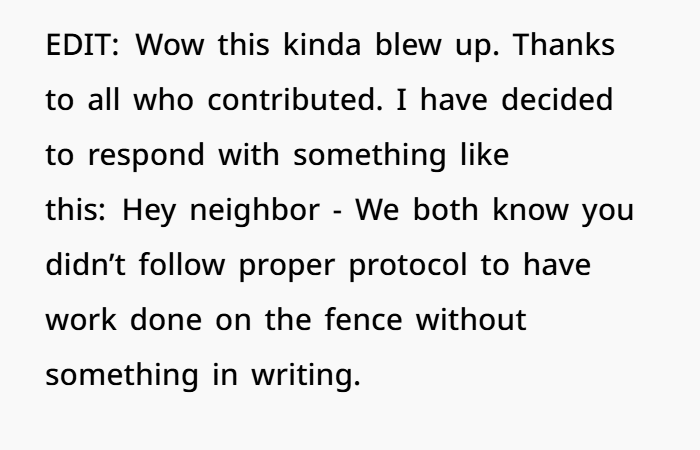
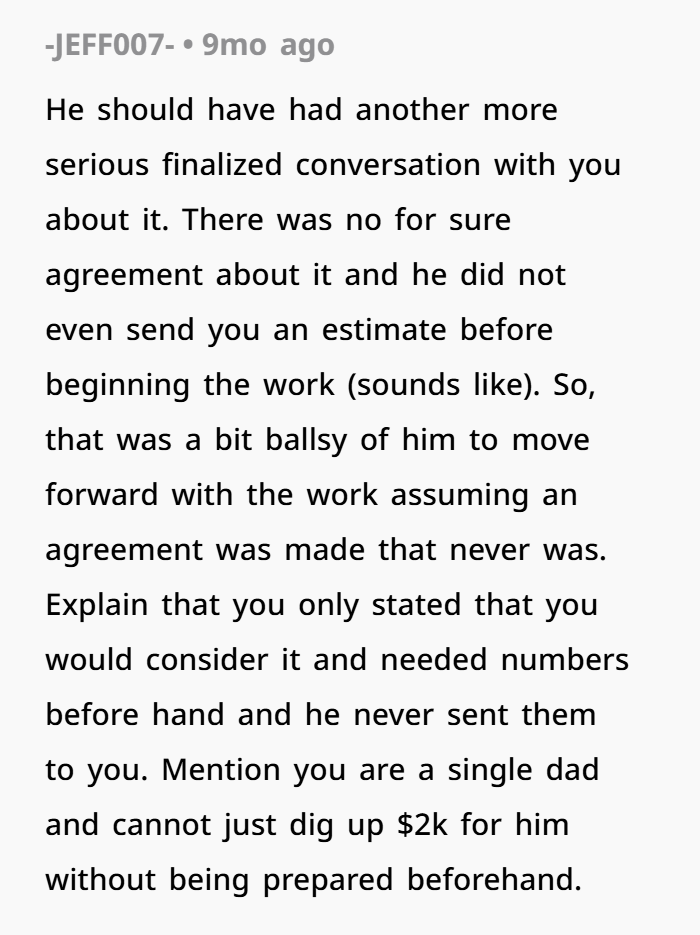
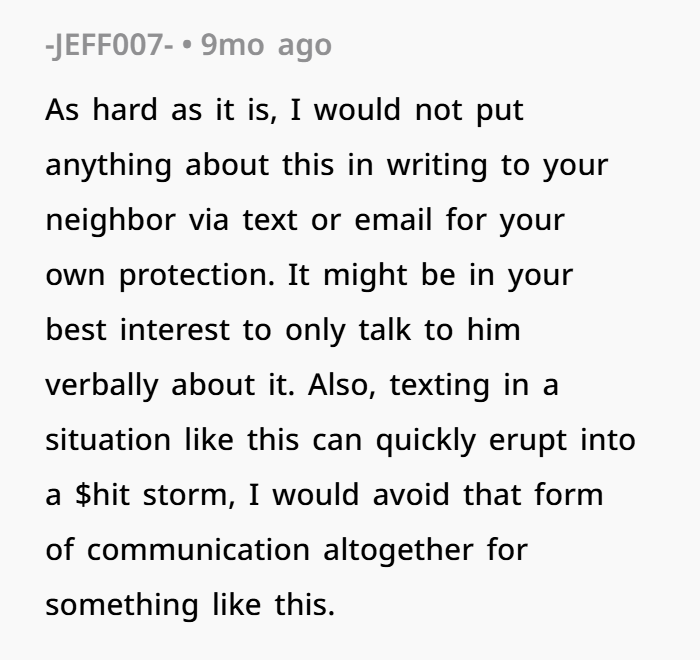
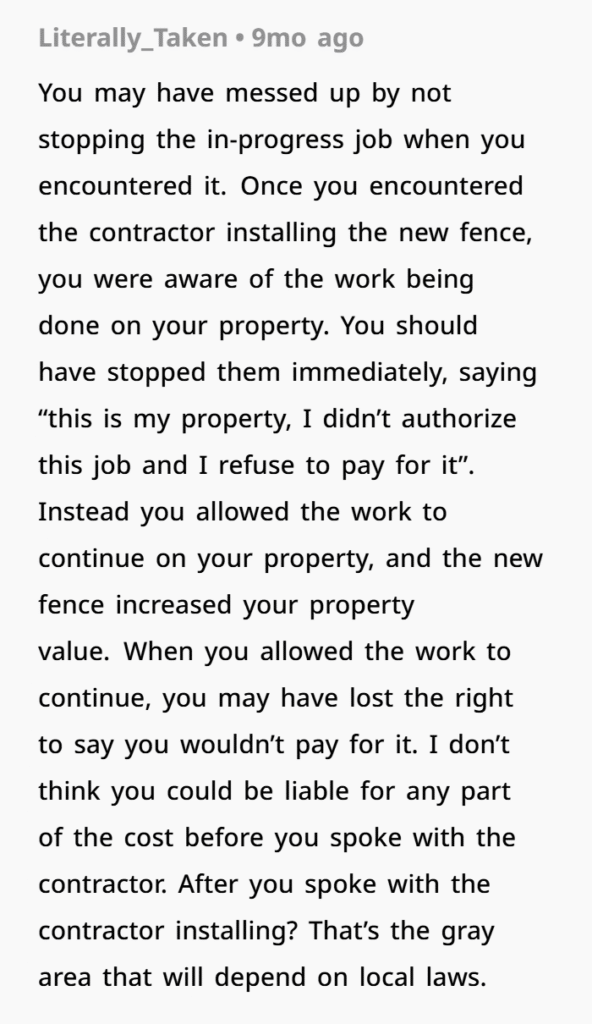
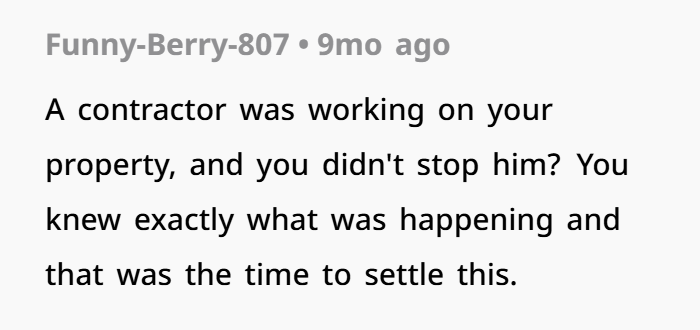
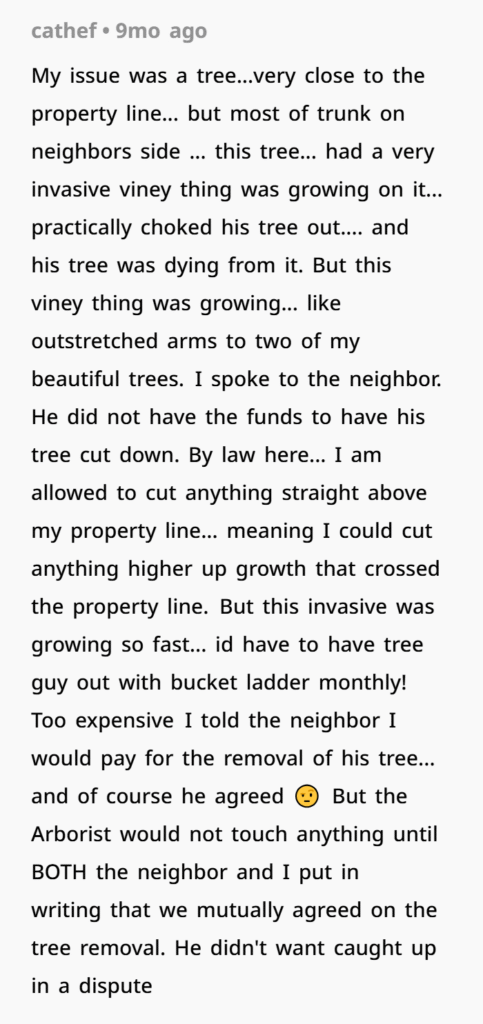
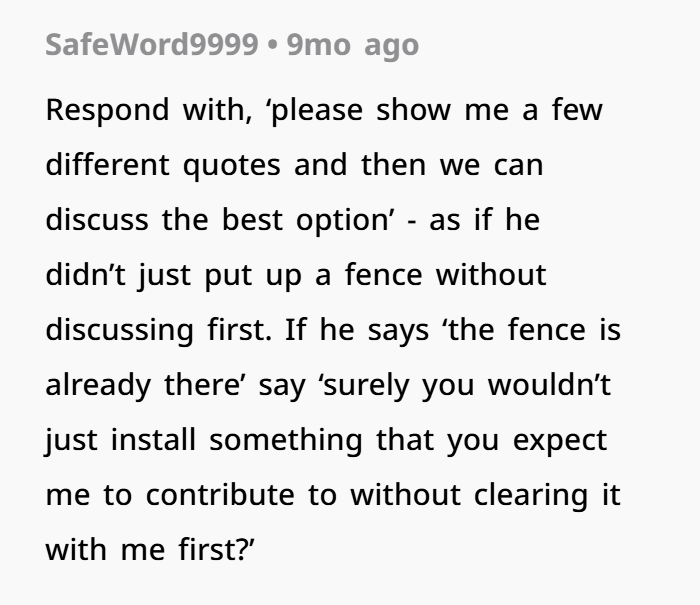
Most commenters told the man has two options – to take legal action or to offer some kind of a deal, so the author picked the second one
Neighbour fence disputes like this often come down to property boundaries, documentation, and consent — not just who said what in a call or conversation. In your case, with no written agreement and fence on your property: you have the upper hand.
A polite but firm written notice, backed by a survey, will likely settle things — either by pushing the neighbor to pay full cost or by forcing removal. And if they push back, you could have a strong case for trespass/encroachment.