I Told My MIL to F*ck Off After She Screamed at My Wife Over a Salad


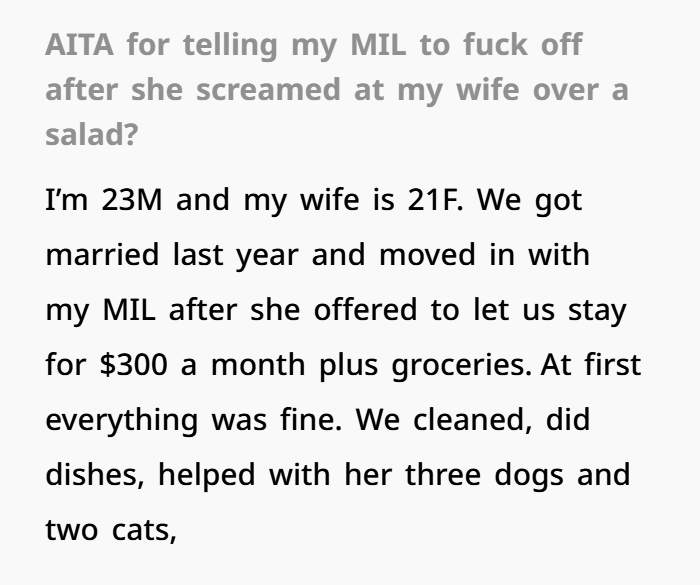
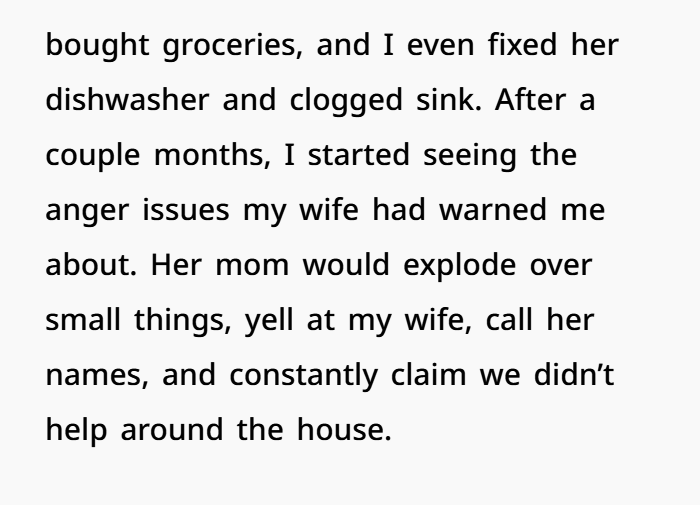
A 23-year-old husband talked about a stressful experience with his mother-in-law after living together under the same roof. He and his wife moved into her house because they wanted to save money and improve their financial situation. While living there, they tried to be responsible and helpful members of the household.
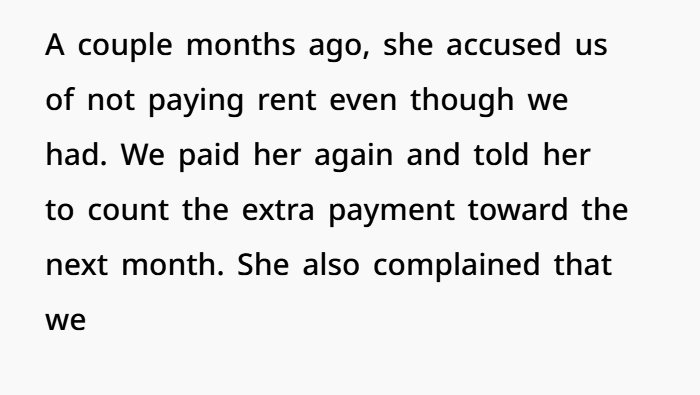
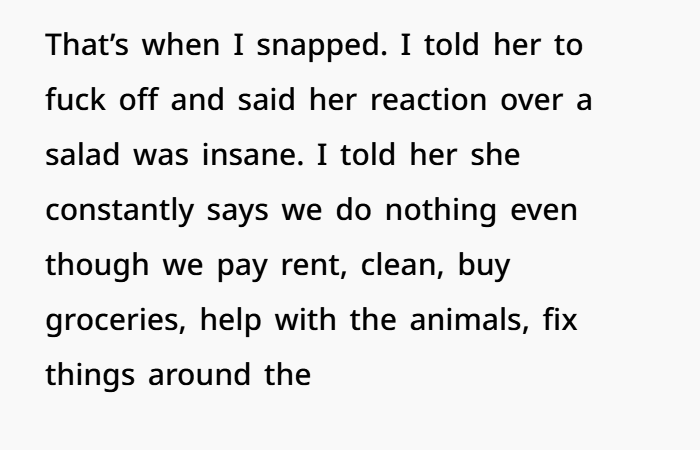
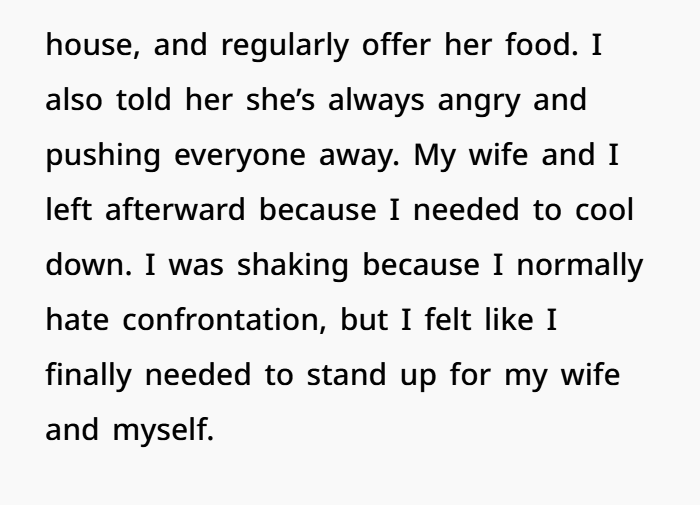
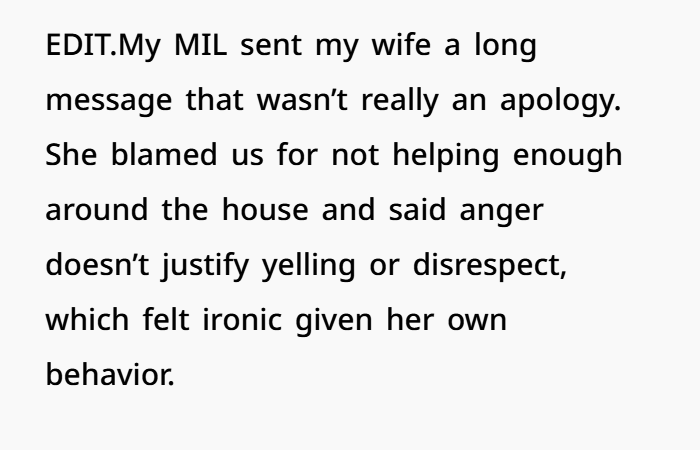
They say they contributed by paying rent, buying groceries, cleaning, helping with pets, and fixing problems around the home. Despite these efforts, the husband felt that his mother-in-law became more negative toward them. He says she often complained and accused them of not helping enough, which created tension in the family.
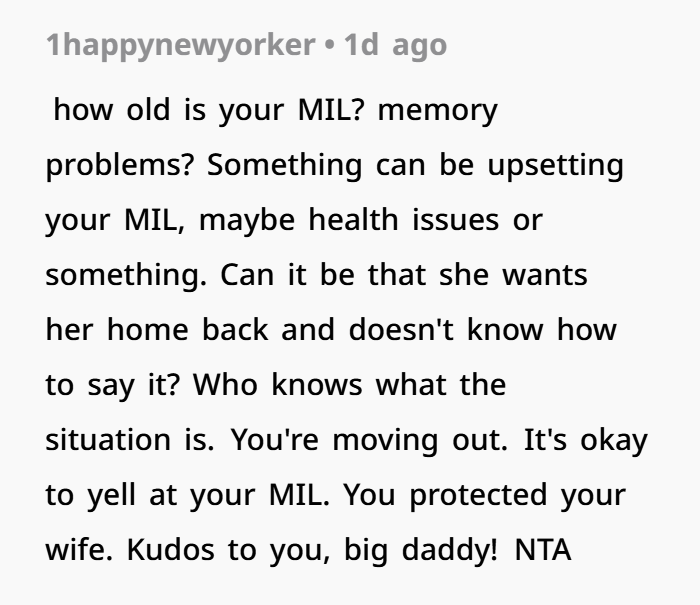
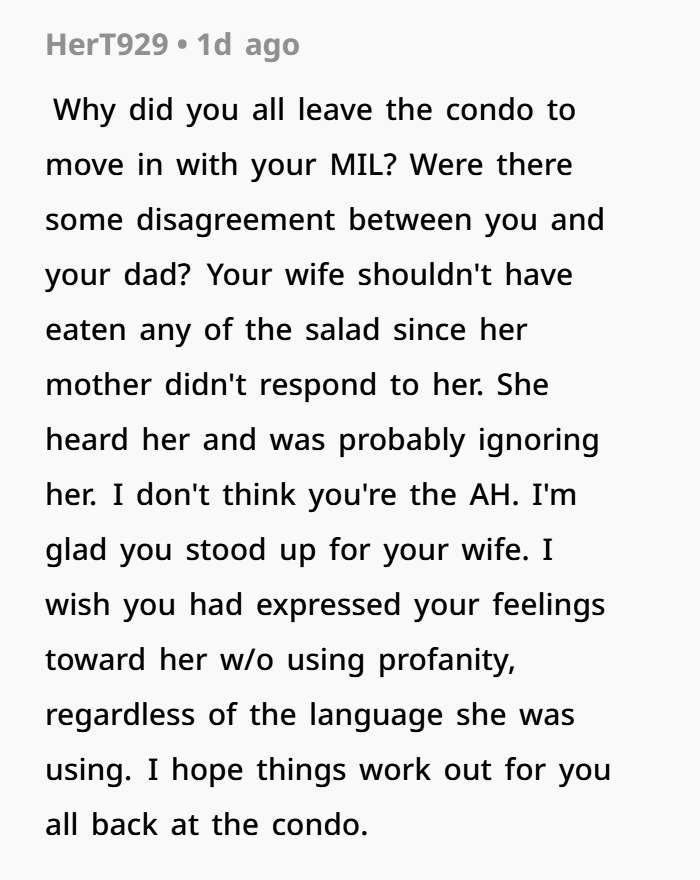
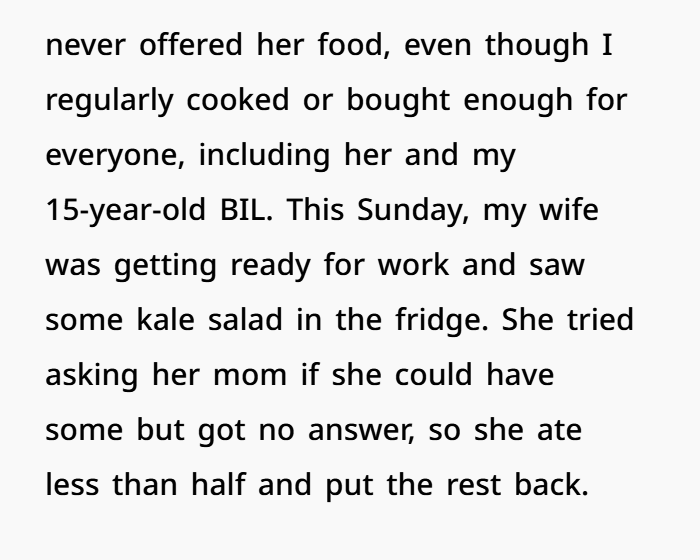
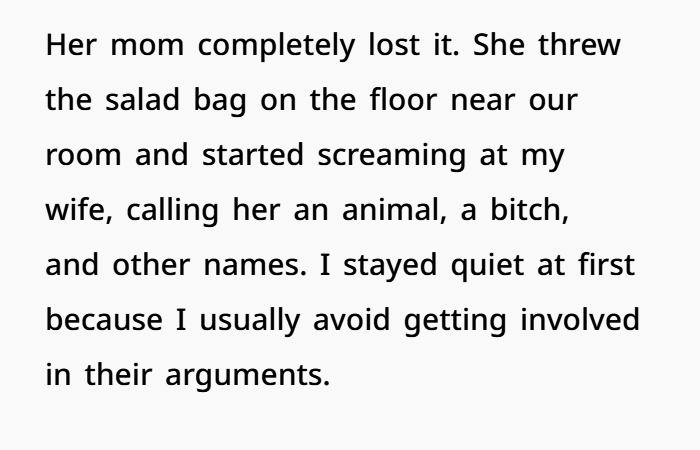
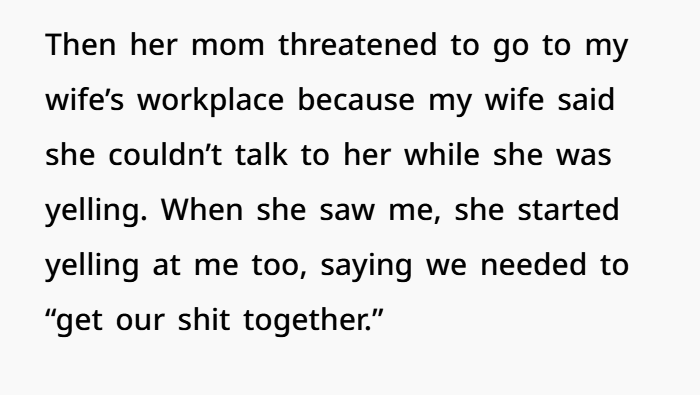
The final disagreement started when his wife took some kale salad from the refrigerator. She had attempted to ask first but did not receive a reply. His mother-in-law became angry, threw the salad away, and used insulting words toward his wife. The husband felt hurt seeing his wife treated this way and responded with angry words of his own.
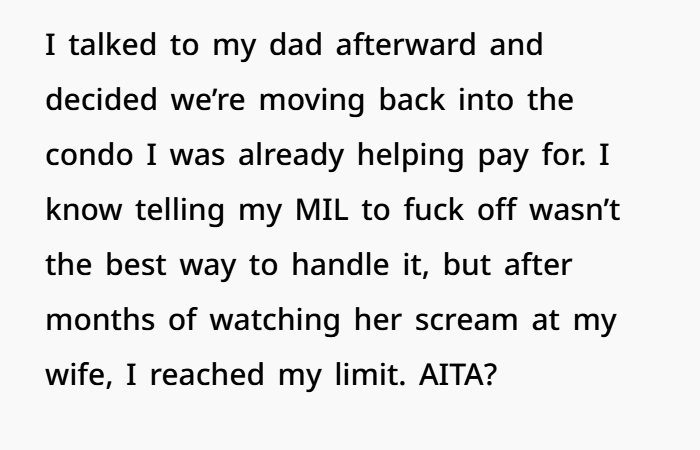
Soon after, the couple decided to move back to their condo and create their own space. The husband is now thinking about whether he should have reacted differently. The situation highlights common challenges with shared housing, family relationships, money management, and creating healthy boundaries at home.

When Family Problems Create Stress and Broken Boundaries
Living with family members can be a helpful choice for many couples. It can reduce housing costs, lower monthly expenses, and make it easier to save money. For young couples, sharing a home with parents or relatives can feel like a practical financial decision.
However, living together can also create problems when expectations are not clear. Different ideas about money, household duties, privacy, and respect can lead to family conflict.
This story shows how financial arrangements, family relationships, and personal boundaries can become difficult when people do not communicate clearly.
When Living Together Creates Family Conflict
The couple moved into the mother-in-law’s home with an agreement. They would pay rent and help with household responsibilities.
From their point of view, they were contributing like responsible adults. They were helping financially and doing their part around the house.
However, the mother-in-law felt they were not doing enough.
This type of disagreement is common in shared households. One person may see their help as enough, while another person may expect more.
When people do not discuss their expectations clearly, small problems can slowly turn into bigger conflicts.
Small Arguments Are Often About Bigger Problems
The argument about the salad was probably not really about the salad.
In many family disagreements, the final argument is only the moment when years or months of frustration come out. The real problem may be a feeling of being ignored, disrespected, or unappreciated.
When small issues happen again and again, people may start feeling emotionally tired.
Healthy family relationships require open and respectful communication. People should be able to discuss problems without insults, yelling, or personal attacks.
The Importance of Respectful Communication
Every family has disagreements. Different opinions are normal, especially when adults share the same home.
The problem starts when arguments become harmful.
Name-calling, constant criticism, threats, and humiliation can damage trust in a relationship. Instead of solving a problem, these actions often make people feel hurt and defensive.
Good communication means talking about the issue instead of attacking the person.
For example, saying:
“I feel overwhelmed because I need more help around the house”
is very different from saying:
“You never do anything right.”
The way people speak during conflicts can make a big difference.
Understanding Emotional Boundaries in Families
Family relationships also need healthy boundaries.
Boundaries help people understand what behavior is acceptable and what is not. They allow family members to respect each other’s feelings, privacy, and personal choices.
Even when people love each other, they can still hurt each other if boundaries are ignored.
Living with relatives requires clear discussions about:
- Monthly rent payments
- Household chores
- Privacy
- Personal space
- Home rules
- Financial responsibilities
Having these conversations early can prevent many misunderstandings.
When a Partner Needs Support
Another important part of this situation is the husband’s role.
Marriage often means that partners become each other’s main support system. This does not mean a spouse must always agree with everything their partner says. But it does mean they should care about their partner’s emotional well-being.
If someone feels constantly criticized or disrespected, their partner should take those feelings seriously.
Supporting your spouse does not mean creating more conflict. It means working together to find a healthy solution.
Workplace Boundaries Should Be Respected
The situation became more serious when the conflict involved the wife’s workplace.
A workplace is a professional environment where people expect safety, privacy, and respect.
Bringing personal family arguments into someone’s job can create unnecessary stress and embarrassment. Personal disagreements should usually be handled privately and calmly.
Respecting workplace boundaries is important for both personal and professional reasons.
Understanding Harmful Behavior in Relationships
Many people think relationship problems only become serious when there is physical harm. However, repeated yelling, insults, intimidation, and controlling behavior can also negatively affect emotional health.
Not every argument is emotional abuse. People can have bad days and make mistakes.
The important thing is to look at patterns.
If someone repeatedly uses hurtful words, creates fear, or refuses to respect another person’s boundaries, it can seriously damage the relationship.
Money Problems Can Create Family Tension
Financial disagreements are one of the most common causes of stress between family members.
When relatives share a home, money arrangements should be clear. This can include:
- Written agreements
- Rent payment records
- Shared expense discussions
- Clear responsibilities
Even between family members, financial planning is important.
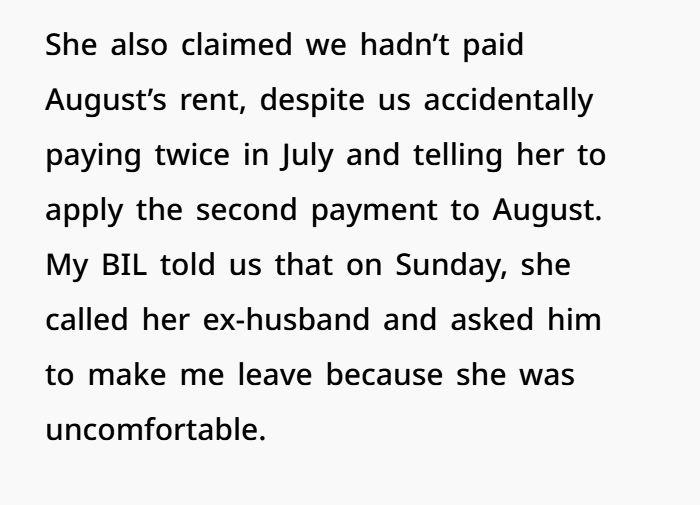
Having a clear agreement can prevent people from feeling confused or taken advantage of.
Moving Out Can Sometimes Be the Healthiest Choice
The couple’s decision to move back to their own home may help reduce stress.
Sometimes creating physical distance can improve family relationships. Living separately can give everyone time to calm down and rebuild respect.
Being family does not mean people must accept unlimited conflict.
Healthy relationships need kindness, understanding, and respect from everyone involved.
The Bigger Lesson About Family and Boundaries
Living with relatives can be a great way to save money and receive support. But it also requires careful planning.
Before moving in together, families should talk about:
- Financial expectations
- Household responsibilities
- Privacy rules
- Personal boundaries
- How disagreements will be handled
Clear communication can prevent many problems.
At the end of the day, family relationships work best when people respect each other. Saving money is important, but emotional peace and healthy relationships are valuable too.
Sometimes creating space is not about ending a relationship. It is about giving everyone a better chance to rebuild it.
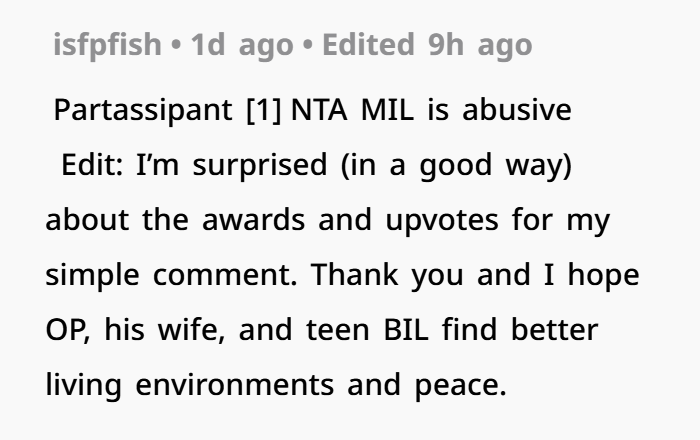
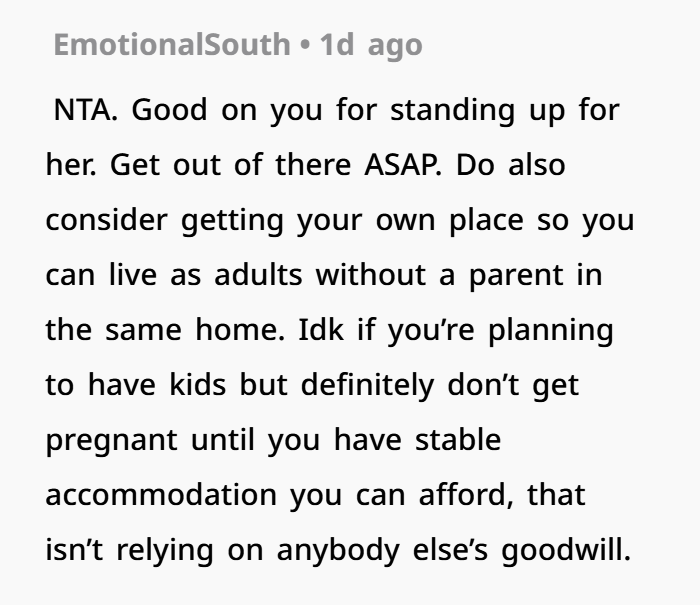
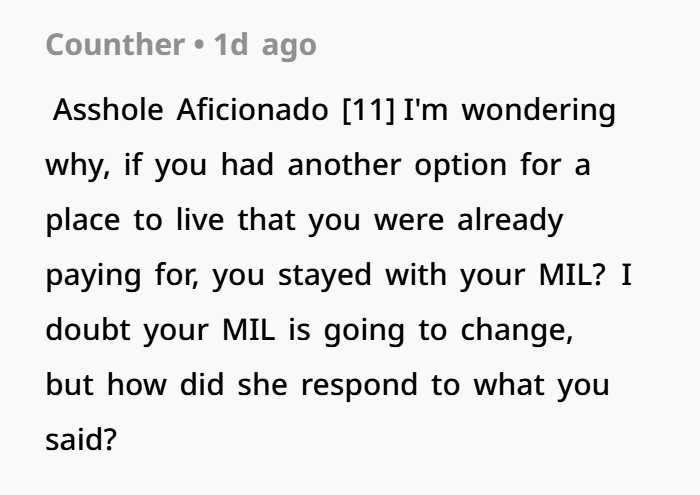
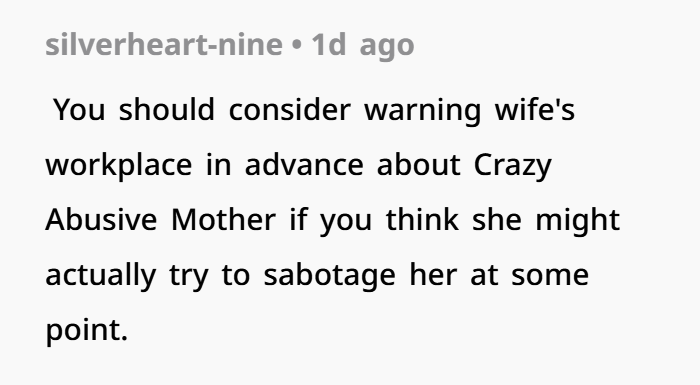
The Comments Are In