
AITA for Refusing to Pay for My Daughter’s College Because She’s Planning Plastic Surgery?


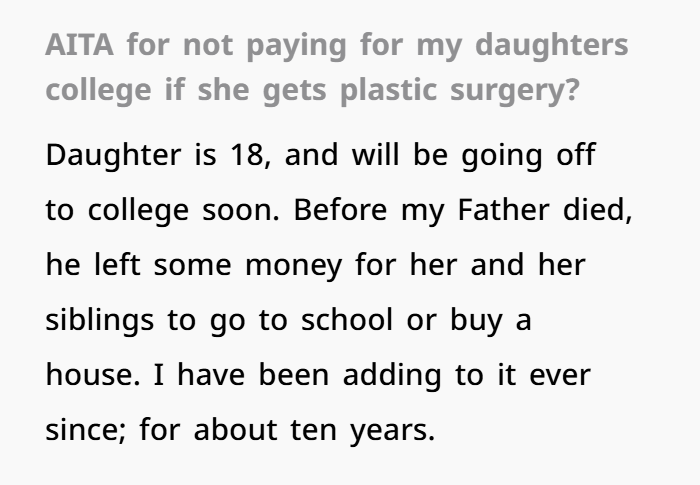
A parent is facing a difficult decision about their daughter’s future. For many years, the parent saved money for her college education, including funds left by her late grandfather. The goal was to help her build a better future through education and career opportunities.
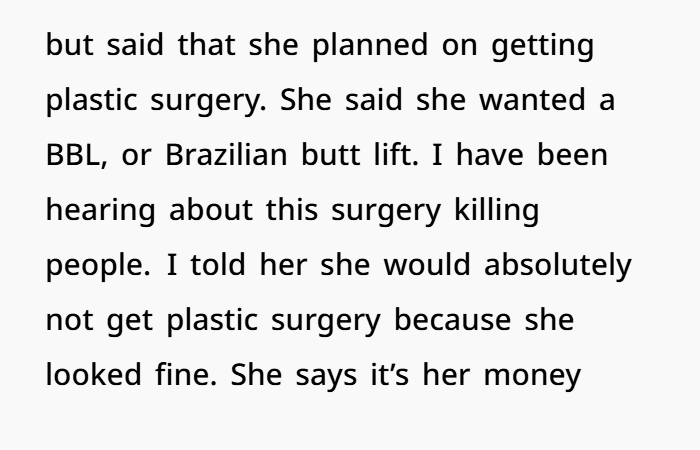
However, the daughter recently shared that she wants to use the money for cosmetic surgery instead, specifically a Brazilian Butt Lift (BBL). The parent became concerned because of the health risks connected to some cosmetic procedures and felt the money was meant for education, not personal changes.
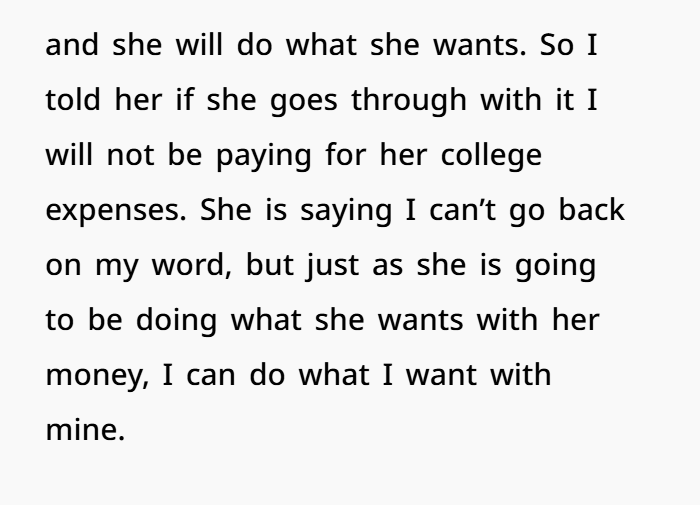
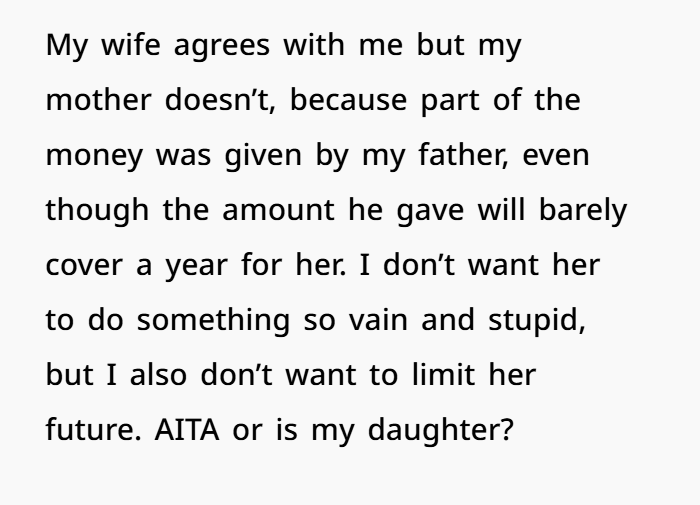
The parent told their daughter that they would not pay for college if she chooses to use the savings for surgery. The daughter feels hurt because she believes the college support was already promised. Other family members have different opinions, with some feeling the parent is being too strict while others support the decision.
The situation raises important questions about family expectations, financial responsibility, and personal choices. While parents want to support their children’s dreams, disagreements can happen when money, values, and future plans are involved. Open communication and understanding may help both sides find a solution.
And quite often the opinions clash, just like it happened in today’s story

My Daughter Wants Cosmetic Surgery Instead of Using Savings for College — How Should I Handle This?
When children become adults, parents often face a difficult balance.
They want to support their child’s independence, but they also want to protect their future.
This situation is not only about cosmetic surgery.
It is about money, education, health decisions, trust, and the changing relationship between parents and adult children.
Why This Situation Feels So Difficult
The main conflict is between two different views.
The daughter believes:
“This is my money, and I should be able to make my own choices.”
The parent believes:
“This money was saved to help with your education and future.”
Both sides have feelings behind their decisions.
For the parent, the savings represent years of planning and sacrifice.
For the daughter, the money represents independence and the ability to make choices as an adult.
The Importance Of College Savings And Future Planning
Many parents save money for their children’s education because they want to create better opportunities for them.
College funding can help young adults avoid large student loans and start their careers with fewer financial challenges.
Money saved for education is usually seen as an investment in a child’s future.
That is why some parents feel differently when that money is used for something else.
The important question is:
Was the money clearly meant for college, or did everyone have different expectations about how it could be used?
Clear communication about money is important in families.
Understanding Adult Financial Independence
At 18, many people begin making more personal decisions about their lives.
They may want control over:
- Their money
- Their appearance
- Their career choices
- Their lifestyle
Learning independence is a normal part of becoming an adult.
However, independence also comes with responsibility.
If someone receives financial support from parents, it is reasonable for both sides to discuss expectations.
Support and independence can exist together.
Understanding Cosmetic Surgery Risks
The daughter is interested in a Brazilian butt lift (BBL), which is a cosmetic procedure.
Many people choose cosmetic surgery for personal reasons, such as improving confidence or feeling more comfortable with their appearance.
However, like all surgeries, cosmetic procedures have risks.
A BBL involves transferring fat to another area of the body, and it has received attention because of safety concerns.
Possible risks can include:
- Infection
- Complications from surgery
- Blood clots
- Fat embolism
Because of these risks, it is important for anyone considering this procedure to carefully research the surgery, choose a qualified medical professional, and understand the possible outcomes.
The parent’s concern may not be about appearance.
It may be about safety.
A Conversation About Values Is Needed
The disagreement may become worse if it turns into:
“You don’t understand me.”
“You don’t respect me.”
“You are controlling me.”
Instead, both sides should try to understand each other.
The parent can ask:
“Why is this surgery important to you?”
“What are you hoping it will change?”
“How do you feel about your education goals?”
The daughter can ask:
“Why does this worry you so much?”
“What are your concerns about my decision?”
A calm conversation can help both people feel heard.
Possible Ways To Find A Middle Ground
There may not be only one solution.
Some possible options include:
Keep Education Funding Separate
The parent may continue supporting college but choose not to pay for cosmetic surgery.
This allows the daughter to pursue education while making her own decisions about other expenses.
Delay The Surgery
The family could agree to revisit the decision later, after the daughter is settled in school or financially more independent.
Use Personal Savings
If the daughter has her own savings, she may decide to use her own money while understanding that education support is separate.
Discuss The Procedure Carefully
If she still wants surgery, encourage responsible research.
Important questions include:
- Is the doctor properly qualified?
- Does the doctor explain all risks?
- Are expectations realistic?
- Has she considered all options?
Avoid Turning This Into A Fight About Appearance
One important thing for parents is avoiding messages that make a child feel judged.
Saying:
“You do not need this because you are already beautiful”
may be supportive, but it may not address the real reason behind the decision.
The conversation should focus on:
- Health
- Safety
- Financial planning
- Long-term goals
Not shame or criticism.
Is The Parent Wrong For Setting A Condition?
From this situation alone, the parent is not necessarily wrong for having concerns.
Parents are allowed to decide how they use their own money.
If money was saved specifically for education, they can explain that purpose.
However, communication matters.
If the daughter believed college funding was guaranteed no matter what, suddenly changing the agreement could damage trust.
The best approach is honesty and a respectful conversation.
A Possible Way To Talk About It
A parent might say:
“I love you and I want you to have a successful future. The money we saved was meant to support your education because we believe in your goals. I am worried about this surgery because of the health risks, not because I want to control your choices. I want us to talk about your reasons, your plans, and what feels right for your future.”
This approach keeps the conversation focused on love and concern.
Netizens were split in their opinions – some agreed with the dad, while others said he shouldn’t blackmail his daughter






Final Thoughts
Parents and adult children often disagree because they see situations differently.
The daughter wants control over her own choices.
The parent wants to protect a future they have worked hard to support.
Both feelings are understandable.
The goal should not be winning the argument.
The goal should be creating a conversation based on respect, honesty, and understanding.
Financial support, personal freedom, and family relationships all require clear boundaries.