
AIO for refusing to take care of my husband after an accident that left him disabled?

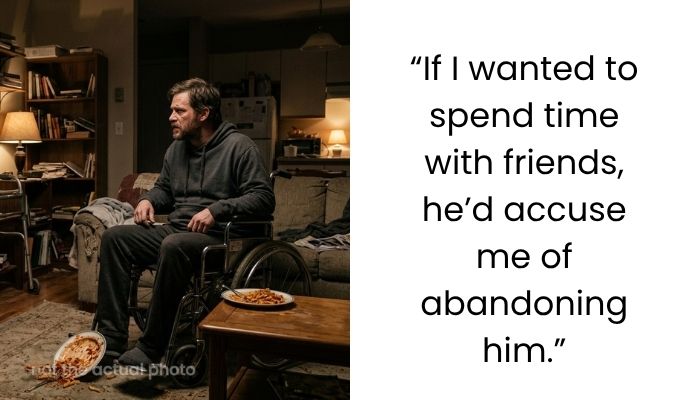
This story is about a married couple whose relationship changed after a serious accident.
The wife, 34, has been married to her husband Jake, 36, for eight years. Their life changed after Jake was in a motorcycle accident that left him permanently disabled. After that, he needed help with daily movement and basic tasks.
At first, the wife supported him fully. She worked a full-time job, managed the home, handled money, and also became his main caregiver. This included helping with medical needs and daily care. It was very stressful, but she continued because of her commitment to the marriage.
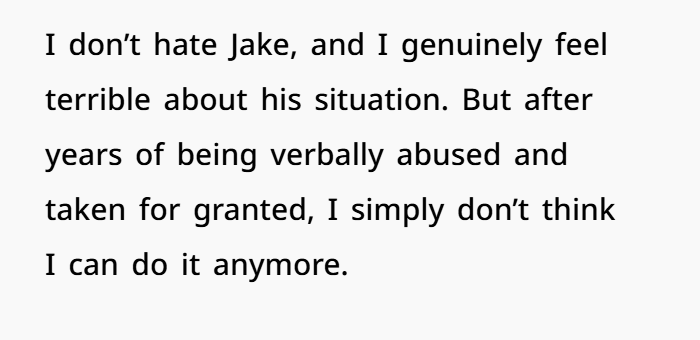
Over time, the situation became harder. Jake reportedly became more angry and emotionally difficult. He often blamed his wife for not doing enough and refused to go for therapy or counseling.
One day, after the wife returned home from work, Jake asked her to go out and bring food. She refused because she was exhausted. He became very angry, threw a plate, and insulted her.
After this incident, the wife decided to leave the home. She moved in with her sister. She said she would still help with money and arrange professional caregiving support, but she could no longer be his full-time caregiver.
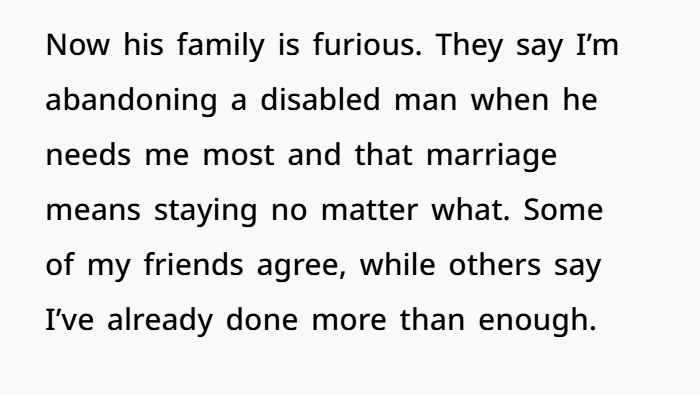
This decision caused conflict in the family. Jake’s relatives felt she was abandoning him because of his disability. Others understood that she was dealing with caregiver stress, emotional pressure, and burnout.
In the end, the situation shows the challenges of long-term caregiving, marriage responsibilities, disability care, and the importance of emotional boundaries and support systems in difficult relationships.
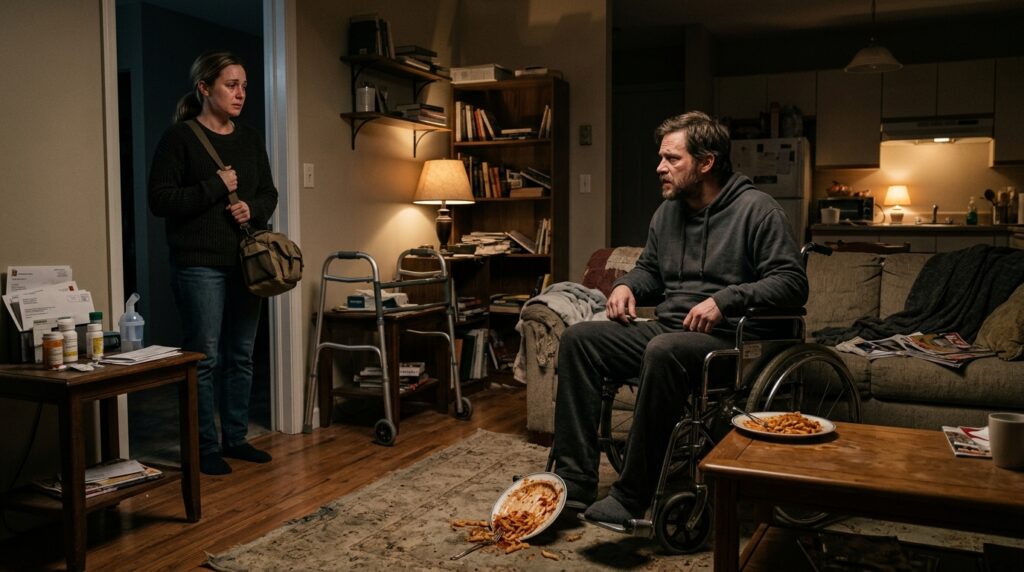
This situation involves a marriage affected by disability, caregiving pressure, emotional abuse, and long-term stress.
Caregiver Stress and Mental Health Impact
Taking care of a disabled partner can be extremely difficult, especially when someone is also working full-time.
Research from the American Psychological Association (APA) shows that long-term caregivers often experience:
- Extreme stress and exhaustion
- Emotional burnout
- Feelings of frustration or sadness
- Loss of personal well-being when support is limited
The Mayo Clinic also explains that caregiver burnout can happen when a person is responsible for constant care without enough emotional or practical support.
Relationship Breakdown and Emotional Abuse
In this case, the wife was providing full-time care after her husband’s accident. Over time, the relationship became more stressful.
The husband reportedly became:
- Emotionally harsh
- Verbally abusive
- Demanding during stressful moments
- Unwilling to seek counseling or therapy
This kind of behavior can lead to serious strain in a relationship, especially when one partner is already under pressure as a primary caregiver in a disability care situation.
Legal View of Caregiving in Marriage
From a legal point of view, marriage does not usually require one spouse to personally provide full-time physical caregiving.
In many legal systems:
- Spouses may have financial responsibilities
- But they are not forced to provide constant hands-on care
- Abuse or unsafe conditions can justify separation
In family law cases, leaving a caregiving role is generally not treated as a crime if the person still provides financial help or arranges professional care.
Separation and Safety in Family Law
In many countries with no-fault divorce systems, emotional abuse and ongoing conflict can be valid reasons for separation.
Courts often focus on:
- Safety of both partners
- Fair financial support
- Long-term care arrangements for the disabled spouse
The goal is usually to ensure stability, not to force continued caregiving in an unsafe or unhealthy environment.
Psychological Impact of Conflict in Caregiving
Studies in rehabilitation and family psychology show that relationships often break down faster when:
- One partner refuses therapy
- Emotional or verbal aggression increases
- There is no effort to improve communication
This can lead to caregiver burnout, resentment, and relationship breakdown, even when there is physical dependency.
Support and Next Steps in Similar Cases
In situations like this, professionals often suggest:
- Family law or divorce legal advice
- Planning for spousal support and financial stability
- Accessing professional caregiving services
- Using mental health counseling for caregiver stress
- Exploring disability benefits and long-term care options
These steps help reduce emotional pressure while ensuring proper care continues.
See the comments to know what people said
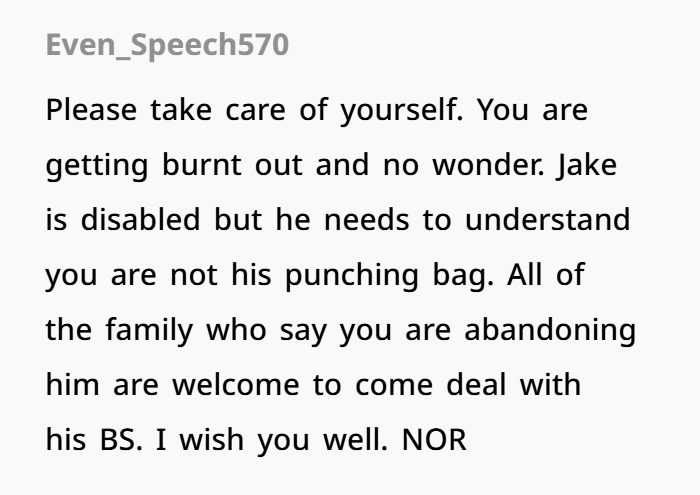
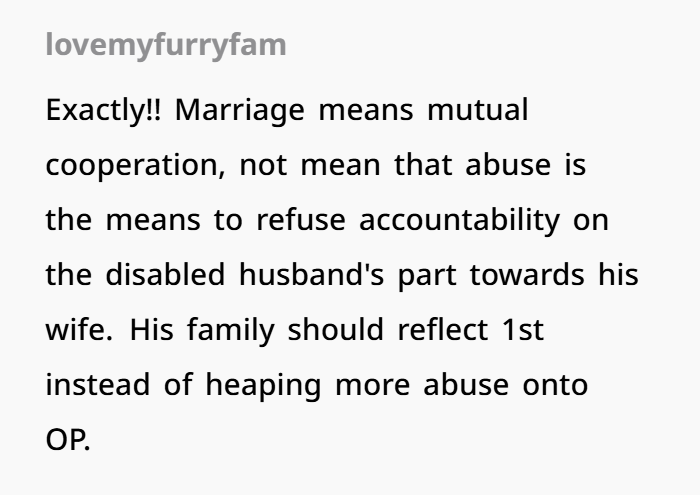

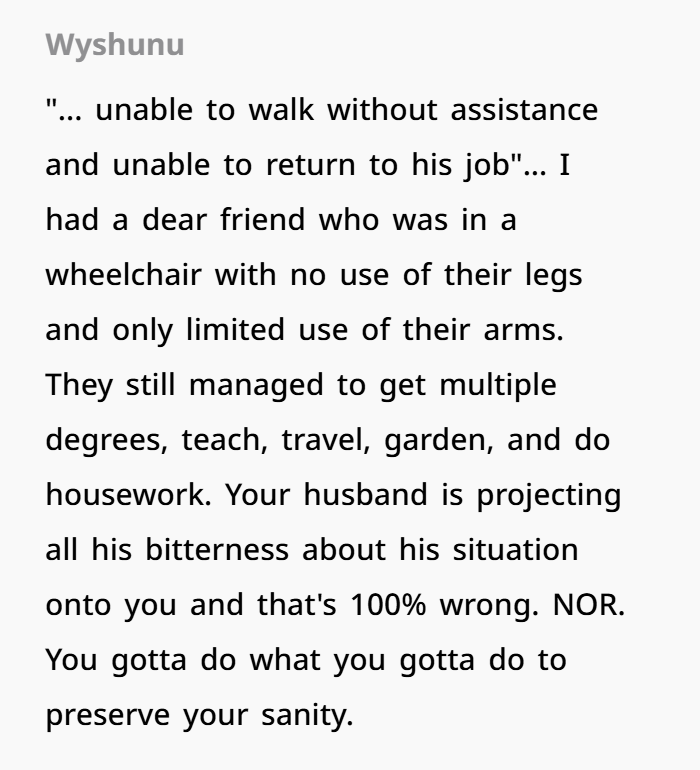

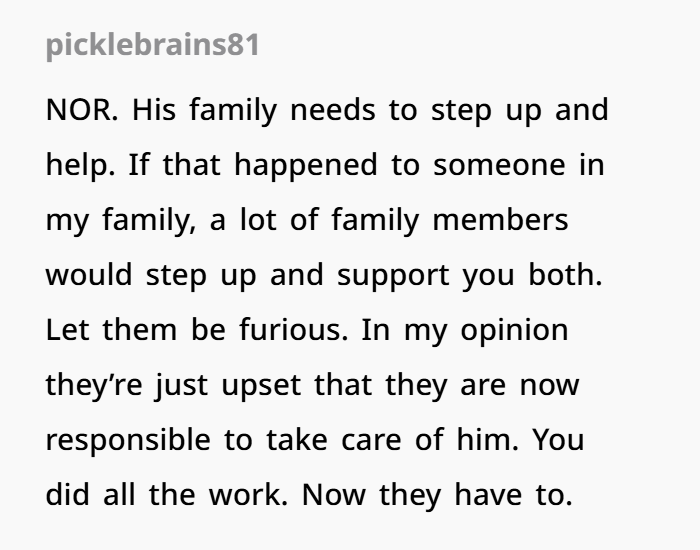
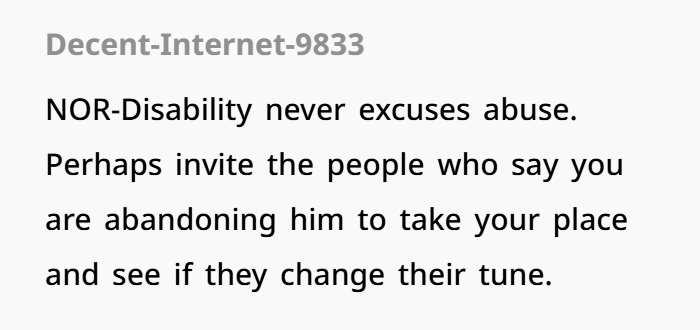
This story shows how caregiving responsibility, emotional abuse, and disability support needs can create serious strain in a marriage.
It highlights an important balance between:
- Supporting a disabled partner
- Protecting personal safety and mental health
- Using legal and professional care systems instead of relying only on one spouse

![Husband [37M] Had an Affair, and My MIL Is Begging Me [32F] to Stay. How do I trust him again?](https://ridmax.com/wp-content/uploads/2026/07/Nimra-Dailyscrolled-700-x-400-px-66.jpg)