“It’s Your Turn to Host Christmas!”—Sick Wife Refuses In-Laws’ Demands After They Accuse Her of Tearing the Family Apart


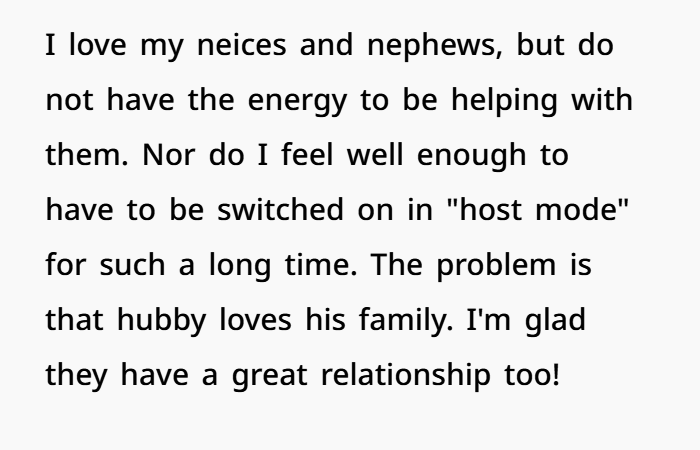
A woman is facing a difficult Christmas decision because her in-laws want her to host the family celebration. She is 31, and her husband is 30. They have been together for eleven years and married for eight. Their usual holiday plan is to spend Christmas with each family on different years. On her husband’s side, the hosting duties are shared between his parents, his brother’s family, and their own household. She normally has a good relationship with her in-laws and is thankful for their help with household finances and home renovation costs. However, she feels they sometimes expect too much from her.
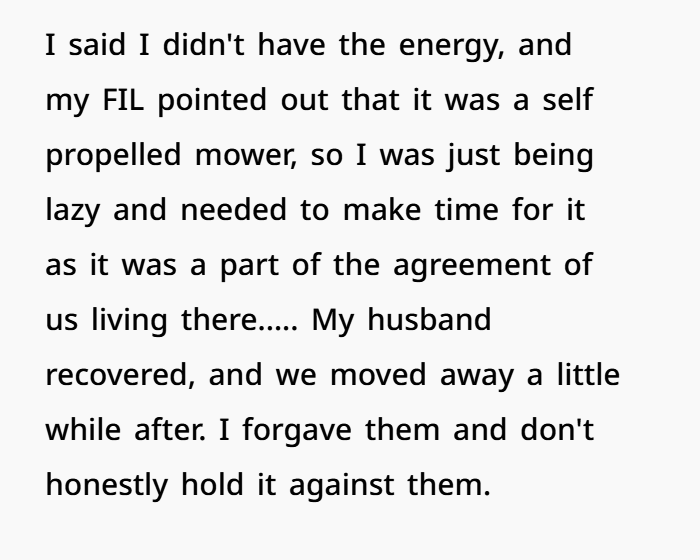
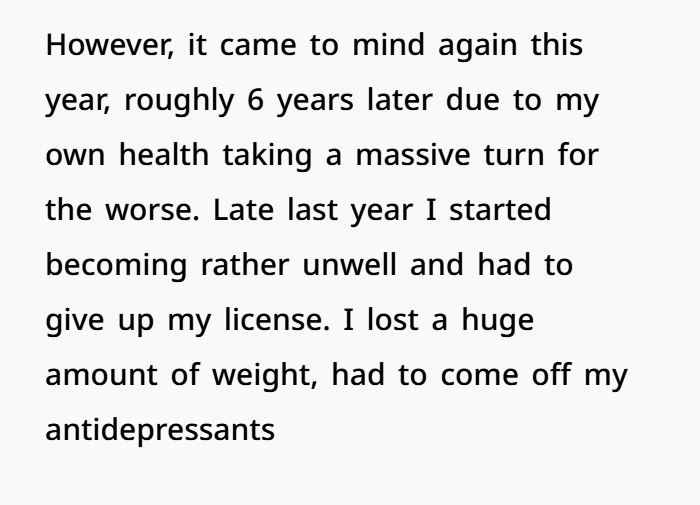
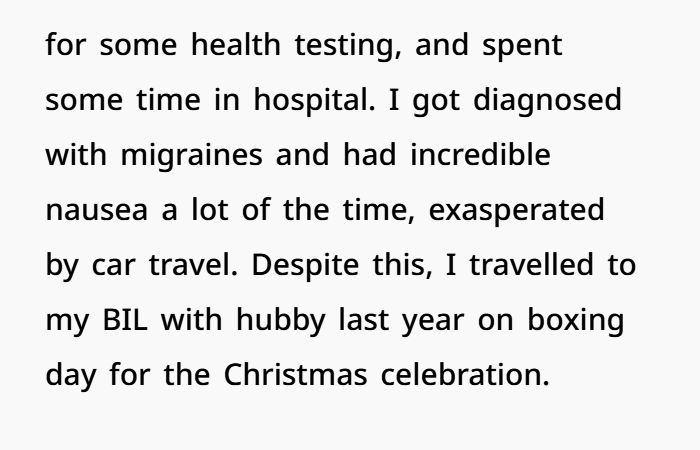
Six years ago, her husband had a serious accident and broke his back and collarbone. She spent her days caring for him, helping with his medication, and working to cover their living expenses. She also had to leave her studies behind. During that time, her father-in-law criticized her for not mowing the lawn. He called her lazy, even though she was already struggling to manage everything. Later, the woman developed serious health problems, including migraines, nausea, and major weight loss. She needed hospital treatment and could no longer drive or work as much as before.
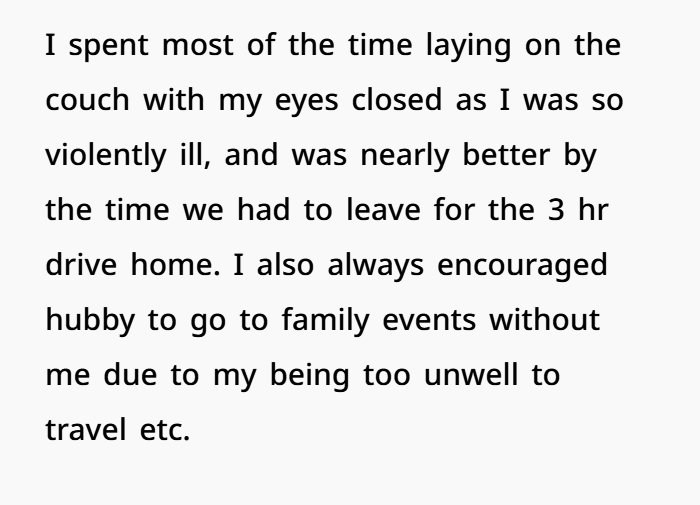
The woman still tried to stay involved with her husband’s family. She once traveled three hours for a Christmas celebration, even though she spent most of the visit lying down because she felt unwell. She also encouraged her husband to spend time with his relatives whenever she could not join him. But during a renovation project earlier this year, her mother-in-law accused her of keeping him away from the family. The woman felt this was unfair because her health, not her feelings toward his relatives, was the reason she missed some gatherings.
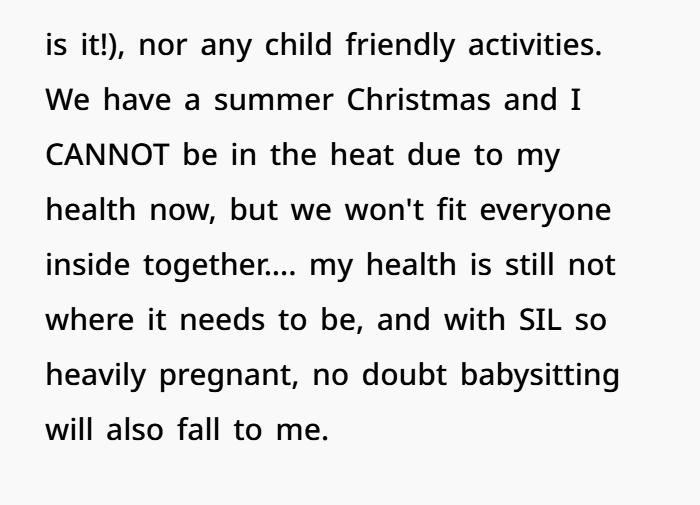
This Christmas, her in-laws expect the couple to host everyone at their house. But the home is small and still needs renovation work. There is no dining table, and the family would need space for several adults and three children. The summer heat makes things harder because it can affect her health. She is also worried about cooking, cleaning, and possible childcare responsibilities. Her in-laws have helped with home improvement projects and given the couple opportunities to earn extra income through their business, so she feels guilty about refusing. Now, she is wondering whether saying no would be unfair or whether her health should come before the family’s Christmas plans.

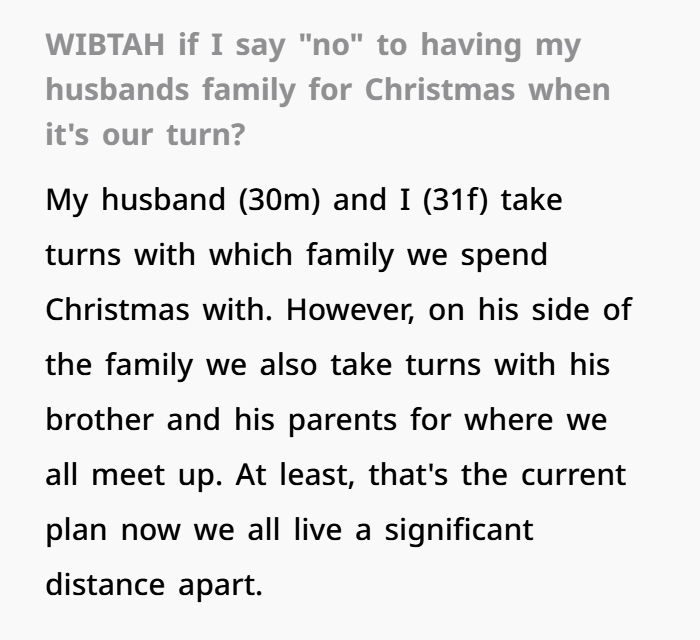

Woman Says She Can’t Host Christmas Because She’s Sick, but Fears Her In-Laws Will Call Her Lazy
Christmas is usually a time for family dinners, decorations, and spending time with loved ones.
But for one woman, this year’s holiday plans are causing a lot of worry.
Her husband’s family has a tradition of taking turns hosting Christmas. This year, it’s supposed to be their turn.
The problem is that she isn’t well enough to host.
She’s dealing with ongoing health problems, including migraines, severe nausea, and difficulty traveling. Her house is also being renovated, and money is tight.
She wants to tell her in-laws that they can’t host this year.
But she’s afraid they’ll be upset.
According to her story, they have criticized her before when she couldn’t keep up with household responsibilities.
Now she’s wondering whether saying no to Christmas dinner would make her selfish.
Why Her Health Problems Make Hosting Difficult
One of the hardest things about living with a long-term health condition is that other people may not understand what you’re going through.
Some days, a person may feel well enough to do laundry, cook a meal, or clean the house.
Other days, those same tasks may feel impossible.
Symptoms can change from day to day.
And just because someone looks healthy doesn’t mean they feel well.
The woman says she experiences migraines, nausea, and sensitivity to heat.
She also struggles with traveling.
Those symptoms can make long family gatherings difficult.
Hosting Christmas would involve even more work.
She would likely need to clean, prepare food, organize the house, welcome guests, and help with the holiday dinner.
That’s a lot to manage when she already feels unwell.
Many chronic health conditions can affect everyday activities and quality of life.
The World Health Organization recognizes that long-term health problems can limit what people are able to do.
Her in-laws may see her absence from family events as a lack of interest.
But being too sick to attend something isn’t the same as not caring about the people involved.
The Lawn-Mowing Argument Still Bothers Her
The woman also shared an earlier experience that helps explain her fear.
Her husband had been seriously injured in an accident.
During his recovery, she became his main caregiver.
She was also dealing with money problems and changes to her education and employment.
Her responsibilities were already overwhelming.
But according to her account, her father-in-law still expected her to mow the lawn.
When she couldn’t keep up with everything, he reportedly called her lazy.
That comment seems to have stayed with her.
Caring for an injured spouse can be exhausting.
It may involve preparing meals, helping with daily tasks, arranging appointments, and managing household expenses.
Caregiver burnout can happen when someone spends so much time caring for another person that they have little energy left for themselves.
Organizations such as AARP and the National Alliance for Caregiving have discussed how unpaid caregiving can affect a person’s health, work, and finances.
The father-in-law may have expected the yard to be maintained as part of their living arrangement.
But the couple’s situation had changed because of the accident.
A little understanding would have helped.
Instead, the woman felt judged for not doing enough.
Now she worries that refusing to host Christmas will lead to the same criticism.
Her In-Laws Have Helped Them With Money and Home Repairs
The situation isn’t completely one-sided.
The woman also says her in-laws have helped the couple in important ways.
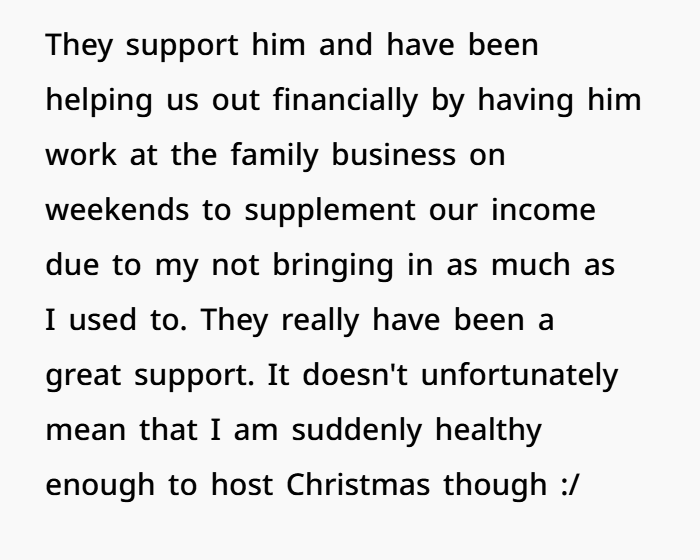
They have assisted with home renovations and offered her husband weekend work through the family business.
That support has made a difference during a difficult financial period.
She seems thankful for their help.
But she also feels pressure to meet their expectations.
This can happen when relatives provide financial support.
Someone may worry that saying no to a request will make them look ungrateful.
However, accepting help doesn’t mean a person must agree to everything.
The couple can appreciate the money and work opportunities their relatives have provided while still making decisions about their own home.
Home renovation costs, household bills, and other living expenses can already create financial stress.
Adding a large Christmas gathering may make their situation harder.
There is no clear evidence that the in-laws are intentionally using their support to control the couple.
But the woman’s worry shows how difficult it can be to set boundaries when family members have helped financially.
Why Family Traditions Sometimes Need to Change
Family traditions can be wonderful.
Maybe one household hosts Thanksgiving while another hosts Christmas.
Maybe everyone takes turns preparing holiday meals.
These arrangements can work well when everyone has enough time, money, and space.
But life doesn’t always stay the same.
Someone may become ill.
A family may experience a job loss.
A home may be too small or under renovation.
When those things happen, changing the plan makes sense.
The woman isn’t saying she never wants to celebrate Christmas with her husband’s family again.
She’s saying that hosting a large gathering isn’t possible for her right now.
That’s an important difference.
A family tradition should bring people together, not make someone feel guilty for having health problems.
Is She Really Keeping Her Husband Away From His Family?
According to the woman, her mother-in-law has accused her of pulling her husband away from the family.
That would be upsetting to hear.
But the woman says she has encouraged her husband to attend family gatherings without her.
She doesn’t appear to be trying to stop him from seeing his relatives.
Instead, she wants him to enjoy time with them while she takes care of her health.
Some families believe attending every event is an important part of staying close.
Others are more comfortable with family members missing gatherings when necessary.
Neither approach automatically means someone cares more or less.
The husband can still visit his parents, attend Christmas dinner, and spend time with his relatives.
His wife doesn’t have to be present at every event for those relationships to continue.
Their Home Isn’t Ready for Christmas Guests
There are also practical reasons why hosting would be difficult.
The couple’s home is still being renovated.
They don’t have enough seating or space for a large family gathering.
The guests would include three young children and a sister-in-law who is close to giving birth.
That could make the celebration more demanding.
The woman may also worry about being expected to help supervise the children while preparing food and looking after guests.
But hosting a family event doesn’t automatically mean agreeing to provide childcare.
There are financial concerns too.
Even a simple Christmas dinner can involve grocery shopping, drinks, decorations, cleaning supplies, and extra household expenses.
For a family already dealing with a tight holiday budget, those costs matter.
Affordable Christmas decorations and simple holiday meal ideas can help reduce spending.
But they don’t solve the main issue.
The woman doesn’t feel physically able to manage a large celebration.
What Could the Family Do Instead?
There are several ways the family could celebrate Christmas without making the woman responsible for hosting.
Another relative could offer to host this year.
The family could also organize a smaller gathering with fewer guests.
A potluck dinner at someone else’s home might make meal preparation easier.
If the budget allows, they could consider a restaurant with a private dining room or a small event venue.
Holiday catering is another option, although it may cost more than preparing food at home.
The couple could also offer to host a future celebration when the renovations are finished and the woman’s health is more manageable.
Or the husband could attend Christmas with his family while his wife stays home to rest.
The important thing is finding a plan that works for everyone.
A holiday tradition doesn’t have to follow the exact same schedule every year.
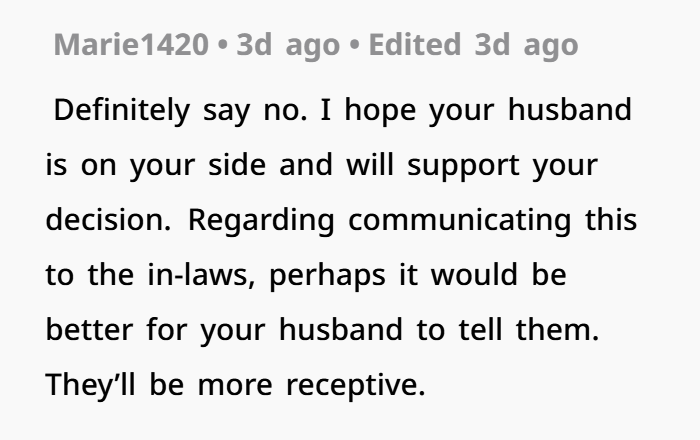
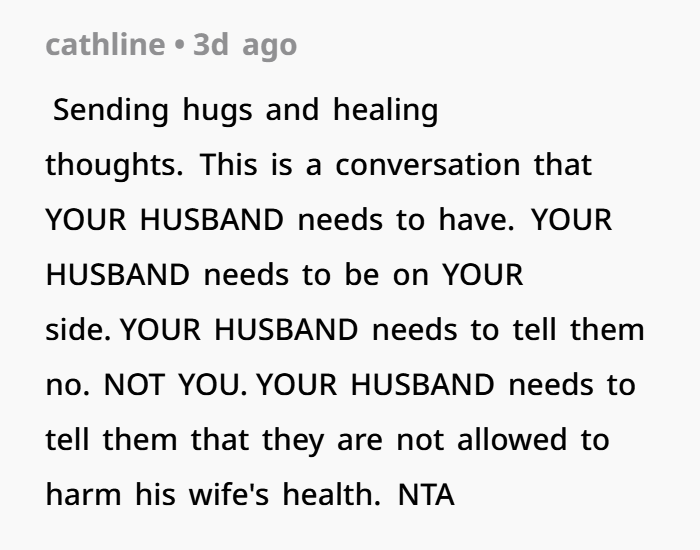
Why Her Husband Should Talk to His Parents
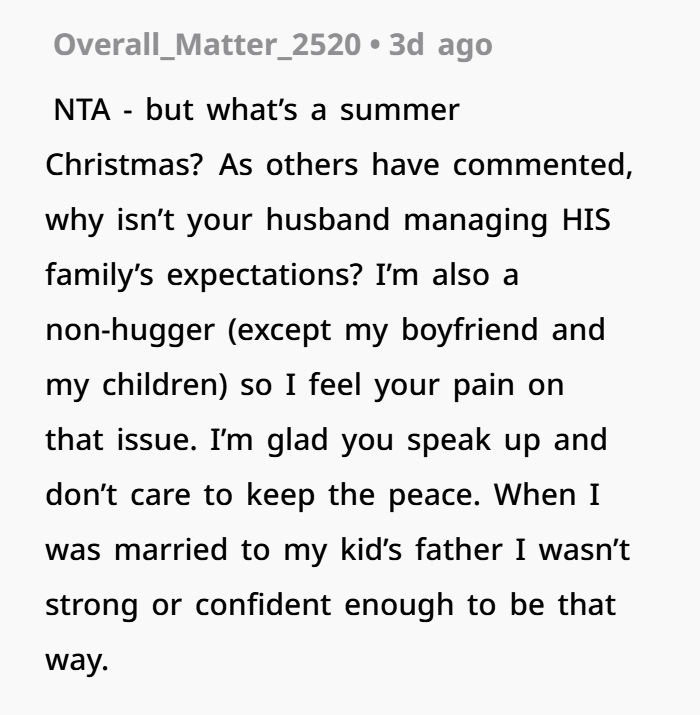
The husband can help make this situation easier.
Because the disagreement involves his family, he could explain the couple’s decision directly.
That would also make it clear that the decision isn’t something his wife is forcing on him.
He could thank his parents for their support and explain that their home isn’t ready for guests.
He could also mention that his wife’s health makes hosting difficult this year.
The message can be simple:
“We appreciate everything you’ve done for us, but we can’t host Christmas this year. The house isn’t ready, and we’re dealing with too much right now. We’d be happy to help make another plan.”
That is respectful and clear.
The couple doesn’t need to share every detail of the woman’s medical situation.
They only need to explain that hosting isn’t possible.
If family disagreements continue to create problems, couples counseling or family counseling may help them communicate and agree on boundaries.
But they don’t need professional help simply to decide not to host a holiday gathering.
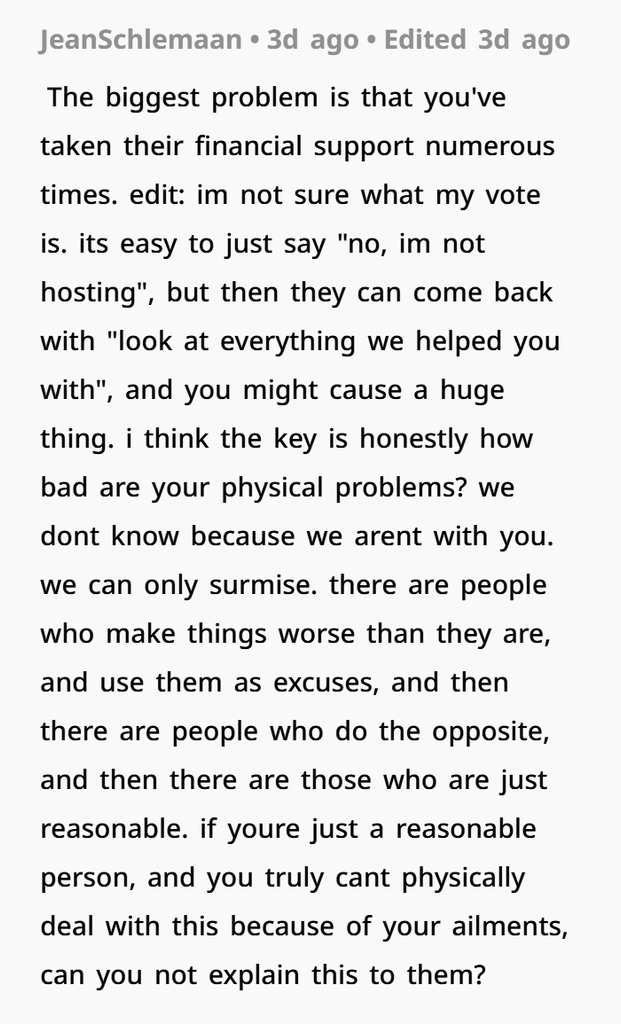
Does Saying No Make Her Ungrateful?
The woman seems worried that refusing to host will make her look ungrateful.
But being thankful doesn’t mean saying yes to every request.
She can appreciate her in-laws’ help with home improvements.
She can be grateful for the weekend work they offered her husband.
And she can still say that she isn’t well enough to host Christmas.
Those feelings can exist together.
Healthy family relationships should allow people to ask for help, offer support, and set limits when necessary.
There are also other ways to show appreciation.
The couple could send a thoughtful holiday card, bring a small gift, or help with another family event when their situation improves.
They don’t have to host a large dinner to prove they care.
Final Verdict: Is She Wrong for Refusing to Host Christmas?
NTA (Not the A-hole).
The woman has several reasonable concerns.
She’s dealing with health problems, an unfinished home, limited space, and financial pressure.
Hosting Christmas would require time, energy, and money that she may not have right now.
Her in-laws may feel disappointed if the usual holiday hosting schedule changes.
But that doesn’t mean she is doing something wrong.
Their past financial support deserves appreciation.
It doesn’t mean she has to ignore her health.
Her husband can continue spending time with his family while supporting his wife’s decision to rest.
A fair solution would be for the couple to explain that they cannot host this year and help the family find another arrangement.
Final Thoughts: Christmas Shouldn’t Become Another Responsibility
Christmas should be about enjoying time with loved ones.
It shouldn’t feel like a test of how much work someone is willing to do for the family.
This woman has already dealt with a difficult period while caring for her injured husband.
Now she’s facing her own health challenges.
She shouldn’t have to push herself through a large holiday celebration just because it’s her household’s turn to host.
Sometimes, family traditions need to change.
And sometimes, the most thoughtful thing relatives can do is understand that someone needs a break.
Saying no to hosting Christmas doesn’t mean saying no to family. It simply means knowing what you can manage and being willing to protect your health.
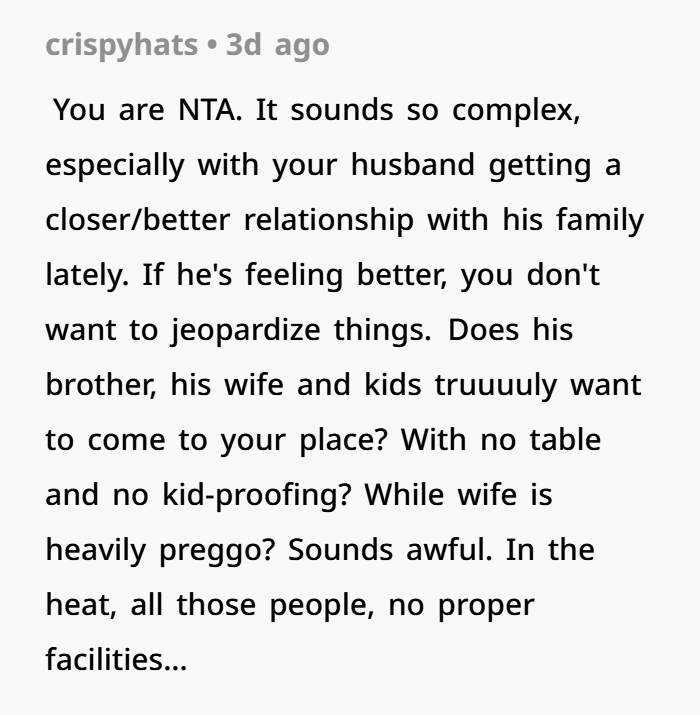
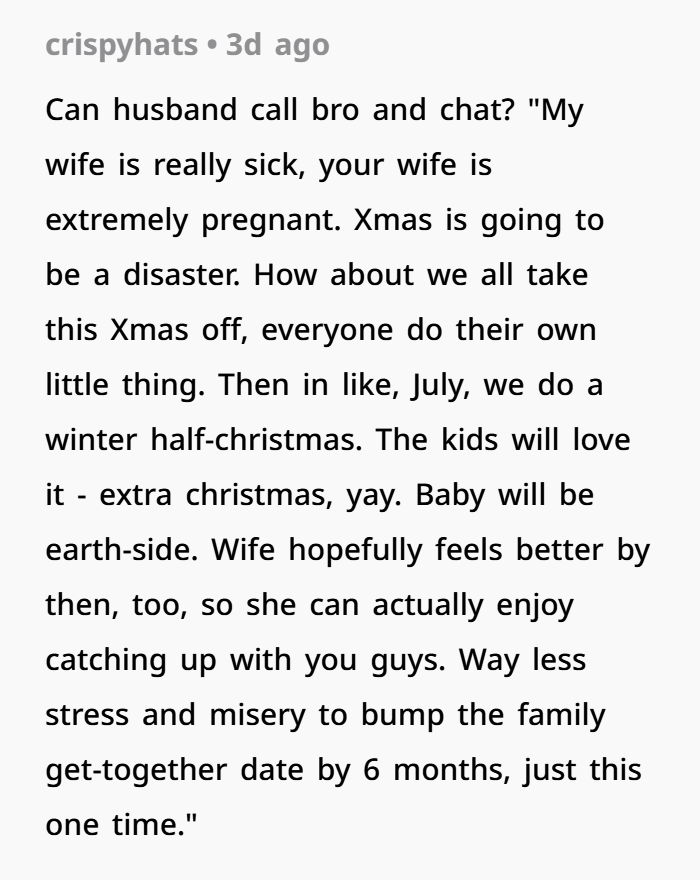
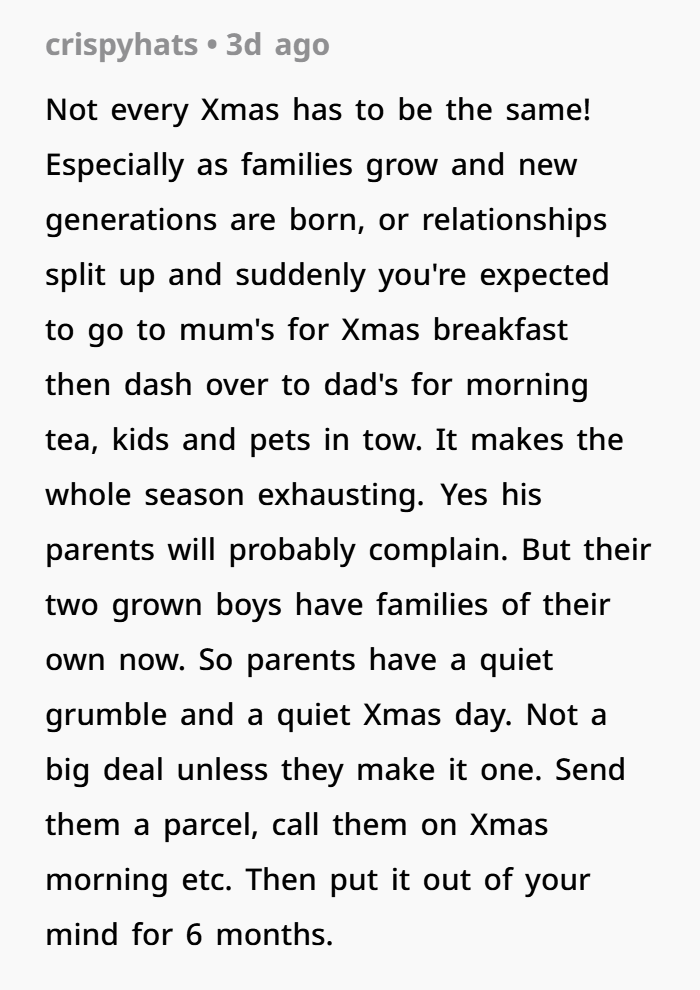
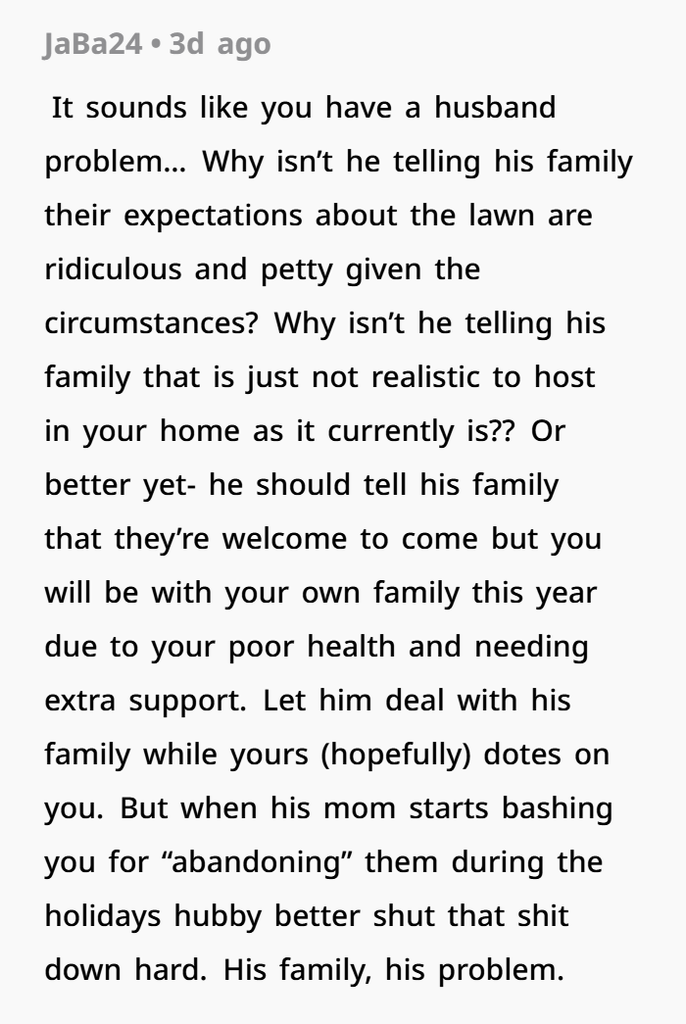
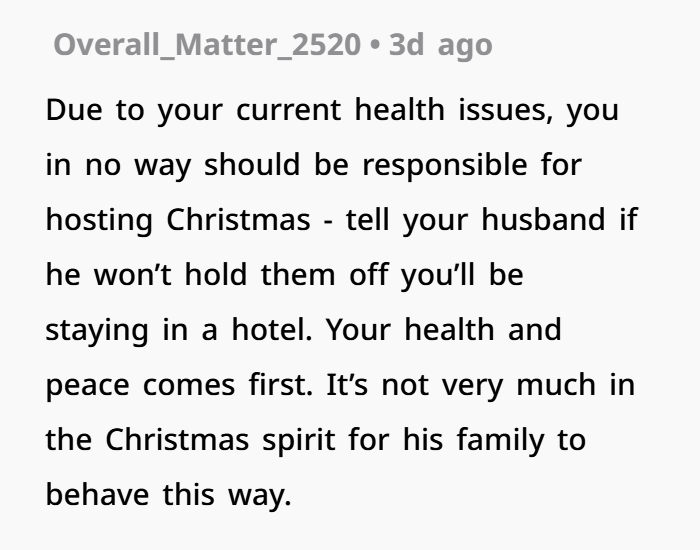
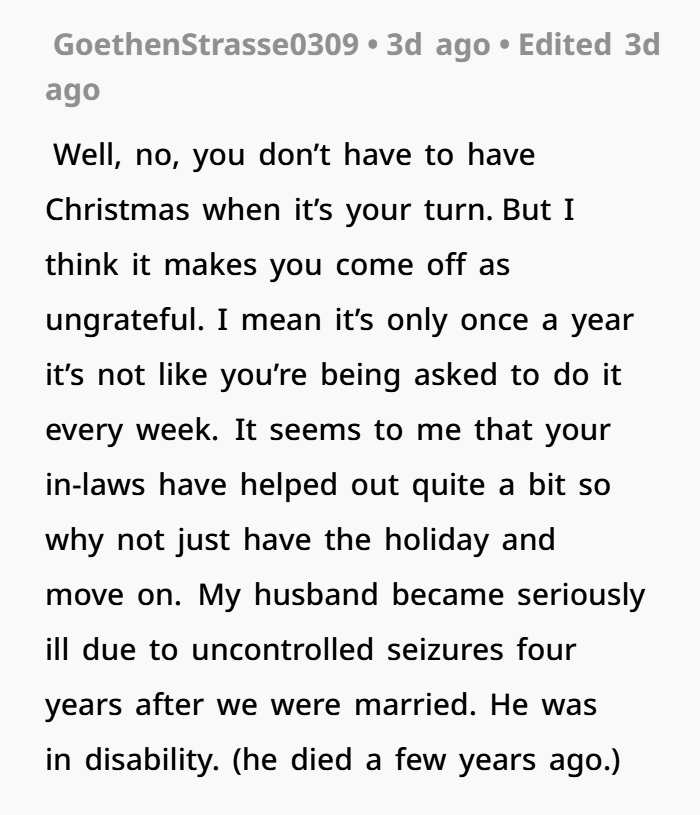
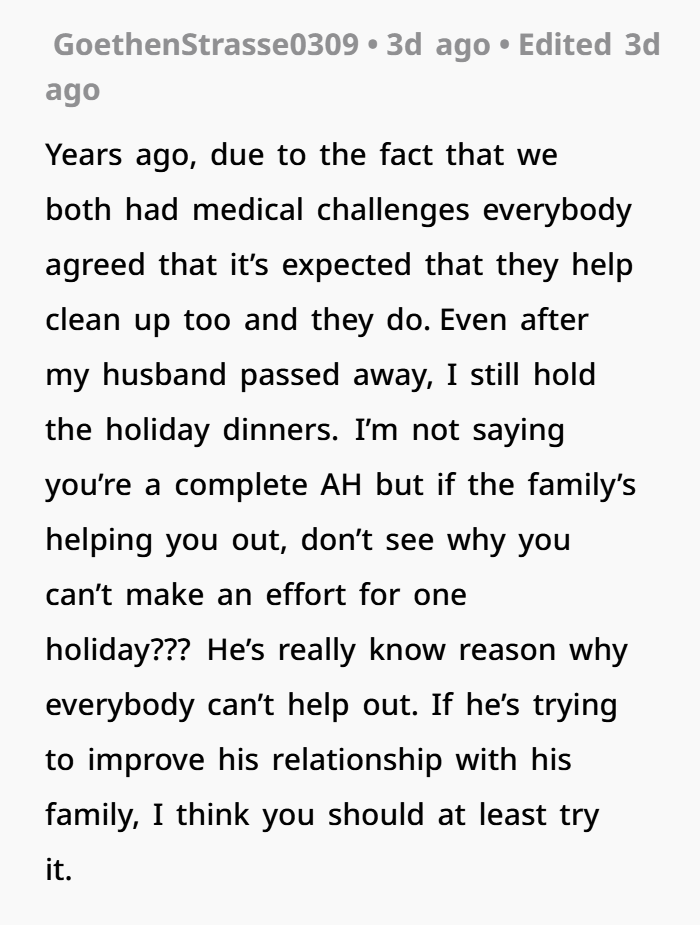
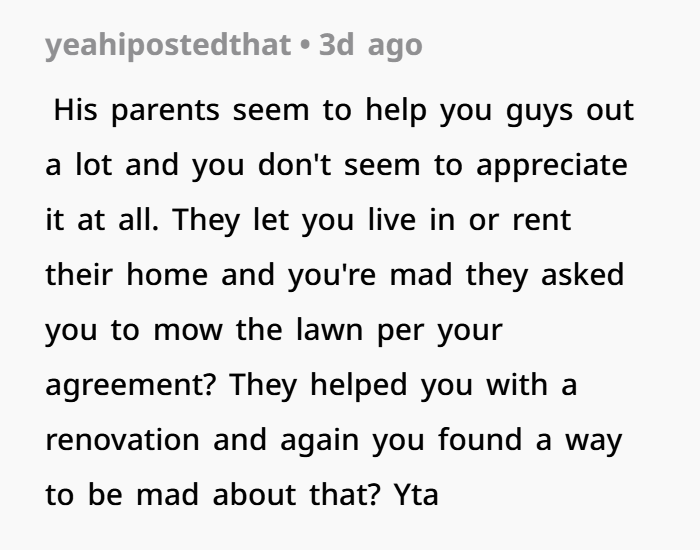
The Comments Are In