Coworker Tried to Shame Woman Over Breast Implants After Mastectomy — Her Evidence Turned the HR Complaint Around

A workplace conflict over breast implants took an unexpected turn when a woman was reported to HR after confronting a coworker who had repeatedly mocked her appearance. The coworker did not know that the implants were not just a personal choice for appearance. They were part of her recovery after a preventive double mastectomy caused by a high breast cancer risk linked to her family history.
The problem started with jokes and comments about her body. But over time, it became a formal workplace complaint.
Instead of facing punishment, the woman gathered statements from witnesses, kept records of the comments, and shared evidence showing a long pattern of inappropriate behavior.
The situation completely changed. The coworker who made the complaint became the person investigated by HR and was eventually fired.

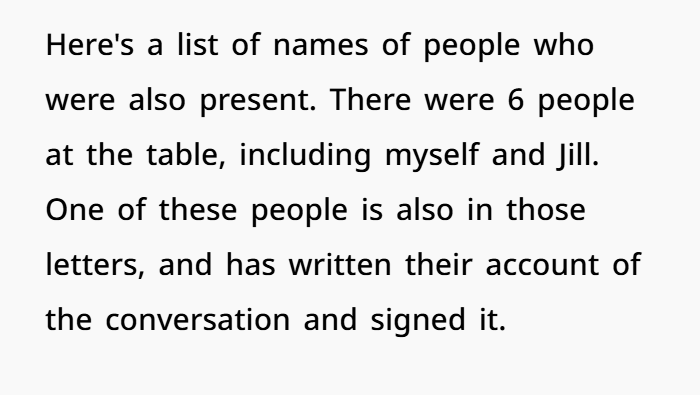
At 24 years old, the woman in this story faced a frightening health decision. Her mother had died from breast cancer, and both of her grandmothers had also lost their lives to the disease.
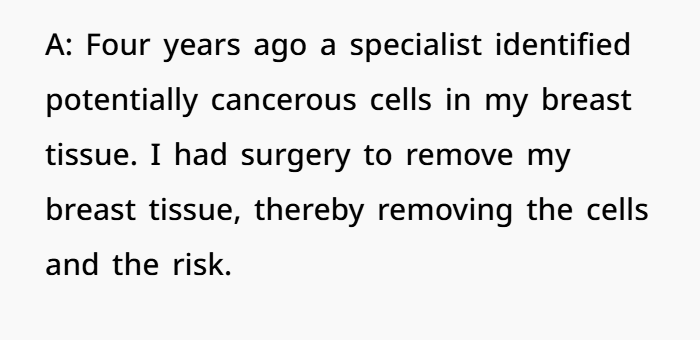
Because of her strong family history, she went for medical screening. Doctors discovered abnormal cells in one breast that could potentially become cancerous.
She was given several choices.
One option was regular monitoring every few months. Another was removing the affected breast. The most extreme option was a bilateral mastectomy, meaning removing breast tissue from both breasts to greatly reduce future cancer risk.
A risk-reducing bilateral mastectomy is a serious medical decision often considered by people with a high chance of developing breast cancer. Medical guidelines say patients should discuss the benefits, risks, and possible effects on body image before choosing surgery.
After watching cancer take the lives of close family members, she chose the double mastectomy.
The Emotional Impact After Surgery
The surgery helped reduce her cancer risk, but recovery was not easy.
She was left with large, noticeable scars across her chest. Instead of feeling relieved, she struggled with how her body looked afterward.
Her mental health became worse. She avoided leaving her home, removed mirrors from her flat, and felt physically upset when she saw her scars.
With help from a therapist, she explored options to improve her confidence. The therapist suggested speaking with a plastic surgeon about scar treatment.
The surgeon discussed different options, including creams, laser treatment, and breast implants.
The creams did not help. Laser treatment was expensive and carried risks, so she chose breast implants.
Her goal was not simply cosmetic. The implants helped hide the scars left after a life-changing medical procedure.
Breast reconstruction after mastectomy is a common option for many patients, and it can involve implants or other reconstruction methods depending on the person’s situation.
After the procedure, she said her confidence improved and she finally felt comfortable looking at herself again.
The Coworker Who Started Making Comments
Years later, she was working in an office when a coworker named Jill discovered she had breast implants.
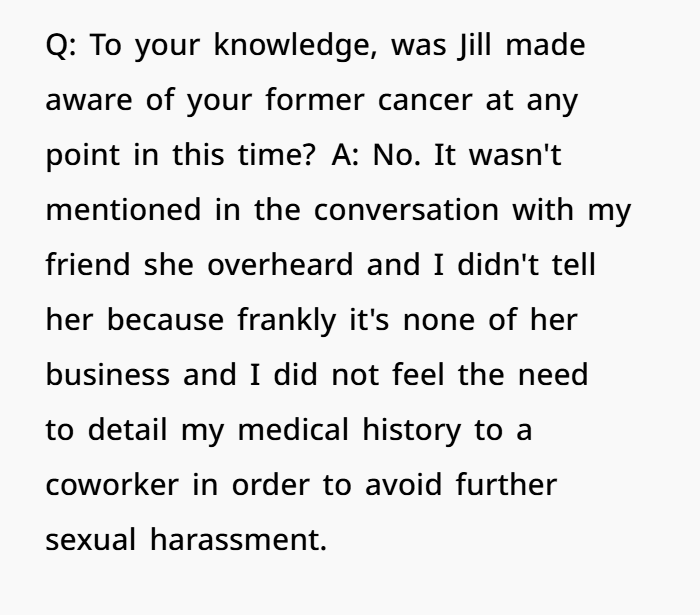
Jill overheard a conversation about a holiday trip where the implants were mentioned as a joke. The problem was that Jill only learned about the implants, not the reason behind them.
By the end of the day, many people in the office knew she had undergone breast implant surgery.
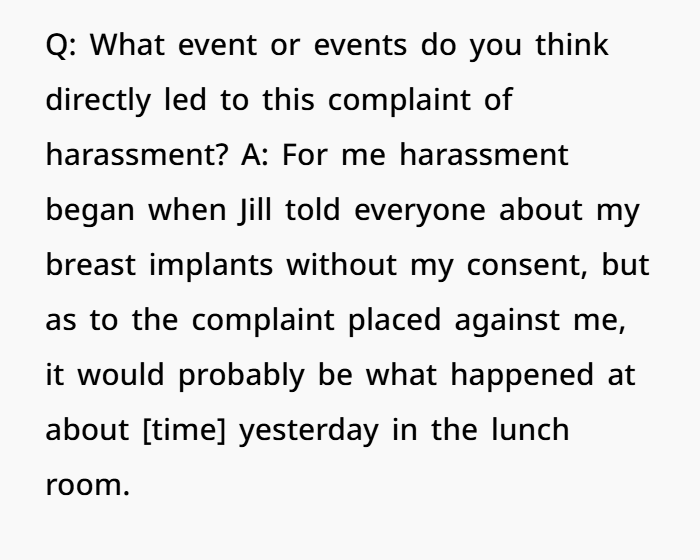
Soon after, Jill began making comments about her body.
According to coworkers, Jill joked that she had “more plastic than Barbie” and called her “fake in two ways.”
Other employees also reported hearing Jill describe her in insulting ways.
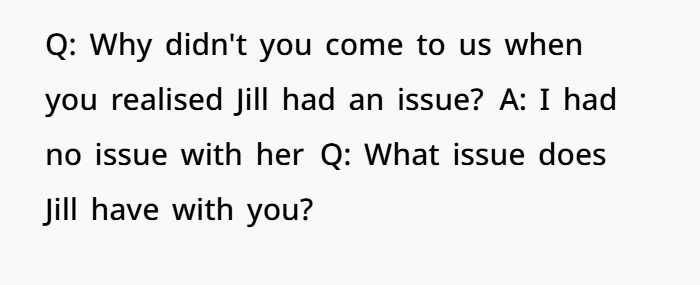
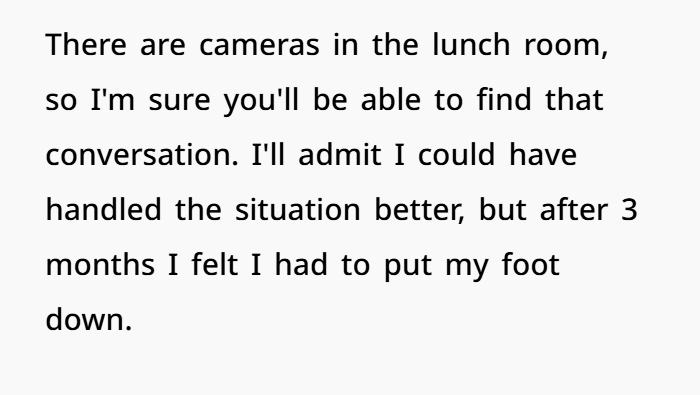
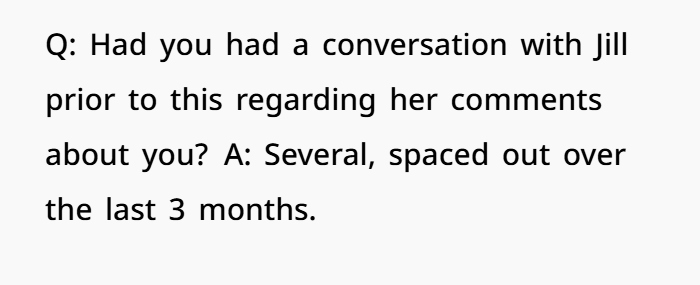
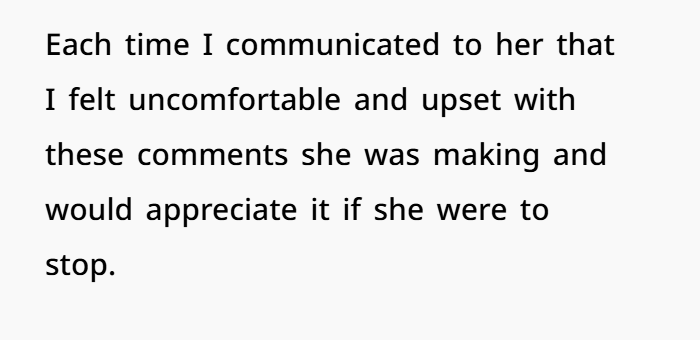
The woman asked Jill several times to stop. She explained that the comments made her uncomfortable, but the jokes continued.
For around three months, she said the comments happened several times a week.
The Moment Everything Changed
The breaking point came during lunch with several coworkers.
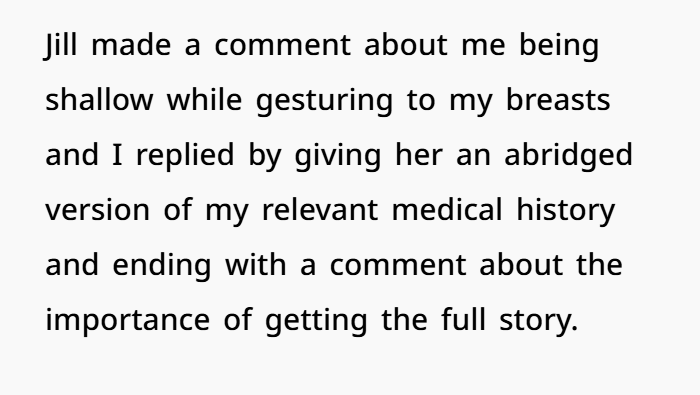
During a conversation about something being shallow, Jill reportedly looked at her chest and said:
“You’d know all about being shallow.”
That was when she finally explained the truth.
She told Jill about the cancer risk, the mastectomy, the painful scars, the therapy, and why she chose implants.
She also pointed out that judging someone’s appearance without knowing their story can be unfair and hurtful.
After the conversation, some coworkers supported her. Others believed she had reacted too strongly and said Jill was only joking.
But the situation was about to become much bigger.
HR Complaint Turns Into a Workplace Investigation
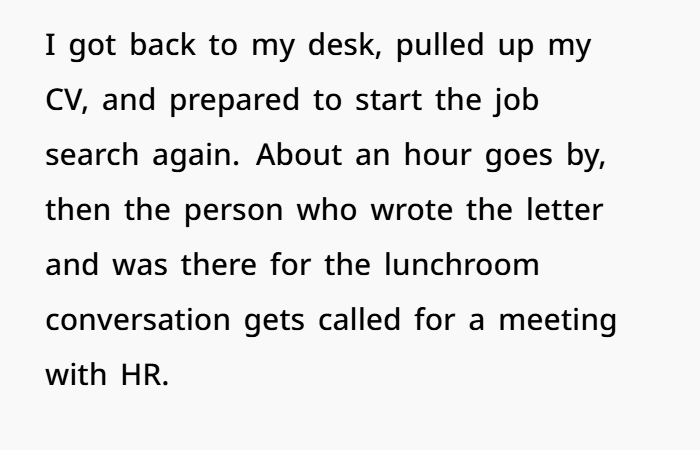
The next day, HR contacted her.
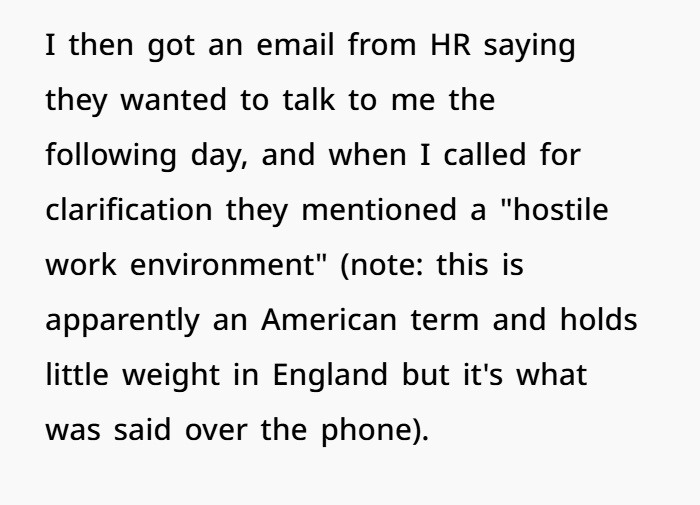
She was told there was a complaint involving a “hostile work environment.”
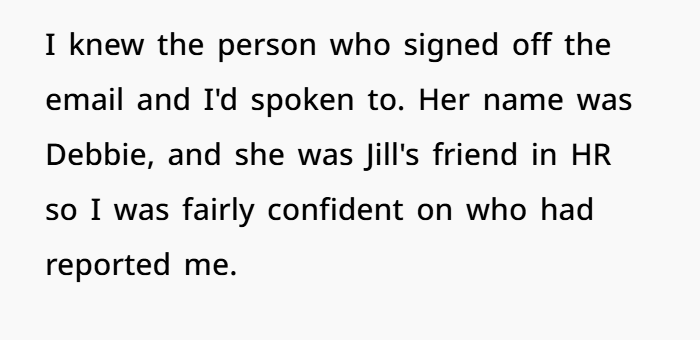
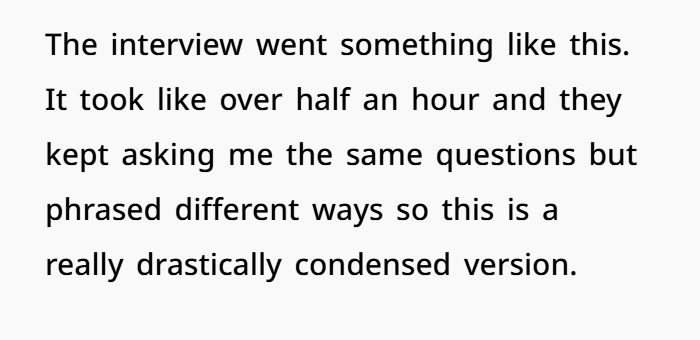
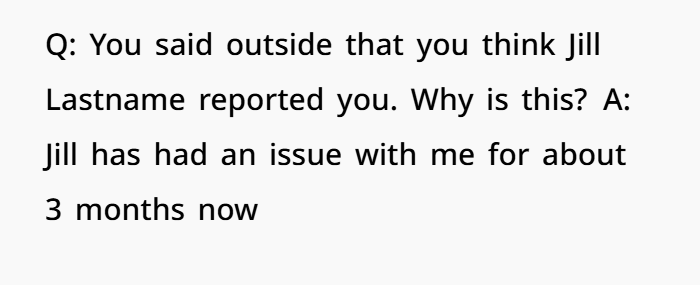
She believed Jill had reported her after the lunchroom argument.
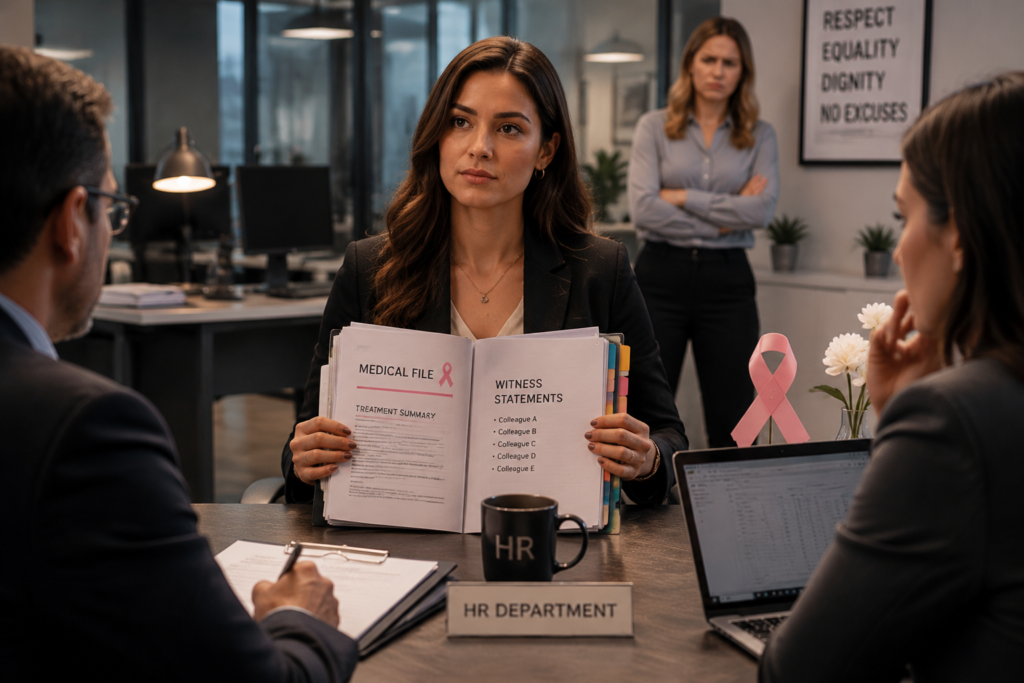
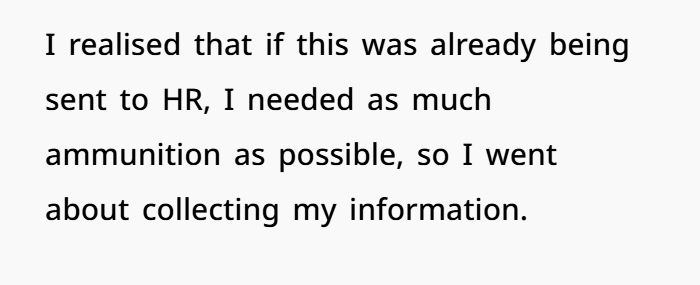
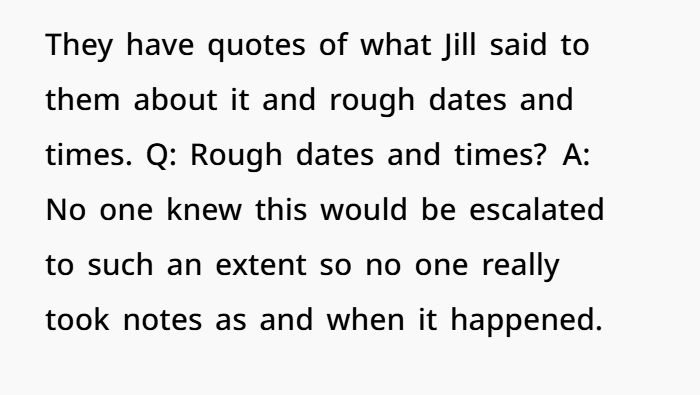
Instead of walking into the meeting unprepared, she gathered evidence.
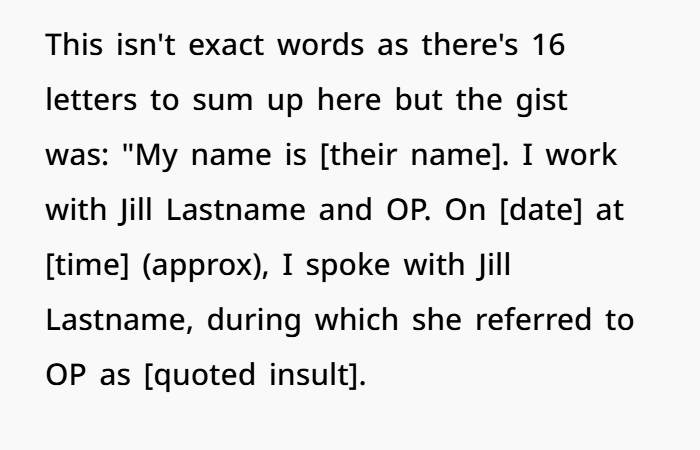
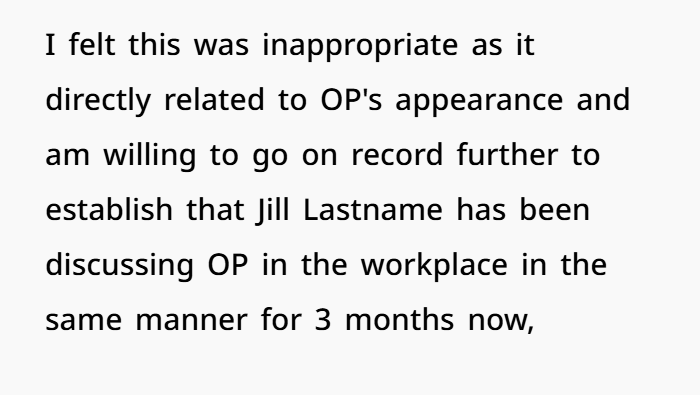
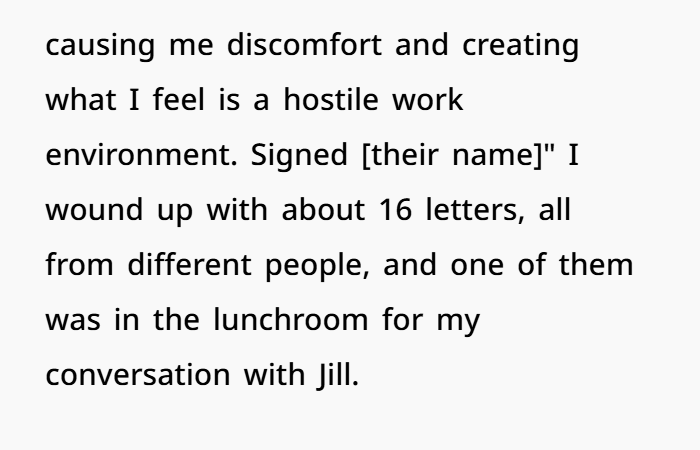
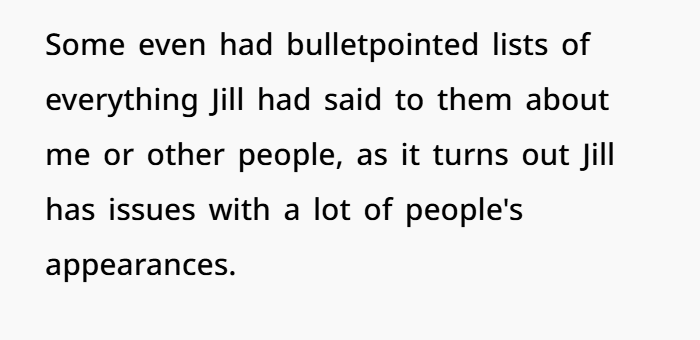
She contacted coworkers who had witnessed Jill’s comments and asked if they were willing to provide written statements.
Around 16 employees agreed.
Their statements described:
- Comments Jill made about her breast implants
- Insults about her appearance
- Conversations where Jill discussed her private medical-related choices
- Other situations where Jill had criticized coworkers’ appearances
Some employees also mentioned Jill had made inappropriate comments about other people’s weight and appearance.
The HR Meeting
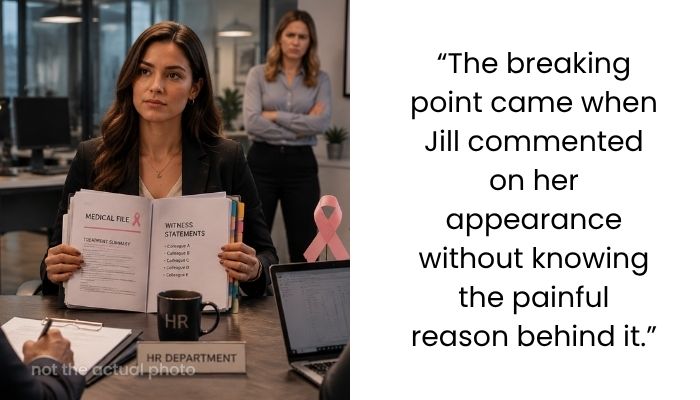
During the HR meeting, she brought:
- Signed coworker statements
- A timeline of previous comments
- Information about when she asked Jill to stop
- Details about the lunchroom conversation
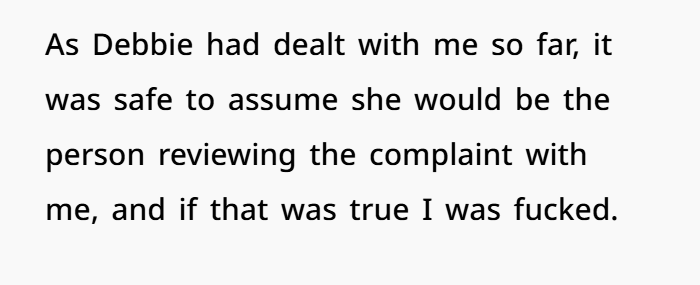
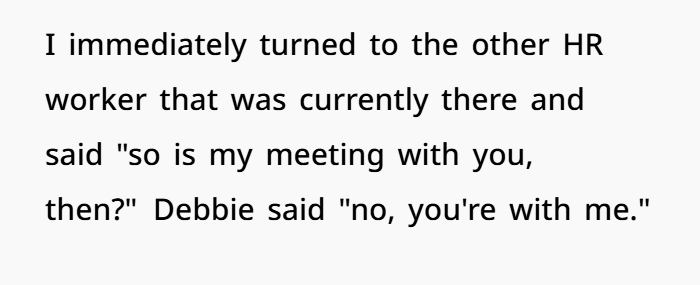
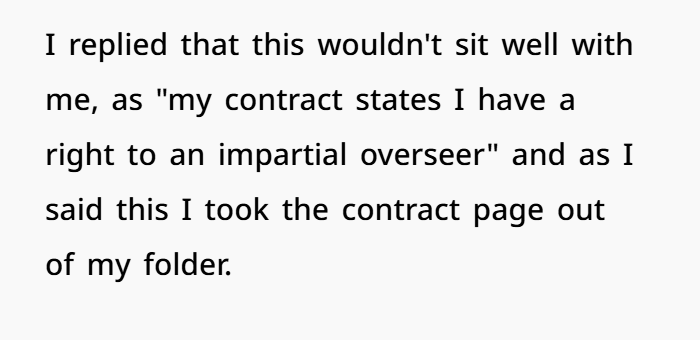
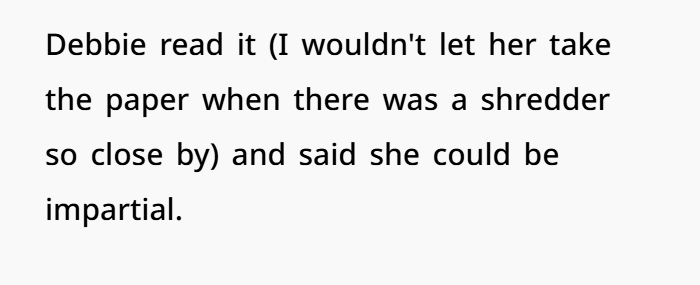
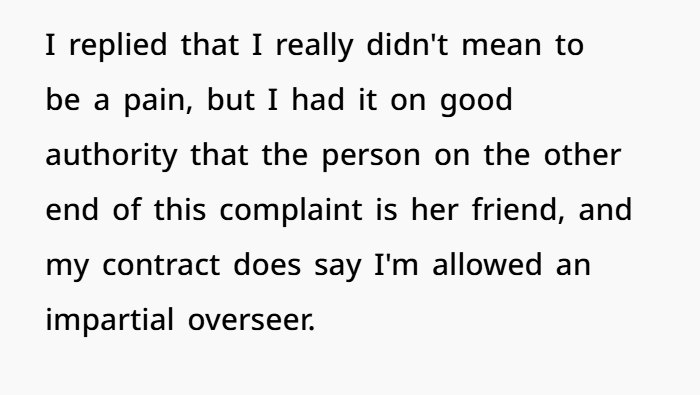
She also raised concerns about the HR employee handling the case because she believed that person was personally close to Jill.
She requested an impartial reviewer based on workplace complaint procedures.
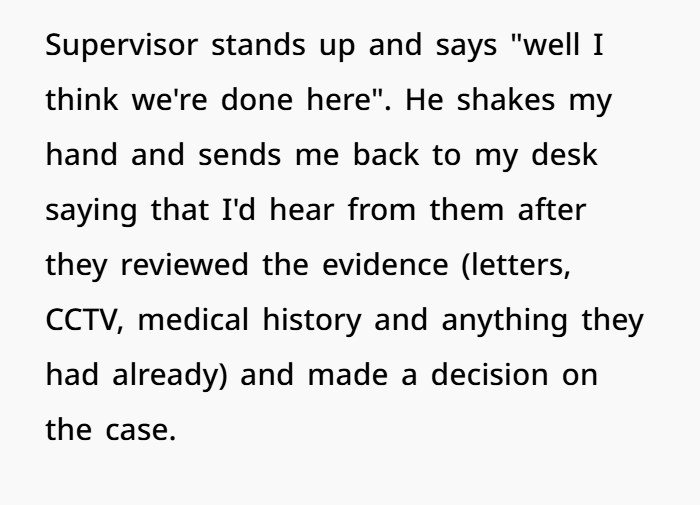
After reviewing the situation, another supervisor joined the meeting.
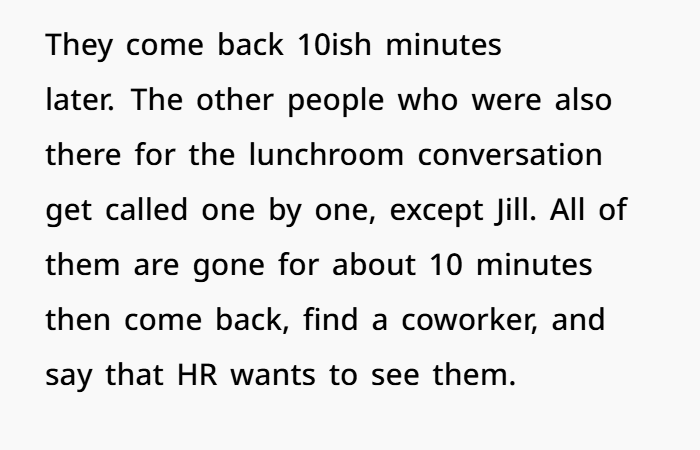
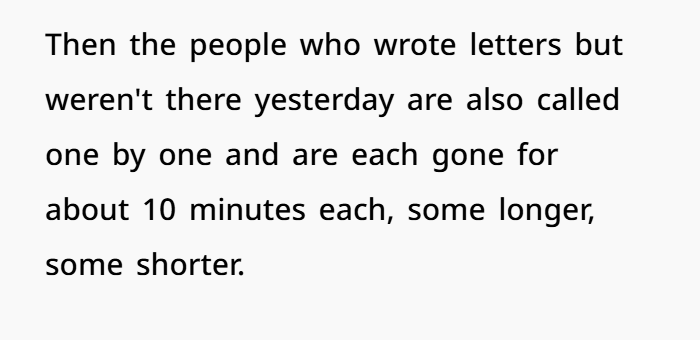
HR then interviewed the people involved, including the coworkers who provided statements.
One by one, employees were called into meetings.
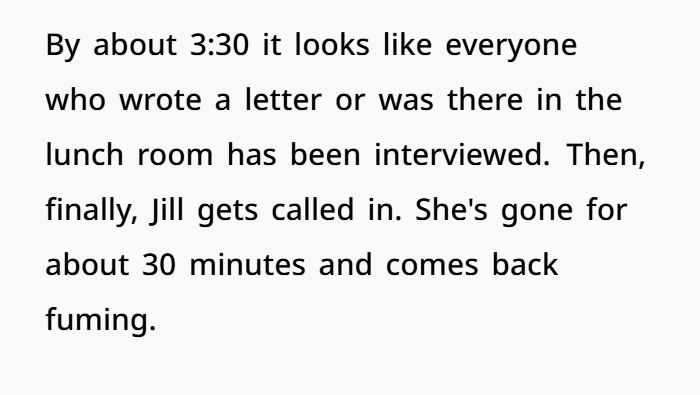
Finally, Jill was interviewed.
She returned looking angry and frustrated.
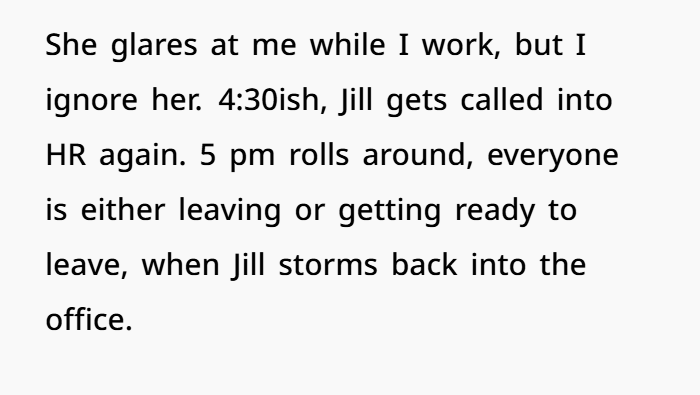
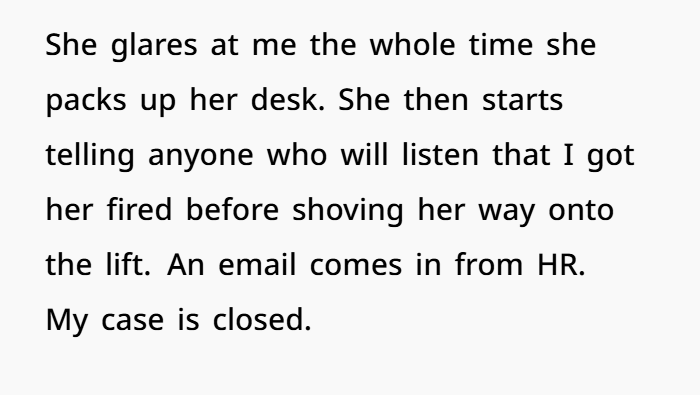
Later that day, Jill packed her desk while telling coworkers that the woman had caused her to lose her job.
See the comments to know what people said
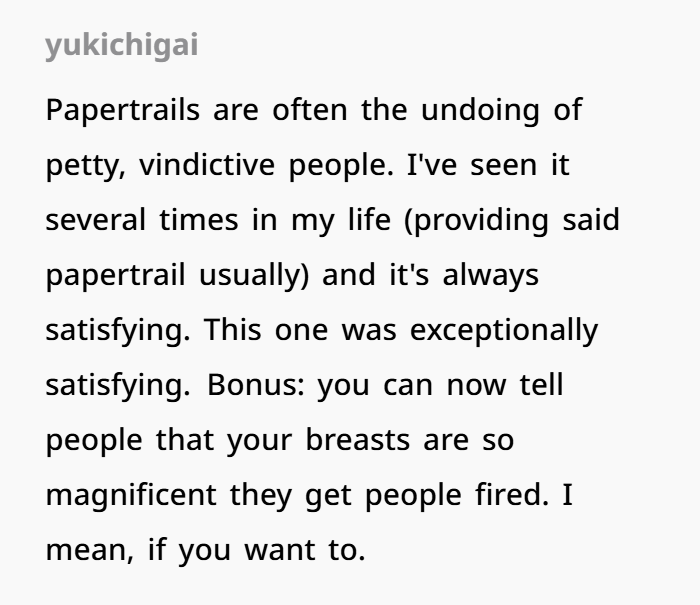


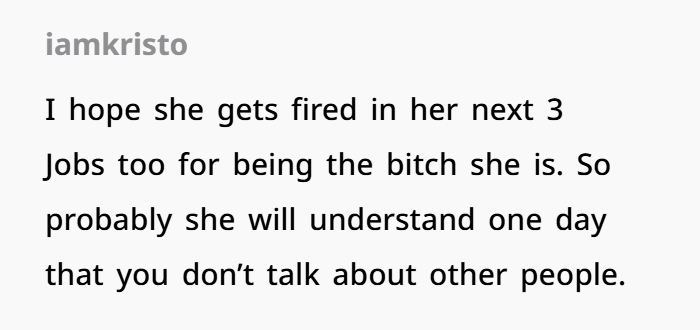

This story highlights how quickly workplace jokes about appearance can become serious harassment issues.
Many people make assumptions about cosmetic procedures without knowing the personal reasons behind them. In this case, what looked like a simple “boob job” to others was connected to cancer prevention, surgery, mental health struggles, and rebuilding confidence.
The biggest lesson is that personal medical choices and someone’s body should not become workplace entertainment.
A comment that seems like a joke to one person can feel deeply harmful to someone else.
For employers, this type of situation also shows why workplace harassment policies, employee complaints, and fair investigations matter. A proper review depends on evidence, witness accounts, and giving everyone involved a chance to explain what happened.
In the end, the employee who was originally afraid of losing her job was able to show a larger pattern of behavior. The complaint that was meant to target her ended up revealing the coworker’s repeated actions instead.