
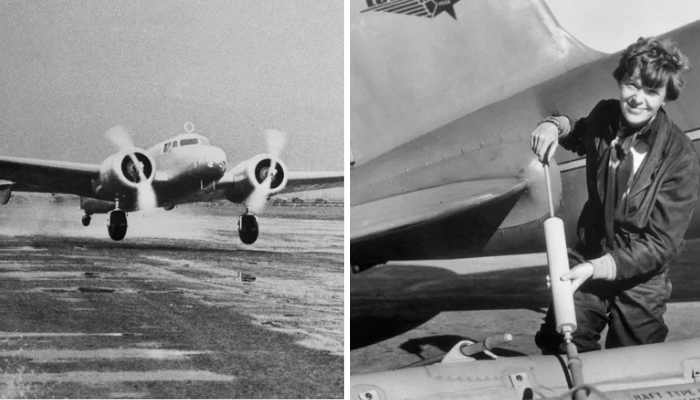
1938 Aerial Footage Could Be the Missing Piece in the Amelia Earhart Plane Mystery
On July 2, 1937, legendary aviator Amelia Earhart and her navigator Fred Noonan took off from Lae, New Guinea, flying a Lockheed 10-E Electra on their mission to circle the globe. They had already covered around 22,000 miles, with just two final stops left — Honolulu and Oakland, California. But somewhere over the vast Pacific Ocean, things went terribly wrong. Earhart’s plane vanished before reaching Howland Island, and despite an intense U.S. Navy and Coast Guard search, not a single trace was found.
Her disappearance became one of the greatest mysteries in aviation history, sparking decades of Amelia Earhart conspiracy theories and countless searches. But now, a new clue might finally change everything.
Recently discovered 1938 aerial footage, taken just a year after her disappearance, might hold the key. Investigators believe the footage — along with newer satellite and drone imagery — shows a strange metallic-looking shape near Nikumaroro Island, roughly 350 miles from Howland Island. They’ve nicknamed it the Taraia Object, after the part of the island where it was spotted.
What’s exciting is that the object’s shape and location match what could be Earhart’s missing plane. A team of 15 researchers from Purdue University and the Archaeological Legacy Institute (ALI) is already planning a major expedition to Nikumaroro in 2026 to uncover the truth.
Could this finally solve the mystery that’s puzzled aviation experts and historians for nearly a century? If the Taraia Object turns out to be Earhart’s Lockheed Electra, it might just close one of the most fascinating chapters in aviation history.
Was Amelia Earhart marooned?

Was Amelia Earhart really marooned on Nikumaroro Island? It’s a theory that’s been around for decades — and honestly, it’s one of the most believable ones yet.
Since 1989, researchers from the International Group for Historic Aircraft Recovery (TIGHAR) have been investigating this remote Pacific island, once called Gardner Island. Their theory? That Earhart and her navigator Fred Noonan made an emergency landing there and survived for a while, using the Electra’s radio to send distress signals until rising tides finally pulled the plane into the ocean.
The U.S. Navy actually flew near Nikumaroro during the initial search. According to official reports from the U.S. Naval Institute, pilots spotted what looked like signs of recent habitation — but since no one responded from the ground, they assumed the island was deserted. What they didn’t realize is that they might’ve been just a few miles away from finding Earhart herself.
Years later, new evidence began to surface. 1938 aerial photos taken by the New Zealand military showed strange objects near the island’s edge, possibly plane wreckage. Then, colonists who settled there later claimed they found metal debris, human bones, and even a woman’s shoe — items eerily consistent with what Earhart might have had on board.
Modern-day researchers have since uncovered even more artifacts that could match parts of the Lockheed 10-E Electra, adding more weight to the theory that Earhart and Noonan crash-landed and survived on the island — at least for a short time.
If true, it means the Amelia Earhart mystery wasn’t about vanishing mid-flight after all. It could be the heartbreaking story of two pioneers stranded in one of the most isolated corners of the South Pacific.
What the photos purport to show
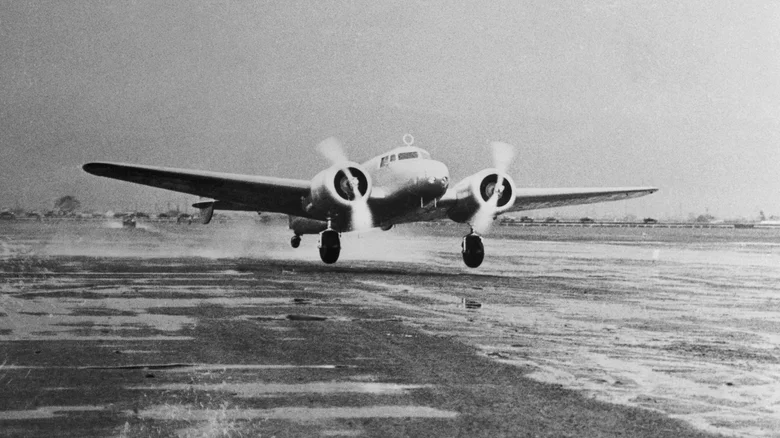
According to Amelia Earhart researcher Michael Ashmore, the mysterious Taraia Object first popped up in 2020 when he was analyzing satellite imagery of Nikumaroro Island. Since then, experts have uncovered more visuals — including 1938 aerial photos taken by a New Zealand survey team that was scouting the island for a coconut plantation. And here’s where it gets wild — the object in the images looks like it could be the tail, fuselage, and even part of the starboard wing of Earhart’s Lockheed Electra.
If that’s true, it could finally connect the dots in one of the greatest aviation mysteries of all time. The satellite and drone footage line up eerily well, suggesting that whatever’s buried near the Taraia region might not just be random debris — it could actually be what’s left of Earhart’s missing plane.
Of course, this isn’t the first time someone’s claimed they’ve found her aircraft. Back in January 2024, explorer Tony Romeo announced he’d discovered what he believed to be Earhart’s plane wreckage nearly 16,000 feet underwater, about 100 miles from Howland Island. Unfortunately, further analysis showed it was nothing more than a rock formation — another dead end in the long trail of Amelia Earhart theories.
Still, researchers aren’t giving up. A full expedition to Nikumaroro is already planned for 2026, and this time, the evidence feels stronger than ever. Whether the Taraia Object turns out to be a piece of aviation history or just another mystery of the Pacific, we’ll soon find out.
A new search set for 2026
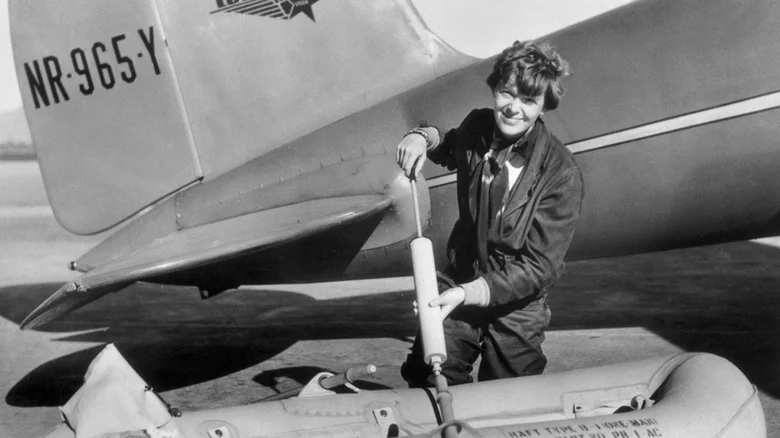
A new search for Amelia Earhart’s plane is officially set for 2026, and this one could finally bring answers.
A 15-member research team from Purdue University and the Archaeological Legacy Institute (ALI) had originally planned to head to Nikumaroro Island in late 2025 for a three-week expedition. But due to permit negotiations with the government of the Republic of Kiribati — the Micronesian nation that owns the island — and the threat of cyclone season in the Pacific, the trip’s been pushed back to 2026.
Getting to Nikumaroro isn’t exactly easy. The island’s been uninhabited since 1963, when drought forced the last settlers to leave. The team will have to sail from the Marshall Islands, braving a six-day voyage across open ocean just to reach the site.
Once they arrive, the researchers plan to use advanced technology like remote sensing, sonar mapping, aerial photography, and magnetometry to locate and identify the Taraia Object — the mysterious anomaly believed to be buried under layers of sediment. If needed, they’ll even dredge the area to see if it really is a piece of Earhart’s Lockheed Electra.
The 1938 aerial photos, paired with modern satellite and drone imagery, have already given investigators enough confidence to make this tough and expensive journey. And for millions of people fascinated by the Amelia Earhart mystery, this upcoming expedition feels like the most promising lead yet.
Maybe — just maybe — 2026 will be the year the world finally learns what really happened to Amelia Earhart and Fred Noonan.