Pregnant Wife Discovers Her Husband Cheated With the Woman She Loved Like a Sister

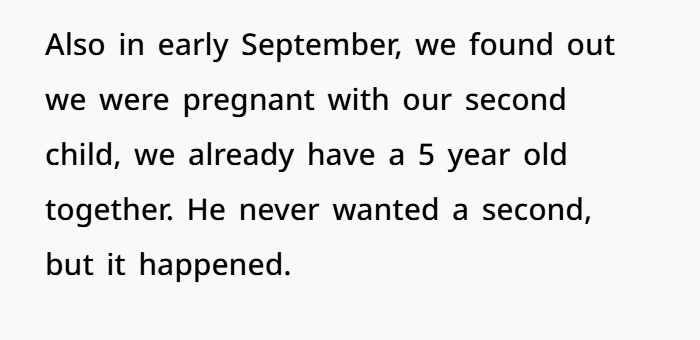
A pregnant woman believed she had a happy marriage built on trust. She and her husband had been together for 10 years and married for three. They had a 5-year-old son and were now expecting their second child.
Then one phone call changed their family life.
Her husband told her he had been unfaithful. The other woman was his brother’s fiancée, someone she had trusted and treated like a sister. The news left her facing serious marriage and relationship problems at a time when she was preparing for a new baby.
The betrayal left her dealing with panic attacks, very little sleep, sudden weight loss, and painful thoughts she could not switch off. She was also forced to face a question many people experience after infidelity in marriage: can trust ever come back after an affair?












For years, she believed her husband was the last person who would ever cheat.
That trust was not casual. After a decade together, she felt sure she knew the man she had married. She never imagined she would become someone searching for answers about marriage counseling, infidelity recovery, rebuilding trust after cheating, or whether a relationship can survive an affair.
The other woman was not a stranger either.
She was the fiancée of the husband’s brother. The couple had been together, on and off, for about six years. The wife considered this woman her sister-in-law and had grown very close to her.
Some relatives and friends did not like the woman. The wife, however, always tried to see the good in people. She loved her like family.
That made what happened later hurt even more.
Their Friendship Started Feeling Too Close
The husband and his sister-in-law became closer after they started working together making deliveries. His mother worked there too.
The group would sometimes go bowling or get something to eat after work with other coworkers. At first, there was nothing obviously wrong with that.
By August, though, the wife started feeling uncomfortable about how close her husband and sister-in-law had become.
She raised her concerns and was told there was nothing inappropriate happening.
Still, something did not feel right.
She secretly turned on his Snapchat location and began checking where he was. She was not proud of doing it, but she could not shake the feeling that something was wrong.
Every time she checked, he appeared to be exactly where he said he was.
Eventually, she stopped looking.
A New Job Seemed to Fix the Problem
In early September, her husband started a new job.
She felt relieved. The situation that had been making her uncomfortable finally seemed to be fading away.
Later that month, the sister-in-law and brother-in-law broke up again. Even after leaving his old workplace, however, the husband continued spending time with his former coworkers, his mother, and his sister-in-law.
His wife still felt uncomfortable.
But she did not want to become what she described as a controlling wife. So she tried to push those feelings aside.
At almost the same time, the couple received huge news.
She was pregnant.
The Second Pregnancy Changed Everything
They already had a 5-year-old son, and her husband had never wanted another child.
Because of that, she was terrified to tell him about the pregnancy. She cried and worried that he would hate her or leave.
Instead, he hugged her and appeared happy.
Behind the scenes, however, he later admitted he was panicking.
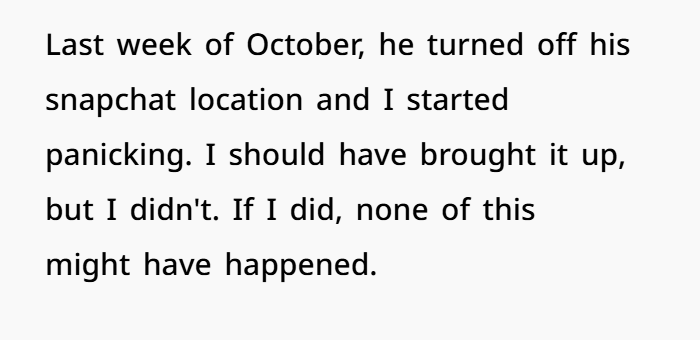
By the final week of October, another small change caught his wife’s attention. He switched off his Snapchat location.
She immediately became worried.
She considered confronting him but stayed quiet. Looking back, she wondered if speaking up could have changed what happened next. At the same time, she understood that his decision to cheat was not something she could take responsibility for.
Then He Asked for a Break
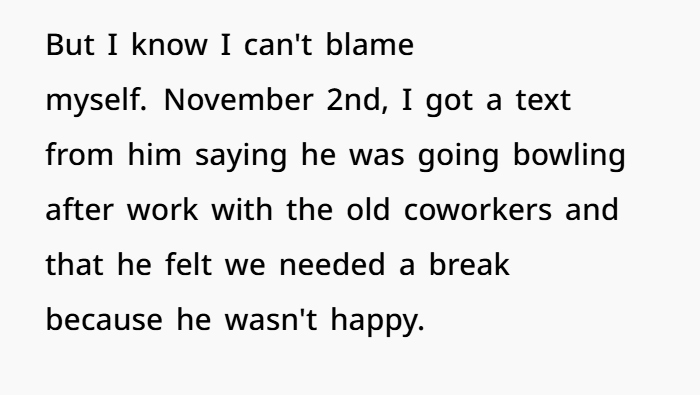
On November 2, her husband texted her after work.
He said he was going bowling with people from his former job. Then he told her he thought they needed a break because he was unhappy.
She was stunned.
There had been no clear warning that her marriage was suddenly at this point.
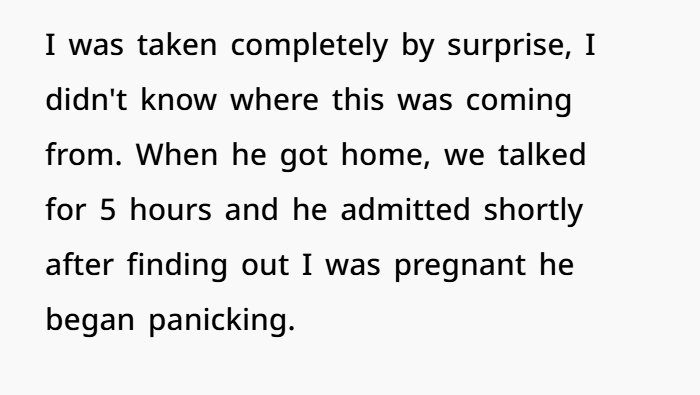
When he returned home, they talked for around five hours.
During that conversation, he admitted that learning about the pregnancy had frightened him because he truly did not want another child.
But that was not all.
He said he felt as if his friends did not like him. He was tired of the pandemic. He felt inadequate at work and worried that he was not knowledgeable or successful enough.
Most seriously, he told his wife that he had been feeling depressed and suicidal for several months.
He also admitted that the person he had been talking to about these feelings was his sister-in-law.
According to the 988 Suicide & Crisis Lifeline, talking about wanting to die, feeling hopeless or trapped, withdrawing from others, major sleep changes, and extreme mood swings can be warning signs that someone needs immediate support. Mental health struggles should be taken seriously, but they do not remove a person’s responsibility for choices that hurt other people.
His wife directly asked whether anything inappropriate was happening between him and the other woman.
He said no.
She warned him that crossing that line would destroy relationships and leave him with deep regret.
He told her he understood.
By the end of their long conversation, things actually seemed better. He said talking to his wife reminded him why he had fallen in love with her. He also wondered why he had waited so long to tell her what he was going through.
For the next month, their marriage seemed to improve.
He stopped going out with his old coworkers. He became more careful with her feelings.
Things finally felt good again.
But his wife still did not know the truth.
“I Cheated”
One Tuesday morning, shortly after arriving at work, he called his wife.
He told her there was something she needed to know.
He had cheated, and he was coming home.
She immediately panicked.
When she asked who the other woman was, his answer confirmed what she had once feared.
It was his sister-in-law.
The wife began asking questions, trying to understand exactly what had happened.
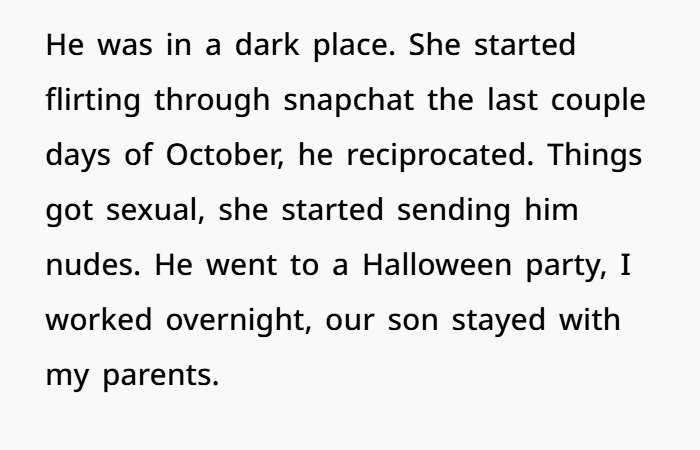
According to her husband’s account, the sister-in-law began flirting with him through Snapchat during the final days of October. He flirted back. The messages became sexual, and she sent intimate photos.
Then came Halloween.
His wife was working overnight, while their son was staying with her parents. Her husband went to a Halloween party.
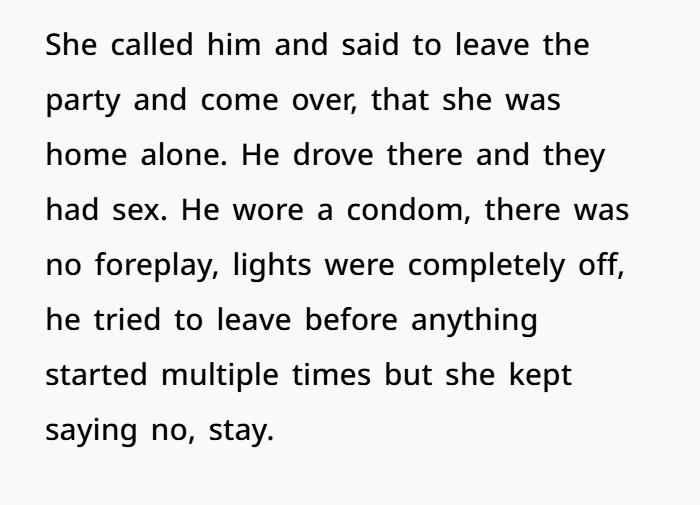
The sister-in-law contacted him and asked him to leave the party and come to her home because she was alone.
He went.
They slept together.
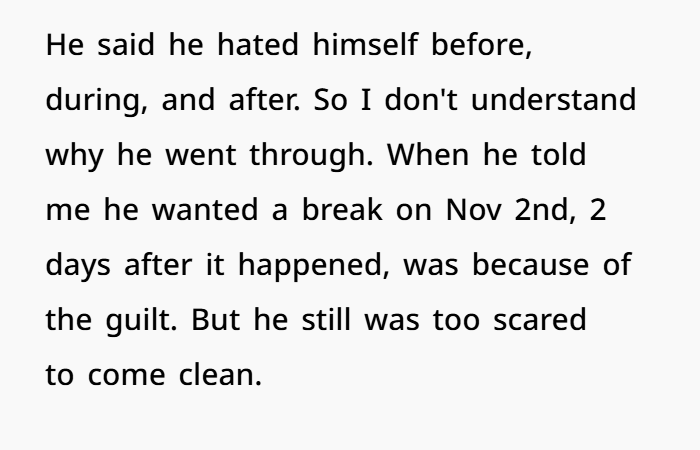
He later told his wife that he had tried several times to leave before it happened but stayed after the other woman kept asking him not to go. He said he hated himself before, during, and afterward.
For his wife, that explanation only created another painful question.
If he already knew it was wrong, why did he continue?
Two days later, when he asked for a break, he was already carrying the secret. According to him, guilt was the real reason behind that conversation.
He still could not bring himself to confess.
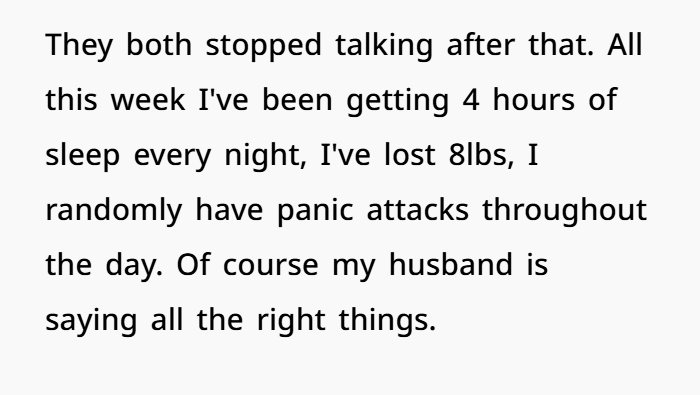
The husband and sister-in-law reportedly stopped talking afterward.
The Truth Took a Heavy Toll
Once the affair finally came out, the wife’s emotional state changed quickly.
She said she was sleeping only around four hours each night. She lost eight pounds in one week and began having panic attacks at unexpected moments.
Those symptoms deserve attention, especially during pregnancy.
The American College of Obstetricians and Gynecologists says anxiety during pregnancy can include constant worry, trouble sleeping, a racing heart, nausea, dizziness, and panic attacks. ACOG advises pregnant people experiencing significant anxiety or major mood changes to speak with their obstetric care provider.
The repeated mental images she described are also not unusual in the aftermath of betrayal.
The American Psychological Association’s discussion of healing after infidelity explains that betrayal can sometimes create experiences resembling post-traumatic stress symptoms. Some approaches to infidelity therapy and couples counseling first focus on containing the immediate damage before examining why the affair happened and deciding what the future of the relationship should look like.
That last part matters. Recovery does not automatically mean staying married, and it does not automatically mean leaving. Those are separate decisions.
Her Husband Wanted to Save the Marriage
After confessing, the husband said many of the things she desperately wished she could believe.
He said he finally understood what he had.
He wanted to be a better husband and father. He said he was excited about their new baby and realized he had taken his family for granted.
He told his wife she had done nothing wrong.
He also said he hated himself for what happened and did not believe he deserved her.
He blamed some of what happened on being emotionally vulnerable and felt that his sister-in-law had taken advantage of that weakness.
But from his wife’s point of view, explanations could not erase his choices.
That is one of the hardest parts of recovering from infidelity. Understanding why something happened is different from excusing it.
It Was Not Just One Betrayal
The wife was grieving more than her husband’s affair.
She felt betrayed by the man she had considered her soulmate. At the same time, she had lost someone she considered one of her closest female friends.
Then another family relationship began falling apart.
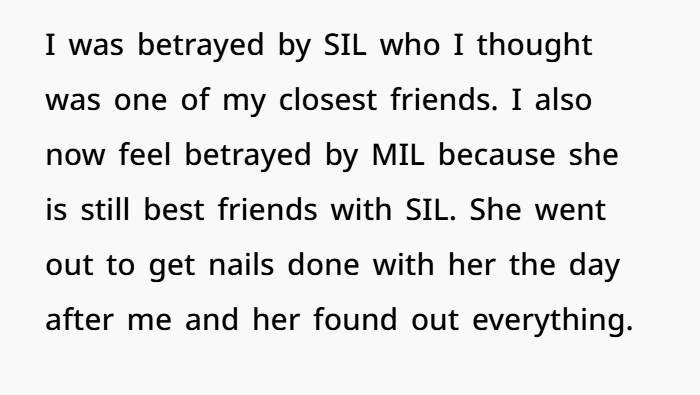
Her mother-in-law remained close friends with the sister-in-law. The day after the affair became known, the mother-in-law went to get her nails done with her.
According to the wife, her mother-in-law did not even ask how she was coping.
That left her feeling betrayed by three people at once.
Her marriage, friendship, and wider family relationships had all been shaken by the same event.
She Still Wanted Him Close
One part of her reaction surprised and embarrassed her.
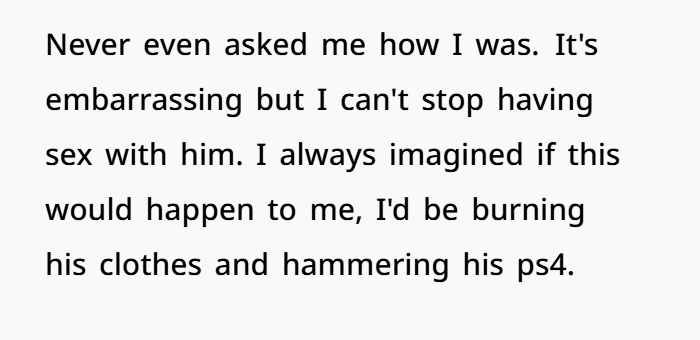
She kept wanting physical intimacy with her husband.
Before experiencing infidelity herself, she had imagined reacting very differently. She thought she would immediately throw him out and destroy his belongings. She had even judged women who stayed with cheating partners.
Now she understood that being inside the situation felt completely different.
She still loved him.
She still wanted him.
And she was also deeply hurt by him.
Those feelings could exist at the same time.
Can a Marriage Survive Cheating?
That became the painful question hanging over everything.
She wanted to stay married, but she was not sure she could live with the memories.
Her mind kept replaying what happened between her husband and the other woman. She worried those images might never disappear.
She also faced a brutal problem with trust.
She did not believe he would cheat again.
But before the affair, she had also been completely certain he would never cheat the first time.
Research and clinical approaches described by the APA suggest that marriage after infidelity does not have one fixed outcome. Therapy may involve ending contact with the affair partner, understanding the circumstances surrounding the betrayal, addressing its emotional effects, and then deciding what both partners want their relationship to become.
For this pregnant wife, however, there was no quick answer.
She was dealing with marital infidelity, pregnancy anxiety, broken trust, family conflict, and the loss of a friendship all at once.
She felt embarrassed, foolish, and gullible.
Yet the story also showed why betrayal is rarely as simple from the inside as it looks from the outside. Before this happened, she thought she knew exactly what she would do if a husband cheated.
Once it became her own marriage, her own family, and the father of her children, the answer was no longer simple.
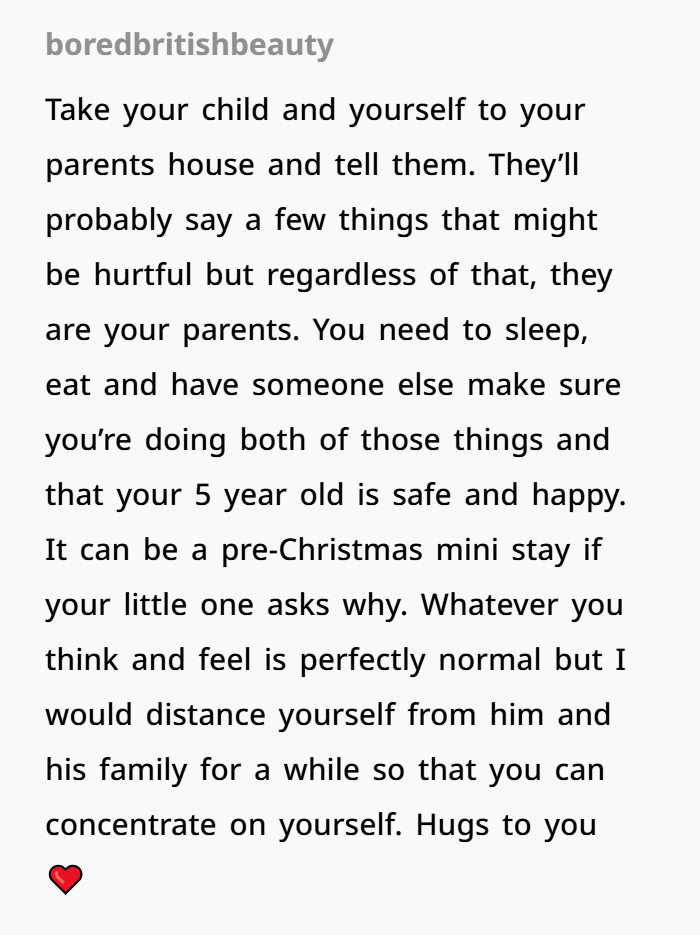
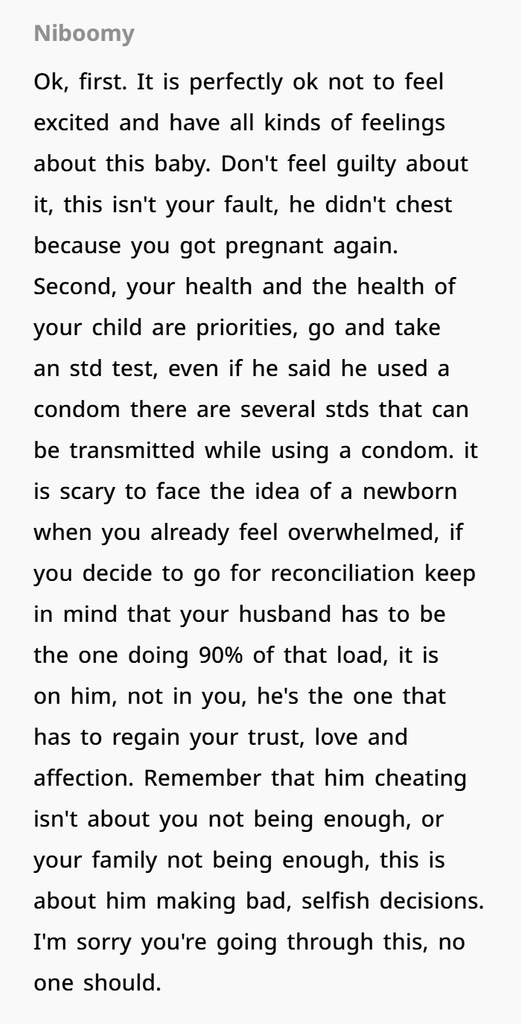
See the comments to know what people said



There is no easy ending to a story like this.
The wife still loves her husband, but love does not make the betrayal disappear. The person she trusted most broke that trust with someone she also considered family. Now she has to deal with the pain while pregnant and caring for their 5-year-old son.
Her husband says he is sorry and wants to rebuild their marriage. But rebuilding trust after infidelity takes more than apologies. It takes time, honesty, clear boundaries, and consistent actions. Marriage counseling or couples therapy may also help some couples understand what happened and decide what they truly want next.
She also does not have to make that decision right away. Staying today does not mean she has promised to stay forever. Leaving is not something she has to decide while she is still trying to process the shock.
Perhaps the hardest lesson is that people cannot always predict how they will react to cheating in a marriage. She once thought she would immediately walk away if a husband cheated. Now that it has happened to her, everything feels far more complicated.
She is hurt, angry, confused, and still attached to the man who caused that pain. None of those feelings neatly cancel out the others.
For now, the biggest question is not simply whether this marriage can survive infidelity. It is whether trust can slowly be rebuilt and whether staying in the relationship can eventually feel safe and healthy for her again.
Whatever she decides, healing will likely take time. Some wounds do not disappear quickly. But with support, space to process what happened, and care for her own well-being, she can make her next decision when she feels ready—not simply because other people think they know what she should do.